

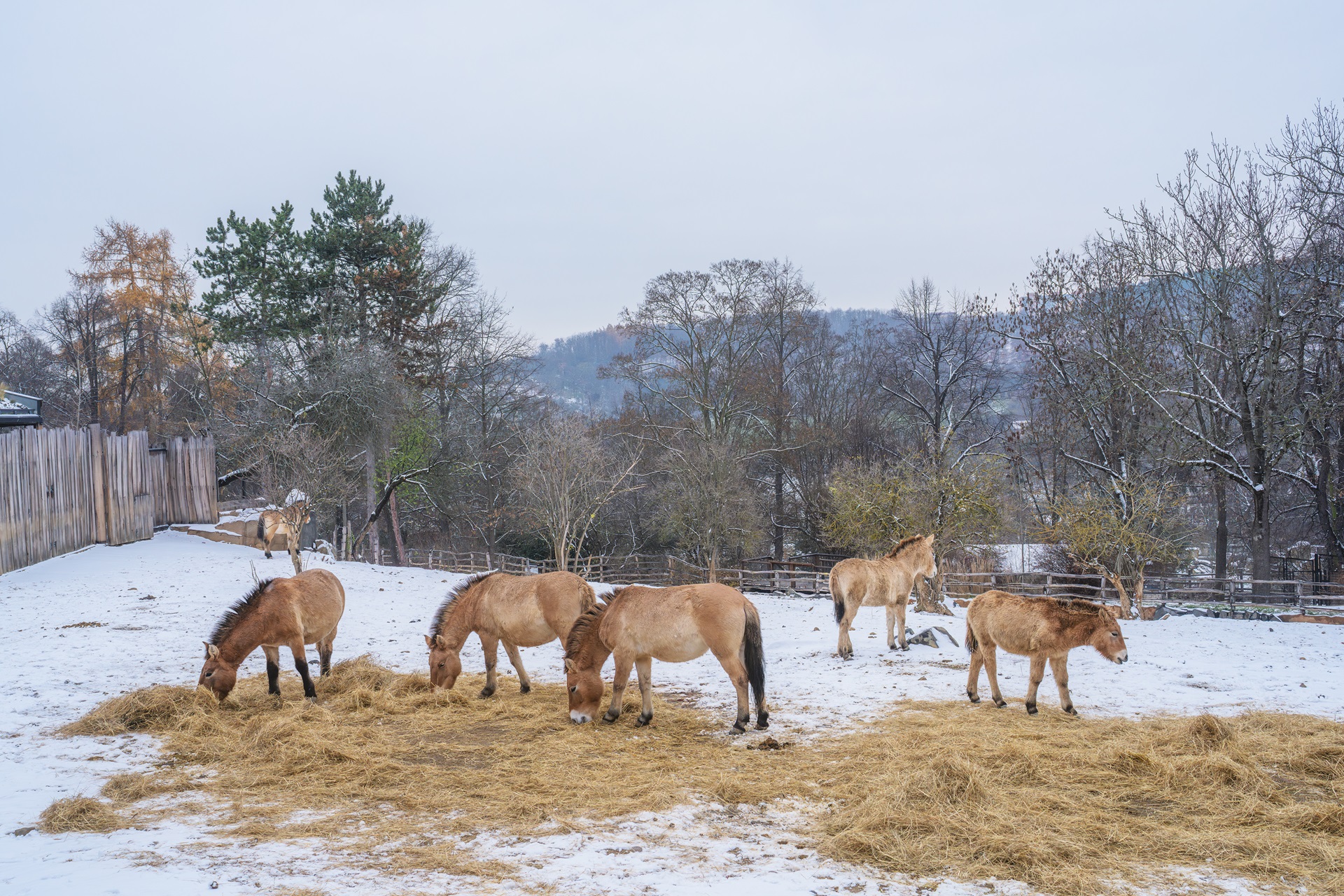
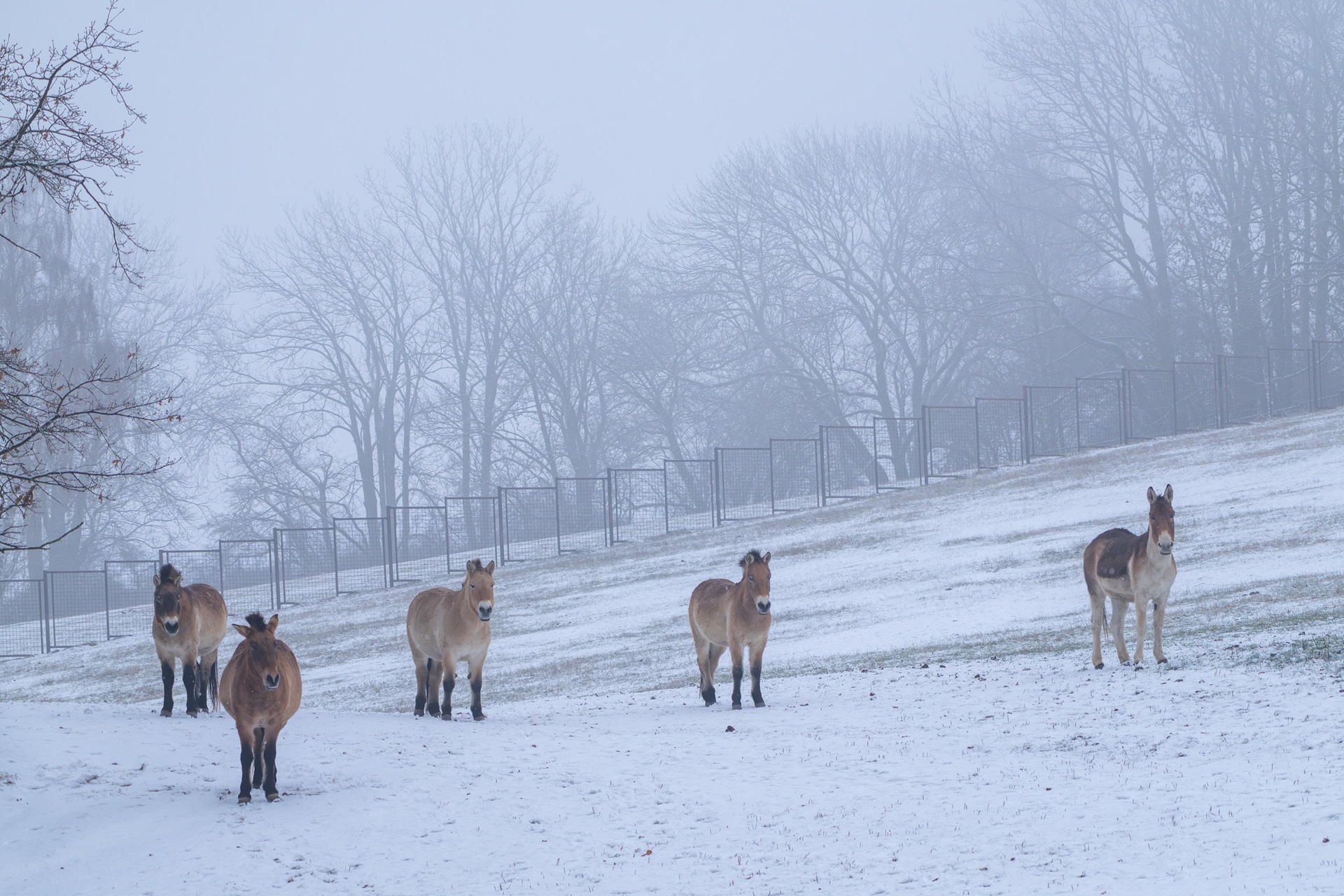
Przewalski’s horses (four to the left) and a kiang (Tibetan wild ass) (right) in breeding and acclimatization station in Dolní Dobřejov
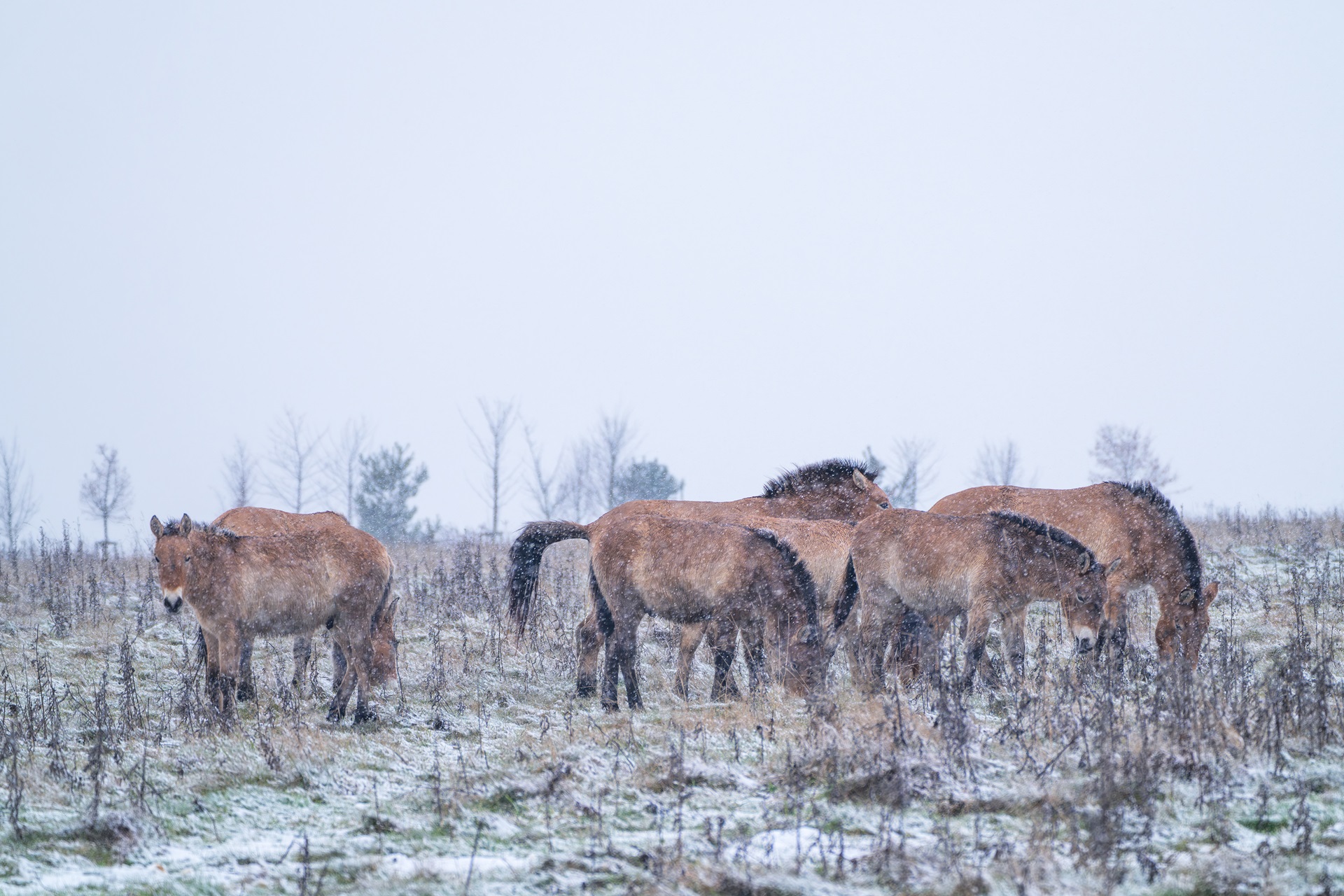
Przewalski’s horses in Dívčí hrady
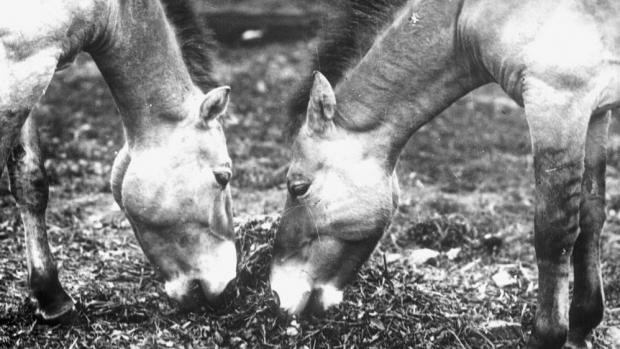
Ali and Minka, the first breeding pair of Przewalski’s horses living in Prague Zoo (1930s). Photo: Prague Zoo archive (https://www.zoopraha.cz/en/return-of-the-wild-horses/przewalski-s-horse/15585-saving-the-przewalski-s-horses)

Przewalski’s horses in Dívčí hrady
As the global captive population grew, releasing the horses back to their ancestral lands became possible. Prague Zoo contributed animals to transports in 1998 and 2000 to Takhiin Tal and Khustain Nuruu, projects then led mostly by organizations in Western Europe.
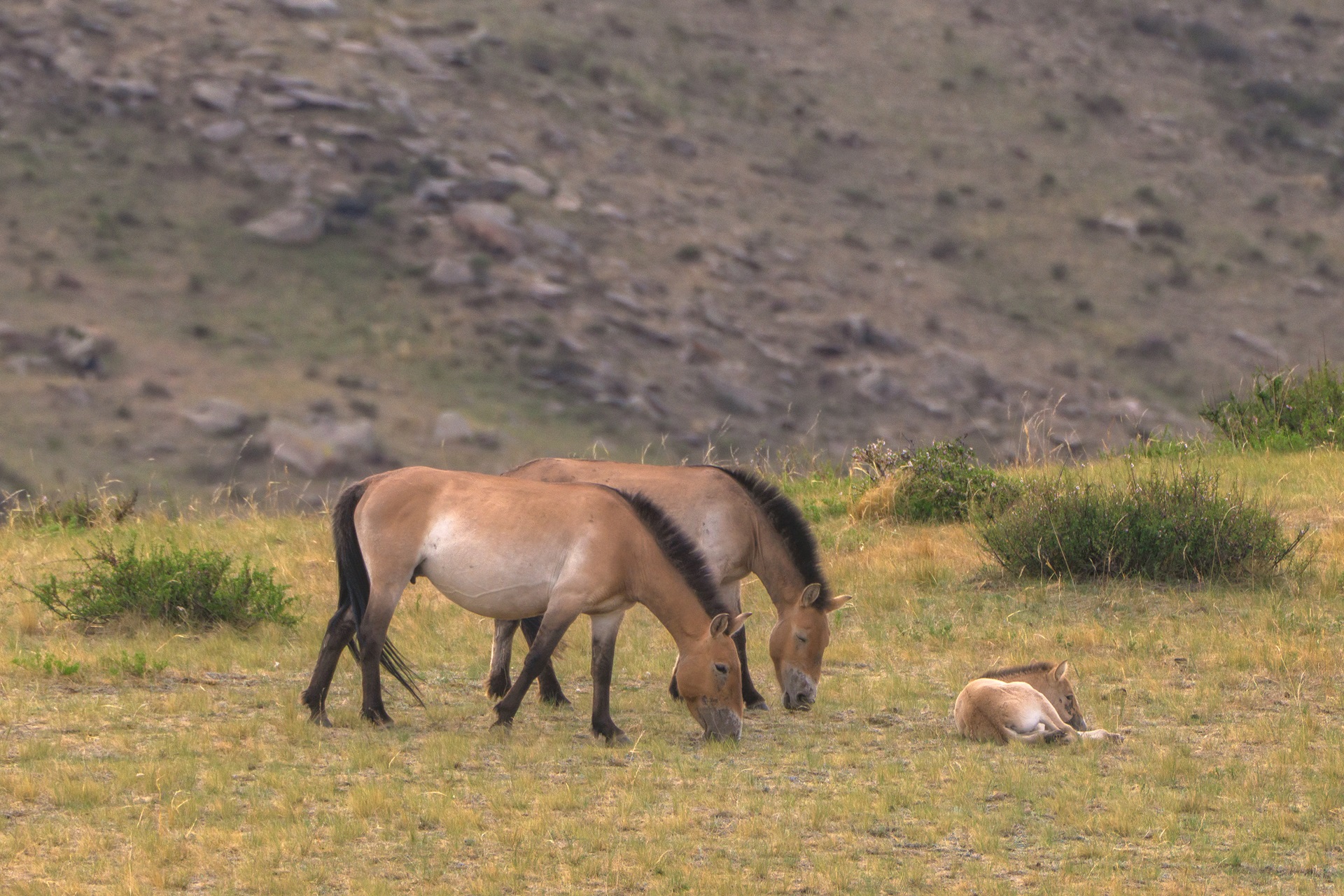
Przewalski’s horses in Hustai National Park, Mongolia
But progress stalled. The species seemed safe enough, and transports nearly stopped. Then came the brutal winter of 2010, which devastated the herd in Mongolia’s Great Gobi B. Recognizing that action was urgently needed, Prague Zoo stepped in and began organizing transports itself, the first zoo in the world to do so. That moment marked the birth of the Return of the Wild Horses project. With the support of the Czech Air Force, Prague Zoo has accomplished something no other zoo has done: it has organized and carried out its own intercontinental air transports of a large wild animal.
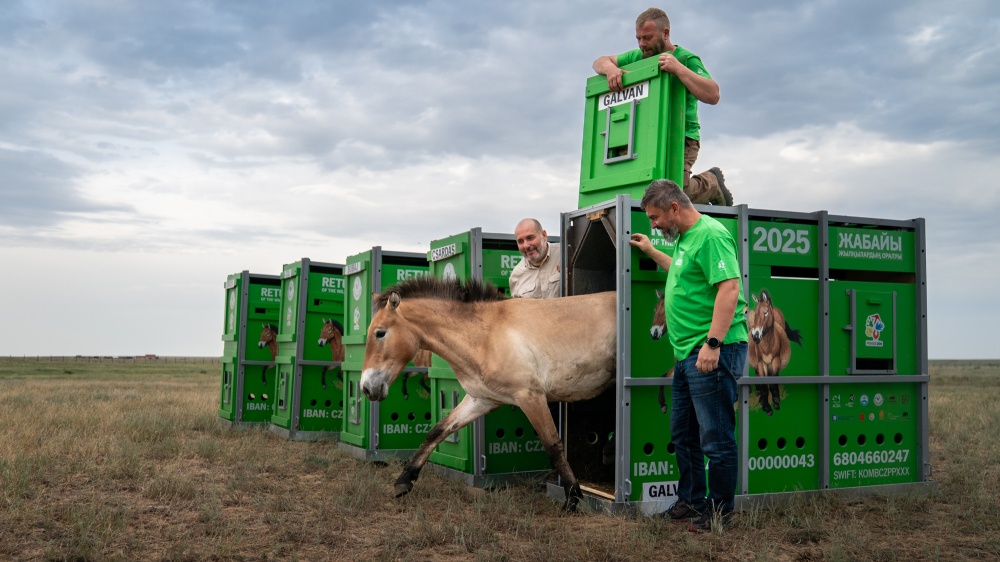
The horse runs into the acclimatization enclosure in Kazakhstan on 3 June 2025. Photo: Oliver Le Que, Prague Zoo (https://www.zoopraha.cz/en/return-of-the-wild-horses/przewalski-s-horse/15590-return-of-the-wild-horses-kazakhstan)
After restoring the horse to Mongolia’s Great Gobi, the program pushed even farther in 2024, delivering horses to Kazakhstan’s Golden Steppe for the first time in centuries. In June 2025, a second transport to Kazakhstan was carried out. For the first time in centuries, a herd of Przewalski’s horses thunders across the Golden Steppe of Kazakhstan, returning to a land where their ancestors vanished hundreds of years ago.
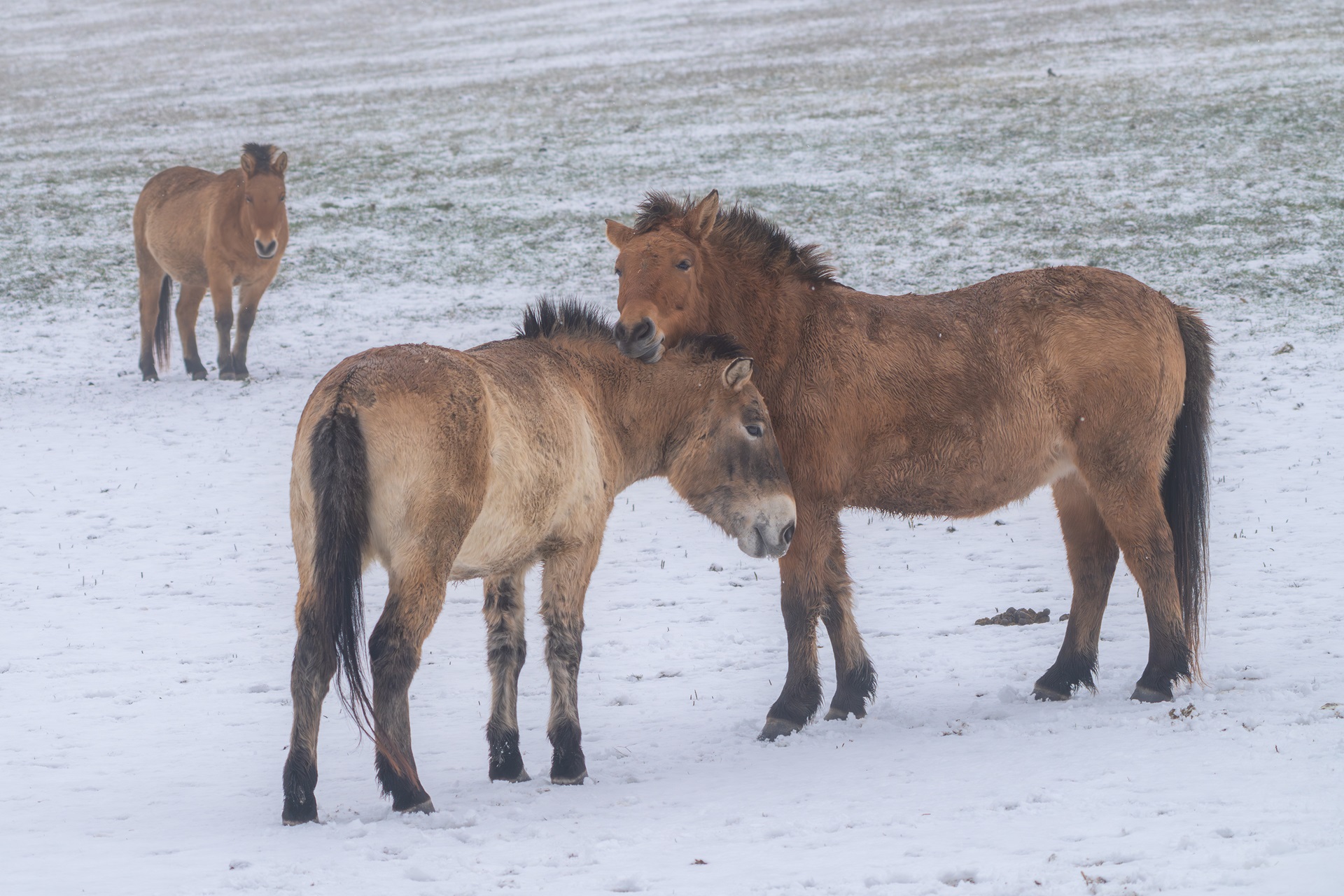
Przewalski’s horses in breeding and acclimatization station in Dolní Dobřejov
Today, the Przewalski’s horse is standing on firmer ground. Around 2,000 individuals live in human care, and several hundred roam protected areas across Asia. Thanks to decades of hard work, the species has climbed from “Extinct in the Wild” to “Endangered” on the IUCN Red List — a rare conservation success story.