

The musk oxen sightings in Arctic Alaska were especially amazing. We observed a total of five social groups and two isolated individuals, with total of 27 musk oxen altogether, across the vast, treeless expanse of Arctic tundra near Deadhorse in North Slope Borough of Alaska. These massive animals are built like tanks! I had been wanting to plan a trip to Greenland specifically to photograph musk oxen, but here in Alaska, I finally got to tick them off my bucket list.
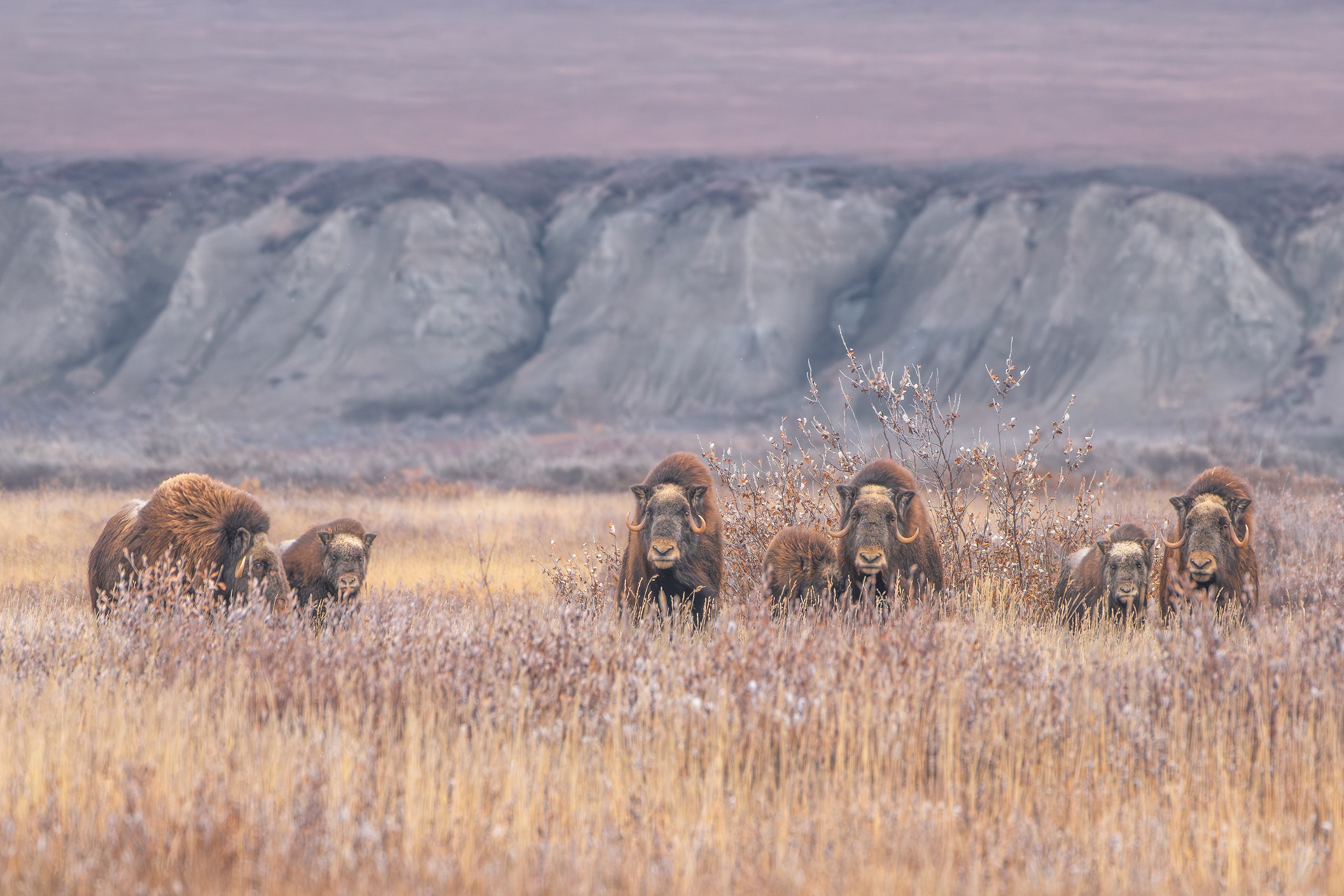
Musk oxen once roamed Alaska alongside other Ice Age animals, but by the late 1800s they had disappeared from the state, with overhunting believed to have contributed to their decline. In 1930, just 34 musk oxen from East Greenland were brought to Alaska as part of an effort to restore the species. They were eventually established on Nunivak Island, and descendants of that founding population were later relocated to other parts of Alaska. Today, thousands of musk oxen once again roam Alaska.
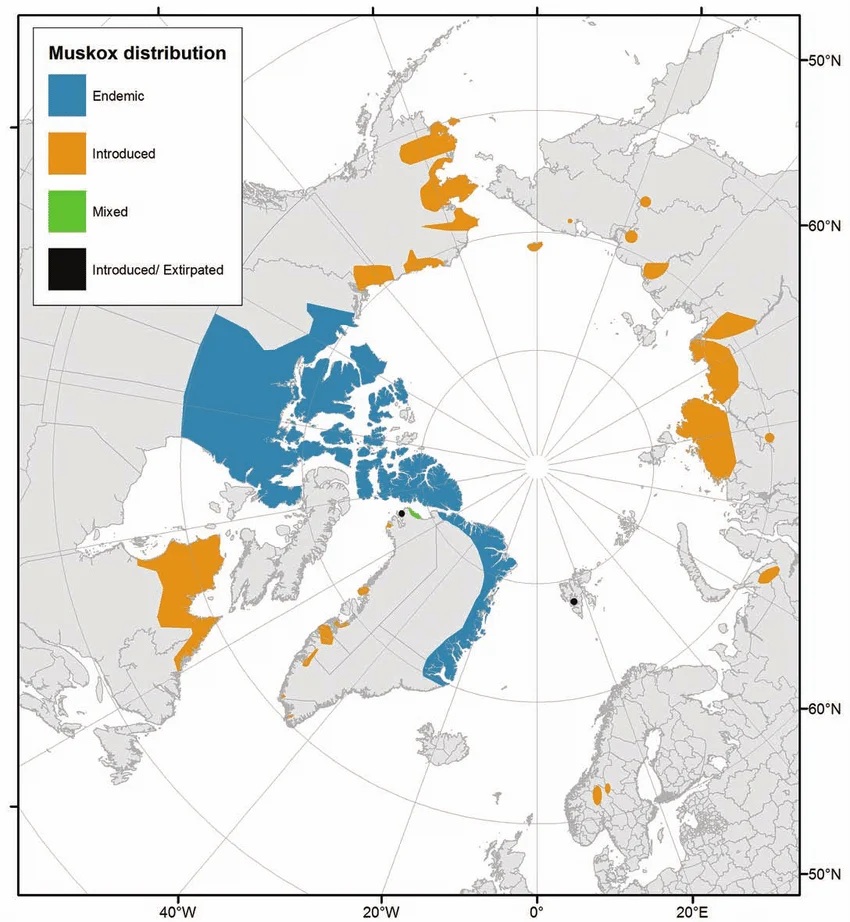
Figure 1 from Rowell et al. (2017). Muskox Health Ecology Symposium 2016: Gathering to Share Knowledge on Umingmak in a Time of Rapid Change. ARCTIC. 70. 225.
Musk oxen are native to the Arctic and today occur mainly in northern Canada and Greenland, which together contain the great majority of the world’s wild population. Their current native range extends across much of the Canadian Arctic Archipelago and parts of the adjacent mainland, as well as northern and eastern Greenland. After disappearing from several parts of their historical range, musk oxen were successfully reintroduced or introduced during the 20th century to areas including Alaska, northern and western Greenland, Norway, and Russia, creating additional established populations outside their surviving native range. Today, the global population is generally estimated at well over 100,000 animals.
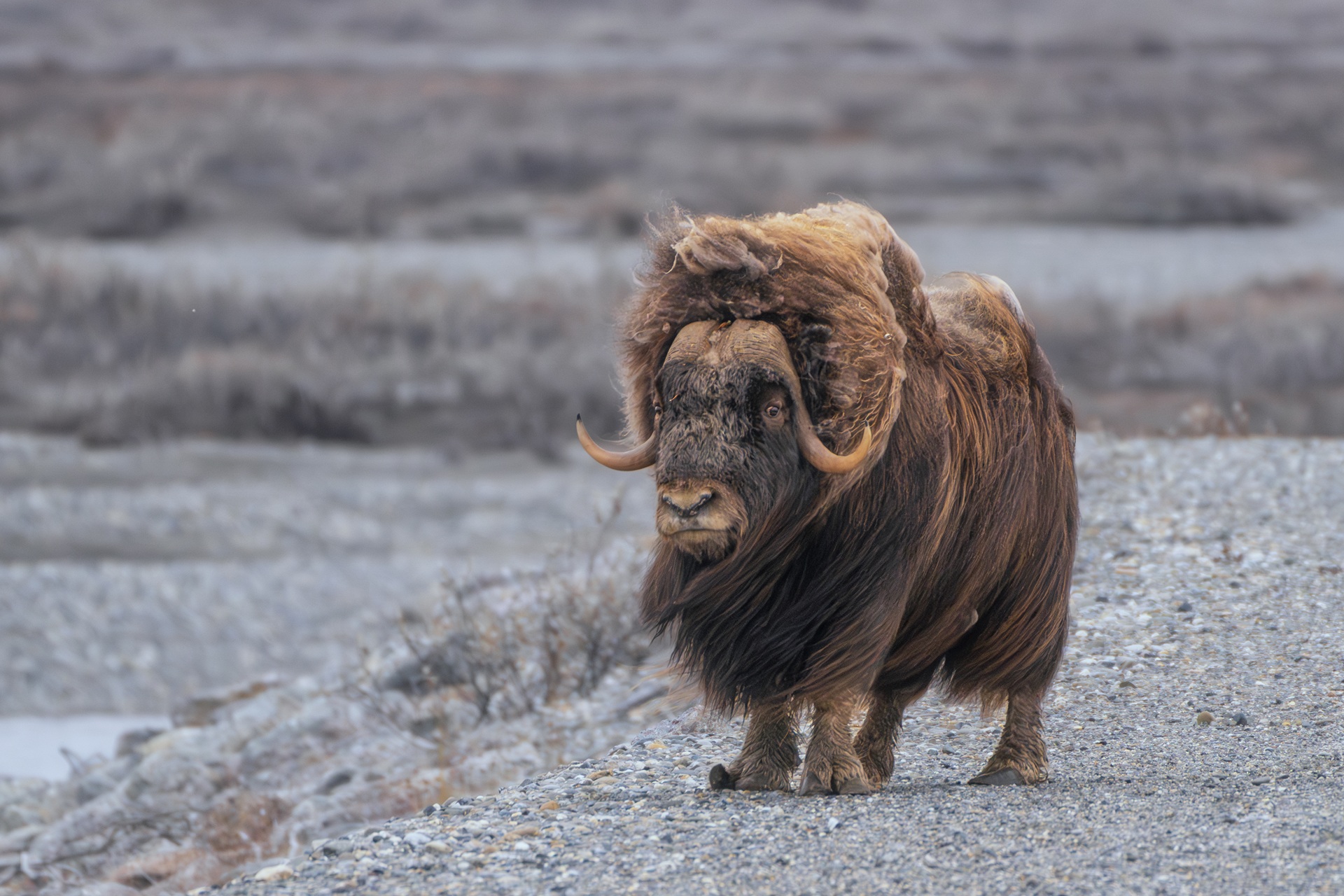
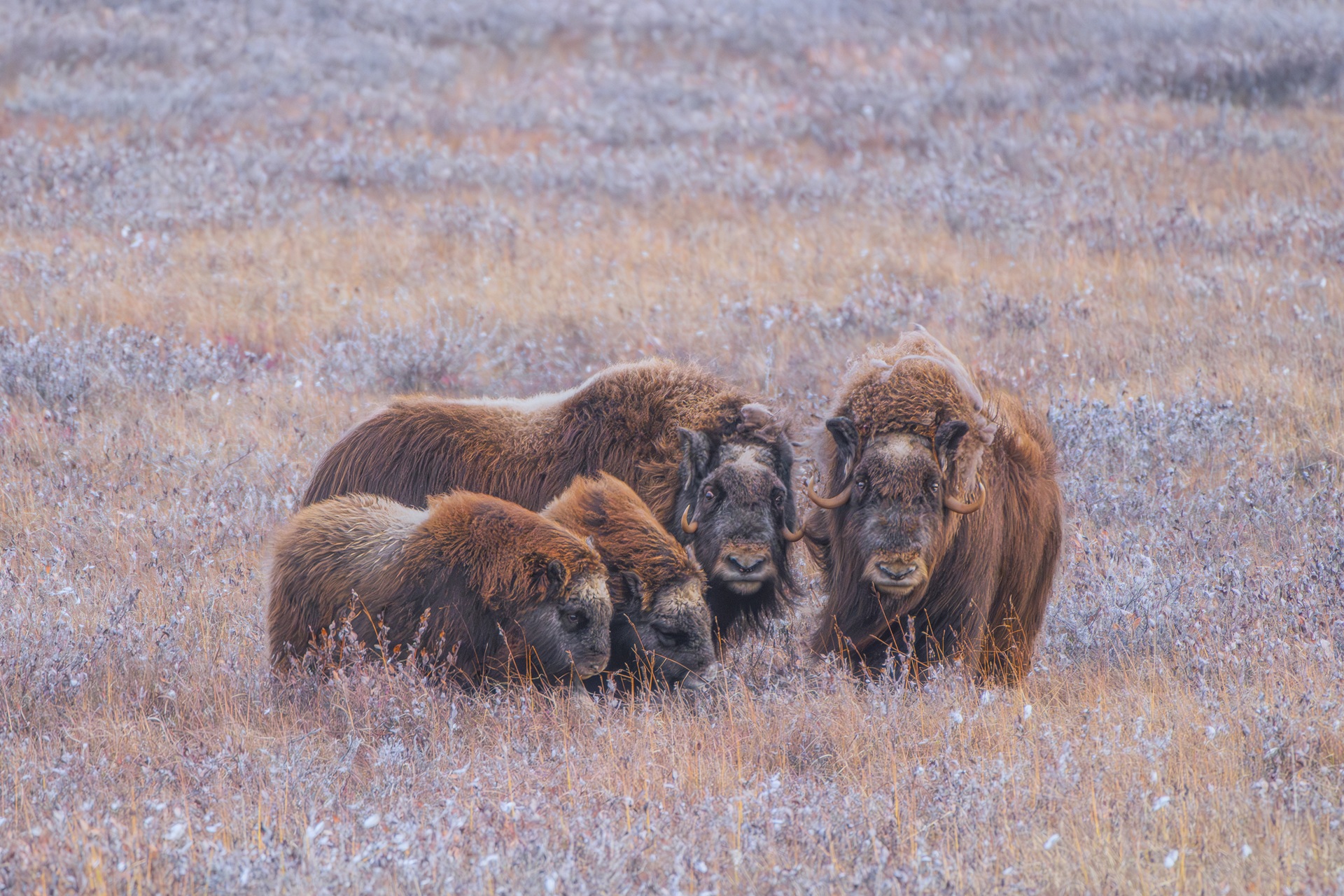
Male and female musk oxen can be distinguished by several features. Adult males are generally much larger and heavier, with massive horns that form a thick, prominent boss across the forehead. Females are smaller, and their horns are generally less massive, with a gap between the horn bases rather than the heavy central boss characteristic of mature bulls.
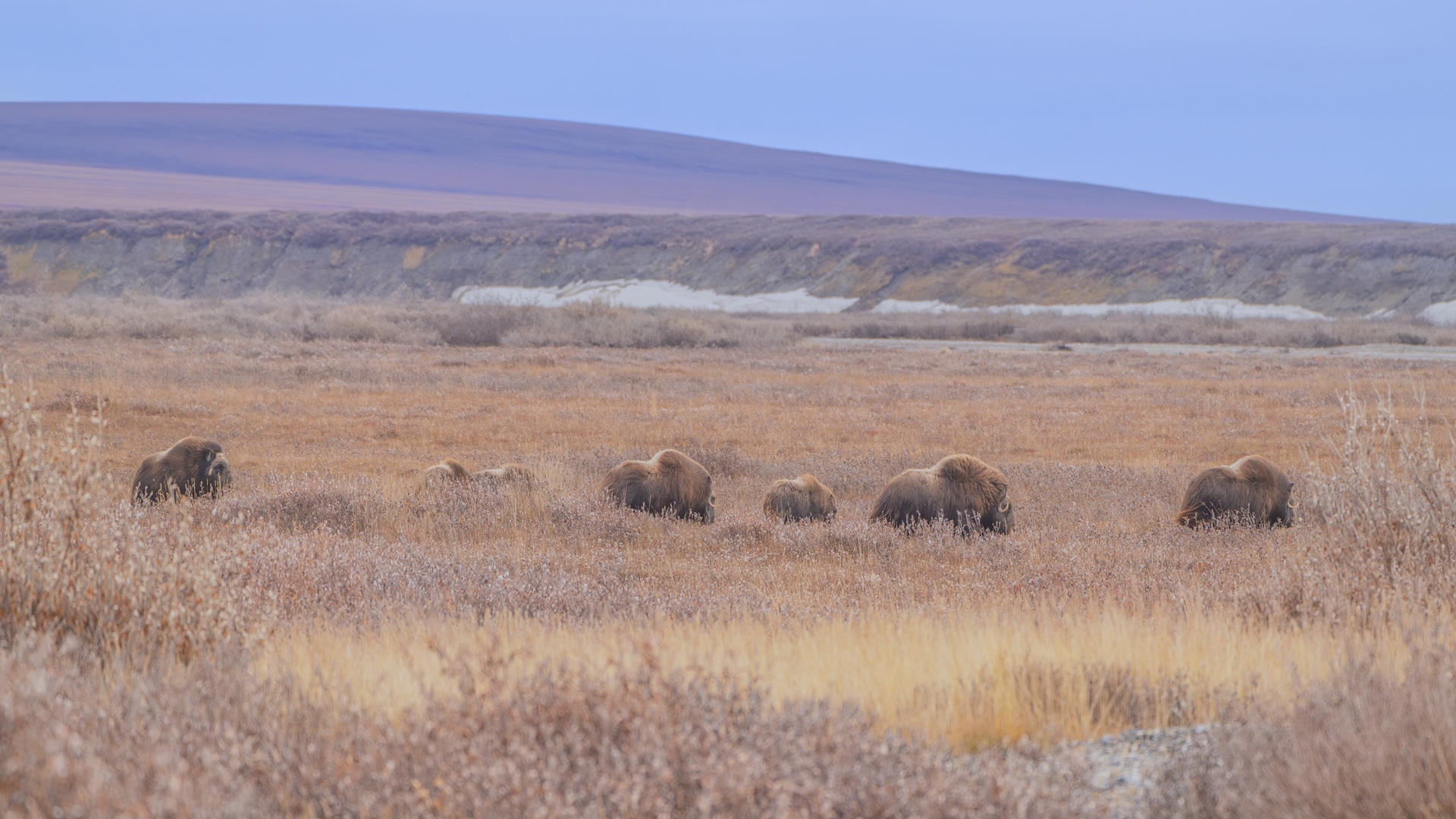
Musk oxen are highly social animals and are often found in herds. Their group behavior is particularly important for protection from predators. When threatened, adults can gather closely together, sometimes forming a defensive formation with their horns facing outward while calves remain protected within or behind the group. At other times, as we observed, the animals simply rested and grazed together peacefully across the open tundra.
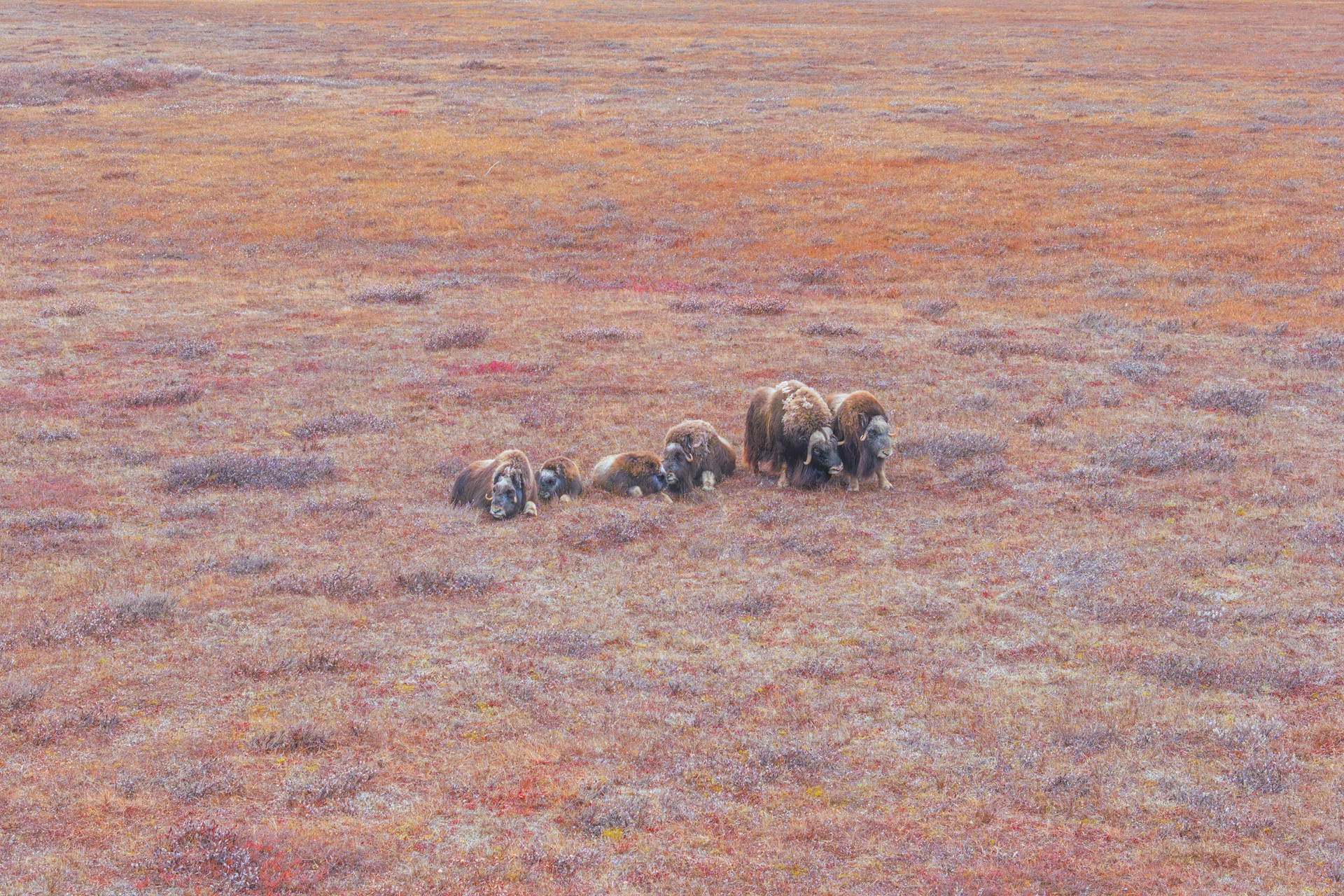
I also had the opportunity to observe one of these social groups from the air with a drone. I flew carefully at a distance and used a zoom lens so that I could observe without approaching or disturbing the animals. From above, it was incredible to see the herd resting together amid the immense landscape, the musk oxen appearing almost tiny against a vast red carpet of Arctic tundra.
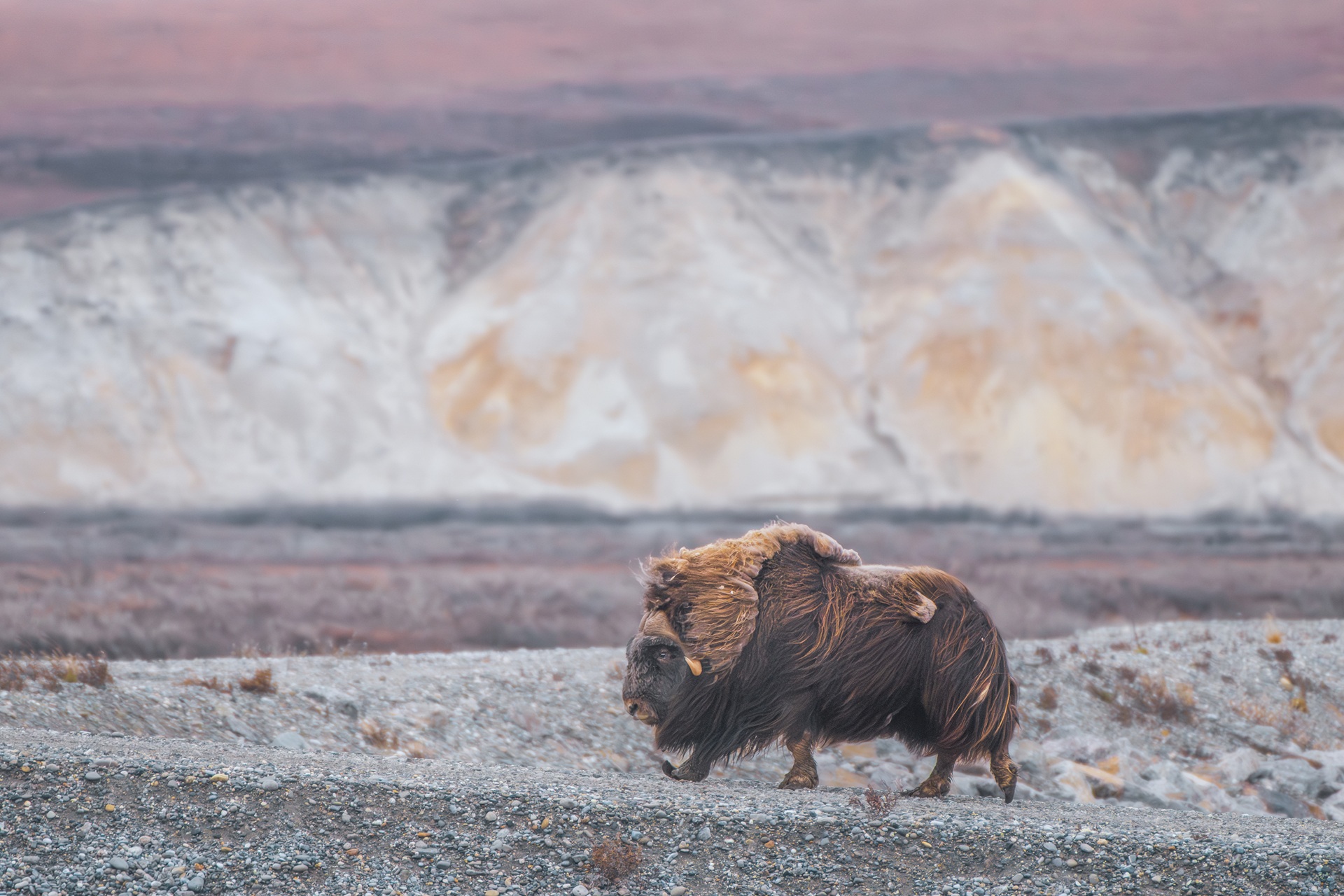
After surviving since the Ice Age, disappearing from Alaska, and eventually returning through conservation efforts, seeing these remarkable animals roaming the Arctic tundra again made the encounter even more meaningful.
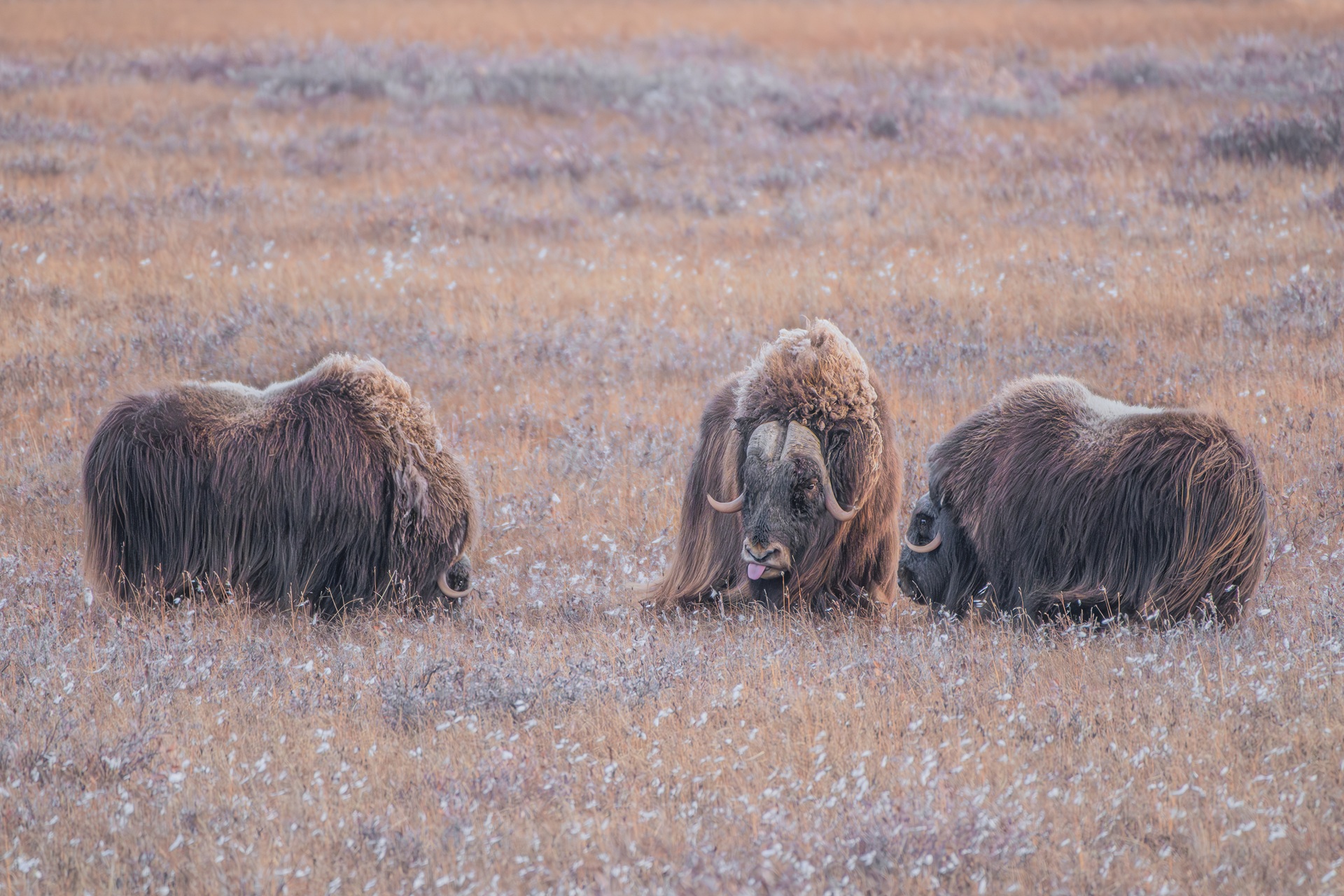
Fun Facts about musk ox:
- Musk oxen are not actually oxen. They are more closely related to goats and sheep than to cattle.
- Musk oxen are Ice Age survivors. Their ancestors lived alongside mammoths and other large Pleistocene mammals.
- Their incredibly soft undercoat is called qiviut, one of the warmest natural fibers in the world.
- When threatened by wolves, a herd may form a defensive line or circle, with adults facing outward and calves protected inside.
- During the breeding season, adult males can charge each other at high speed and collide head-to-head. Their massive horn bosses and thick skulls help absorb the impact.
- Their long outer coat can nearly reach the ground, protecting them from wind and extreme Arctic cold.
- Despite their bulky appearance, musk oxen can run surprisingly fast, around 35 – 40 mph (55 – 65 km/h) for short distances.
- The name “musk ox” comes from the strong odor produced by males during the breeding season, rather than from a true musk gland.
- Musk oxen have survived in the Arctic for hundreds of thousands of years and are among the few remaining large mammals associated with the Pleistocene megafauna.