
When photographing architecture, I often prefer not to include people in the frame. In Morocco, where many historical sites are crowded with visitors, this naturally led me to point my camera upward. What began as a practical solution became an exploration of geometry, patterns, lines, colors, textures, and symmetry. Looking beyond the conventional eye-level perspective opened up an entirely different way of appreciating the Moroccan architecture.
Geometry is one of the fundamental elements of photographic composition. Lines, shapes, curves, angles, and repeating patterns provide a visual structure that guides the viewer’s eyes through an image. Straight lines can create a sense of direction and stability, diagonal lines introduce movement and visual tension, while curves and arches create a softer visual flow. When these elements interact within a composition, they establish relationships that influence how we perceive space, depth, and balance.
Moroccan architecture provides an exceptional opportunity to explore these visual elements. From intricate zellige mosaics and hand-carved plaster to elaborately decorated wooden ceilings and horseshoe arches, geometric patterns are deeply embedded in its architectural tradition. Repetition creates visual rhythm, symmetry establishes order and harmony, and the combination of different shapes and colors adds complexity to the composition.
Perspective plays an equally important role in geometric photography. By shooting upward with a wide-angle lens, architectural lines converge, familiar shapes become exaggerated, and three-dimensional spaces can be transformed into almost abstract two-dimensional compositions. A rectangular courtyard can become a diamond-shaped frame surrounding the blue sky, while intersecting arches and decorated ceilings create a complex arrangement of curves, diagonals, and radial patterns.
Although symmetry is often associated with architectural photography, asymmetry can be equally compelling. I enjoy experimenting with unconventional angles, placing architectural elements off-center, and using negative space to balance intricate details. The contrast between a clear blue sky and densely ornamented surfaces, or between simple plaster walls and colorful geometric patterns, can be particularly effective in creating visual interest without overwhelming the composition.
Color is another important compositional element. Beyond its decorative function, color can separate shapes, emphasize repetition, establish visual hierarchy, and strengthen geometric relationships. The warm tones of natural wood and terracotta, the cool blues of the sky, and the vibrant colors of traditional Moroccan craftsmanship provide endless possibilities for visual contrast.
For me, photographing geometry is as much about observation as it is about composition. Rather than simply documenting a building, I look for relationships between its individual elements, identifying patterns, simplifying visual complexity, and organizing shapes and lines within the boundaries of the frame.
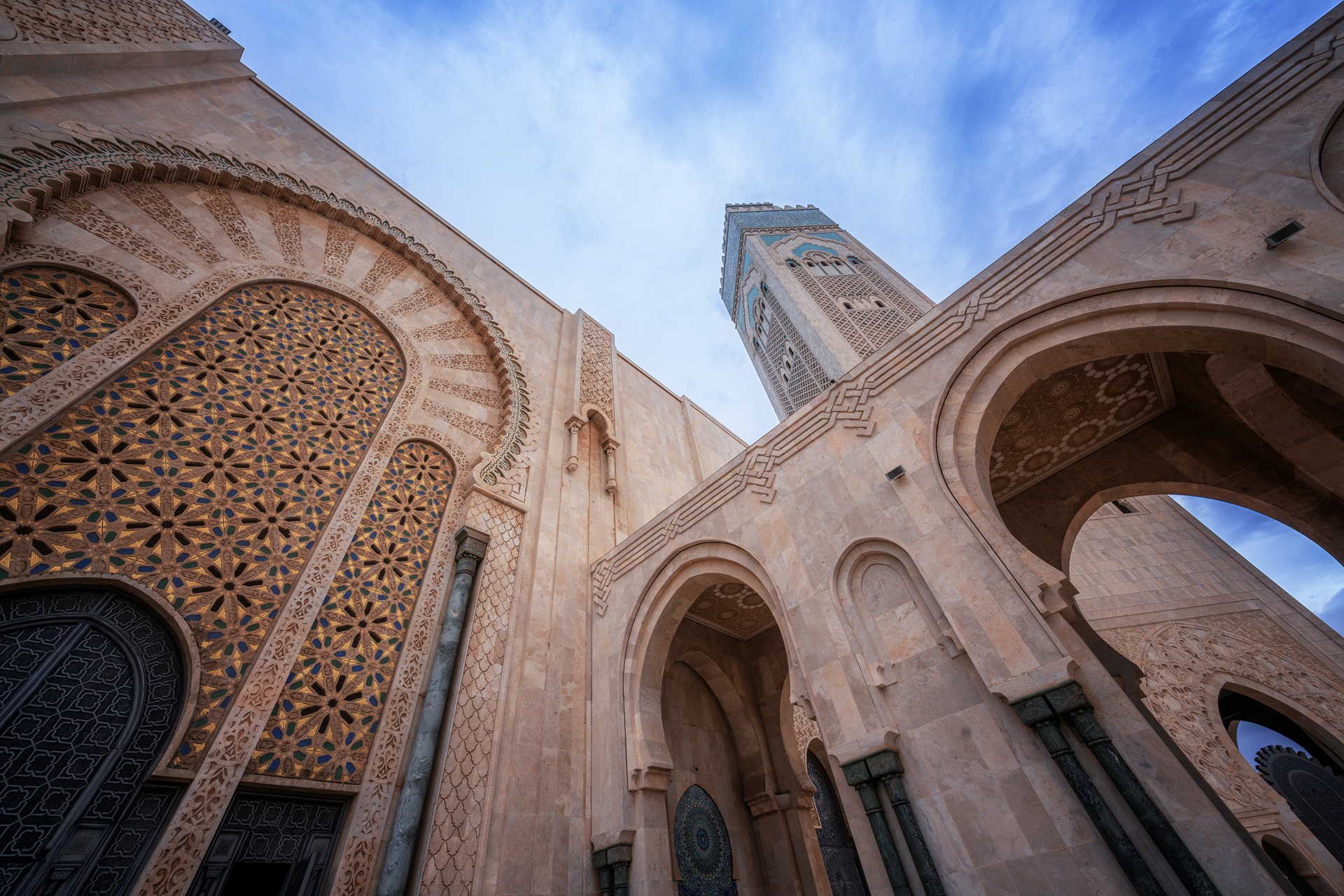
Hassan II Mosque
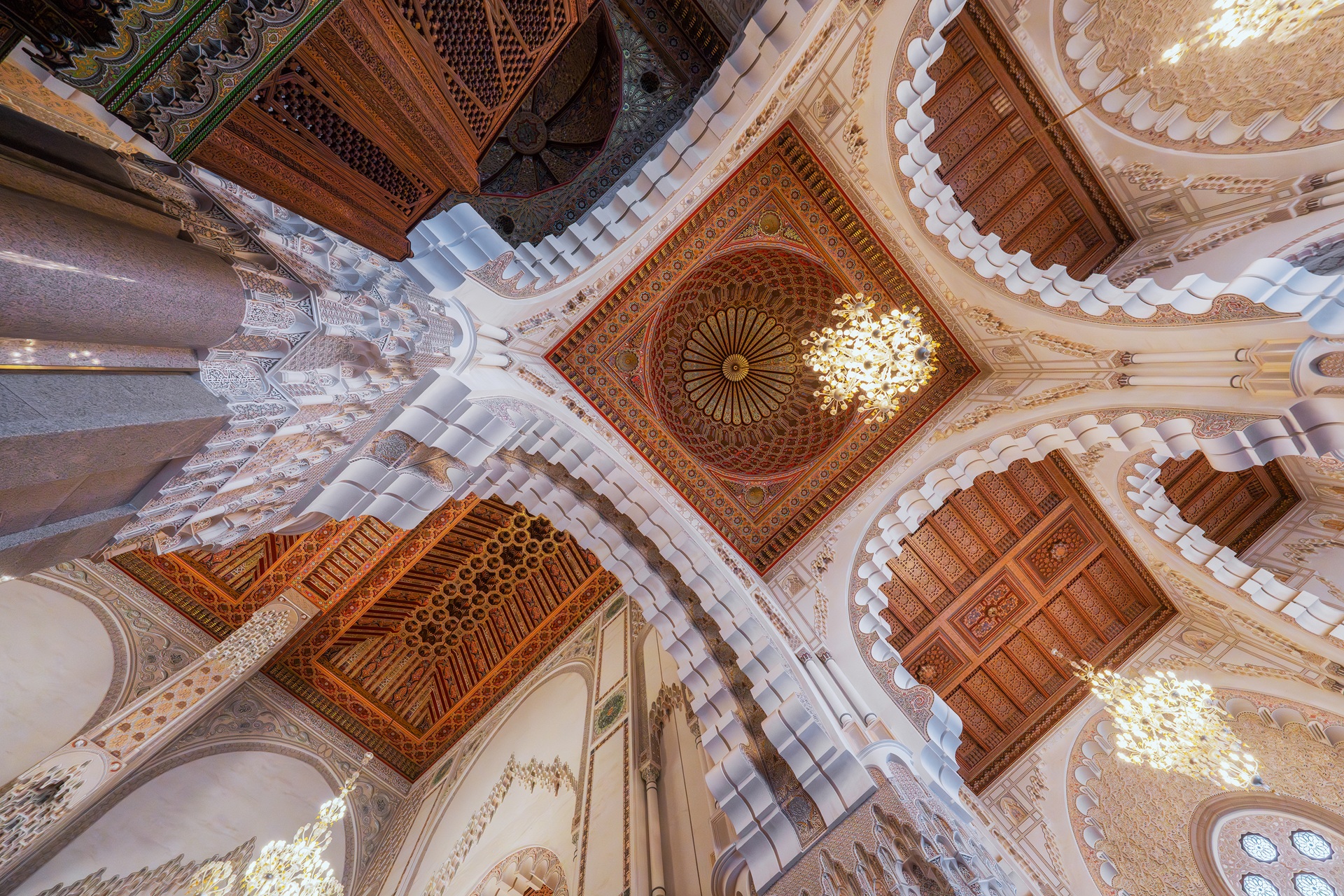
Hassan II Mosque
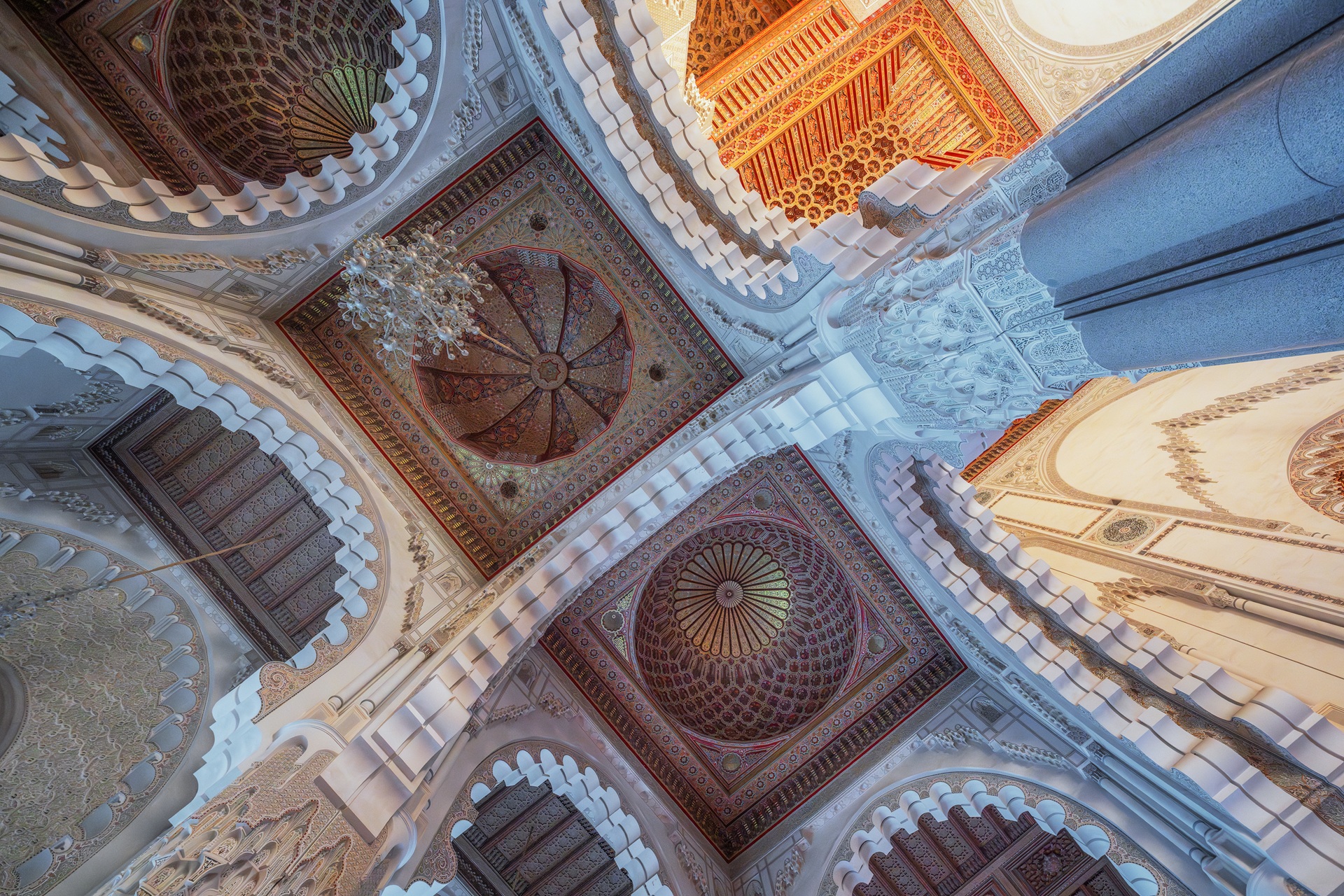
Hassan II Mosque
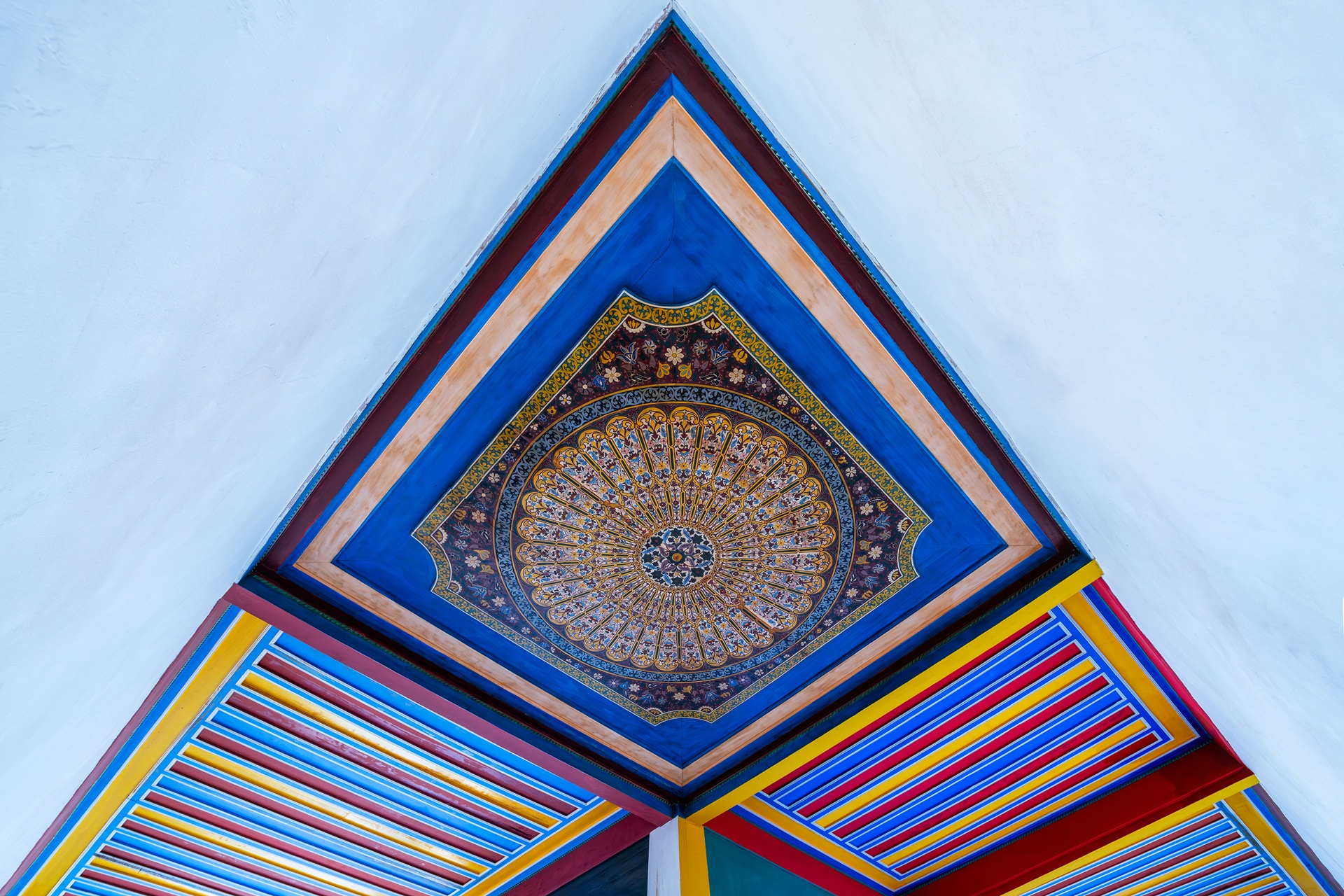
Bahia Palace
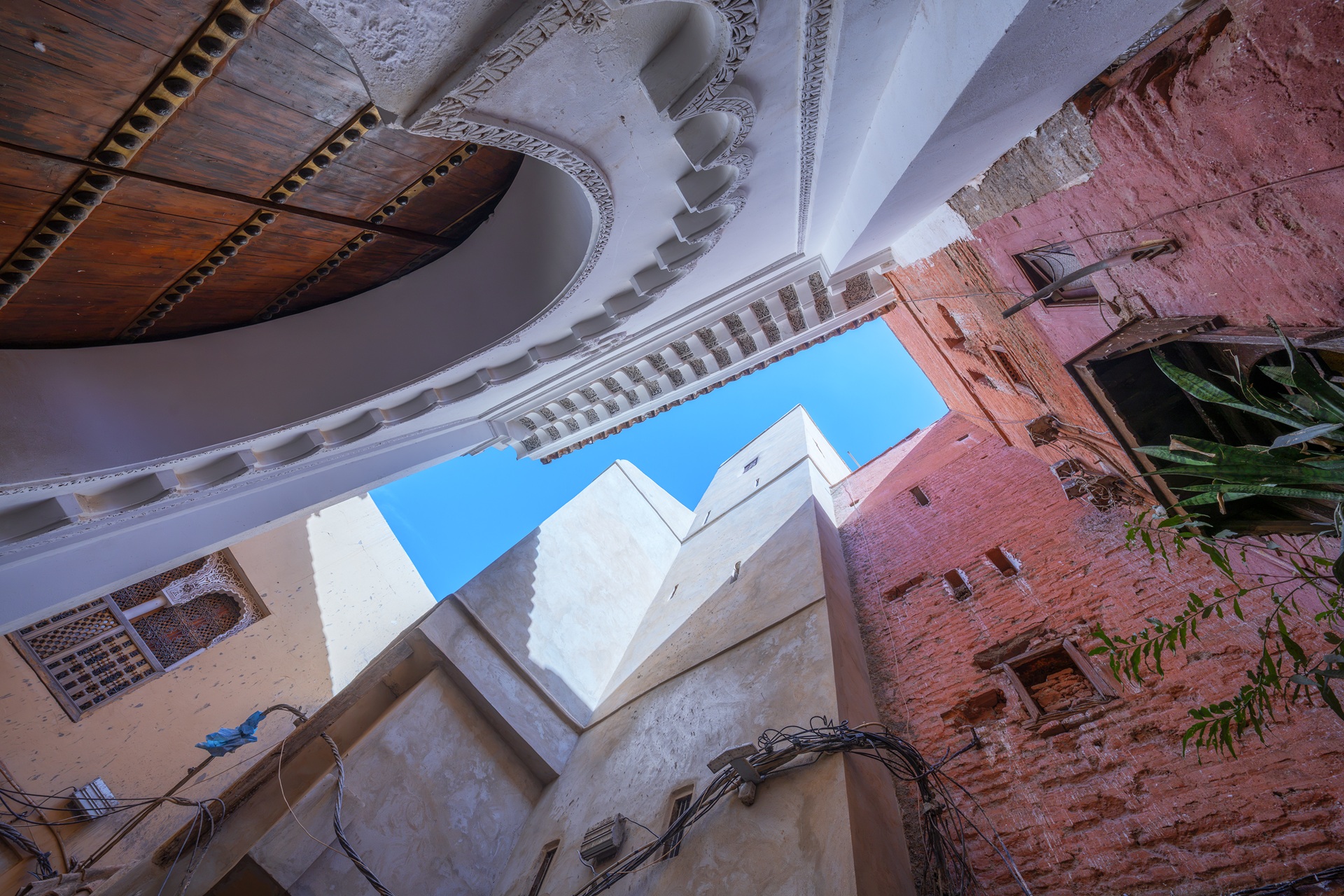
Marrakech Medina
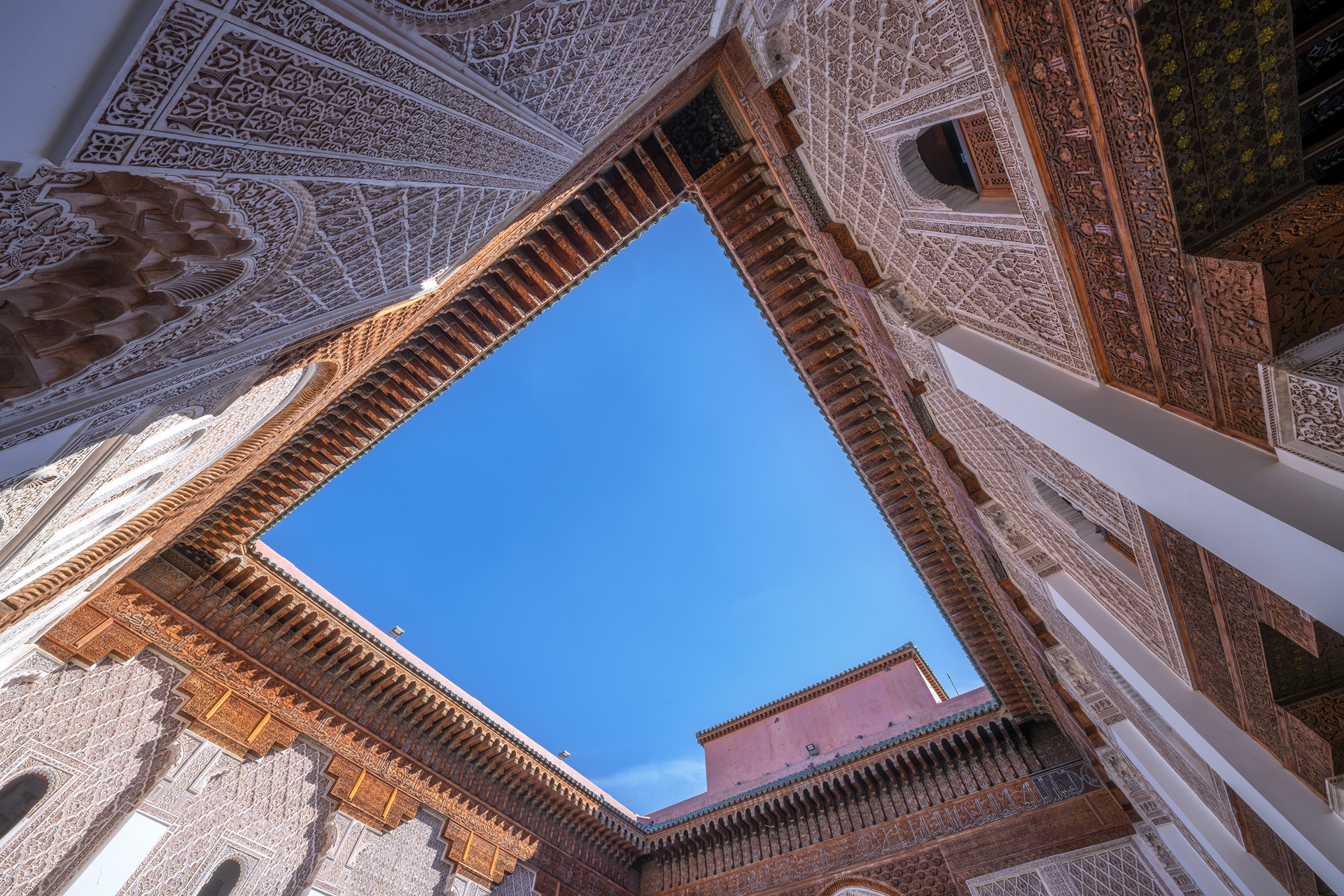
Madrasa Ben Youssef
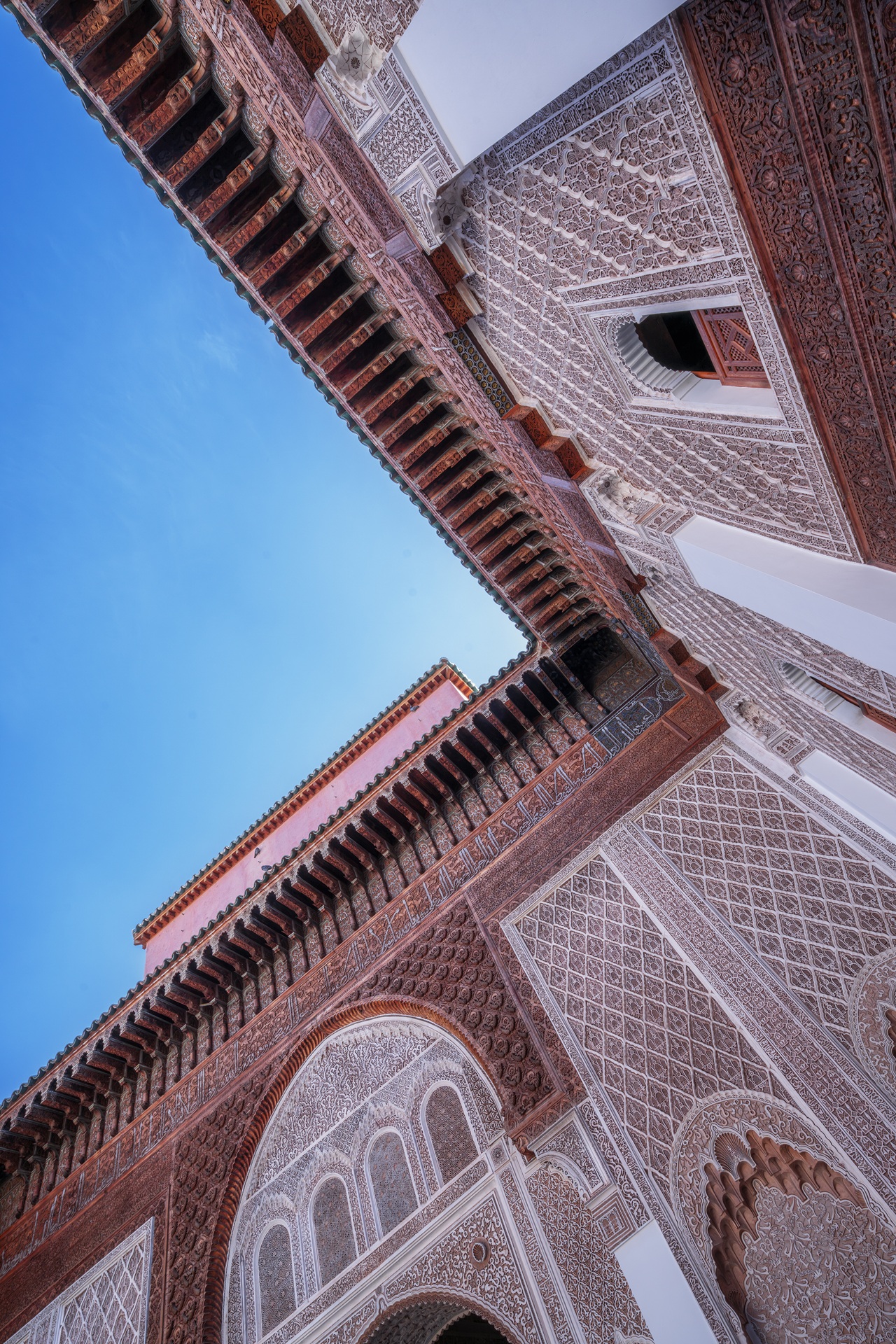
Madrasa Ben Youssef
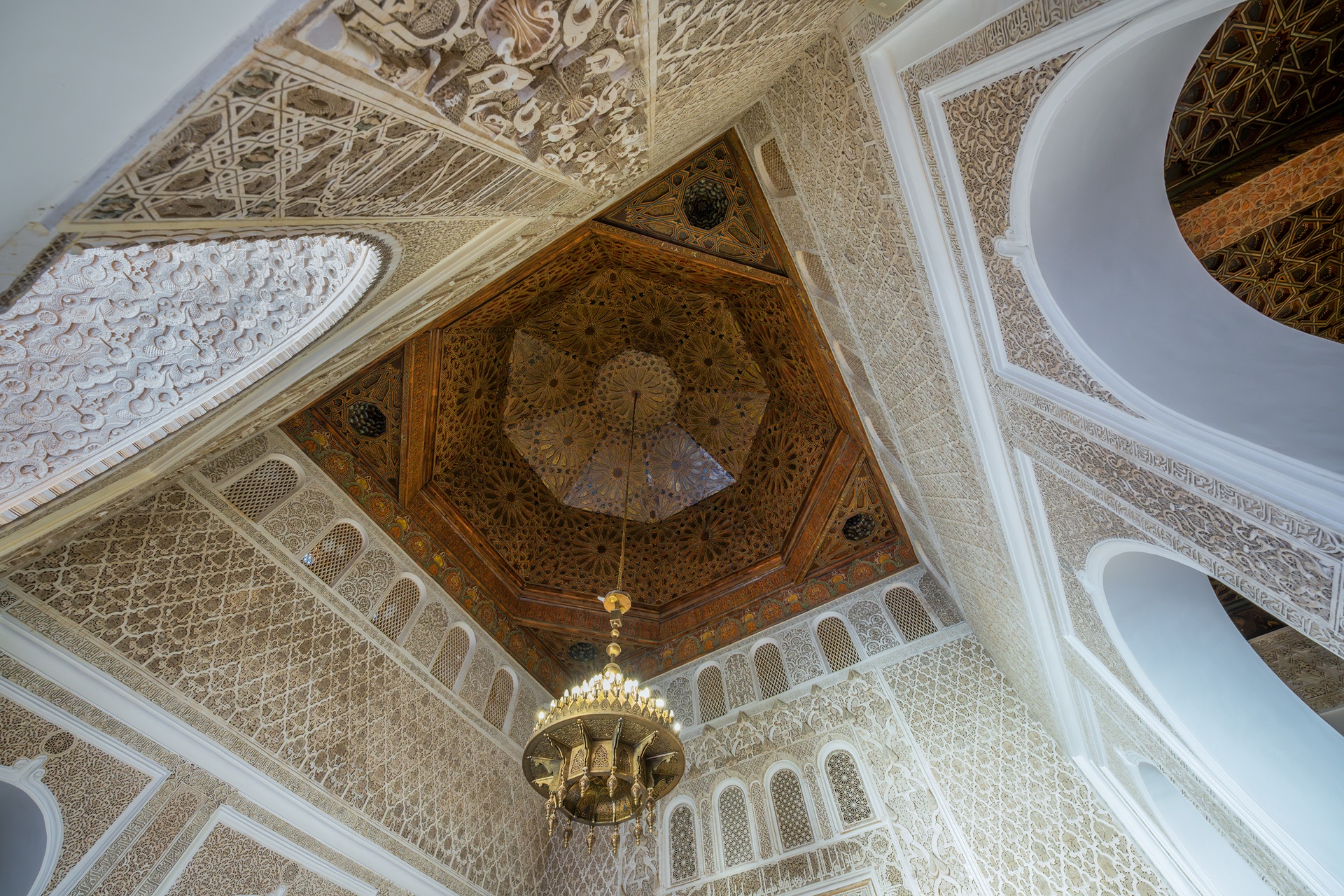
Madrasa Ben Youssef
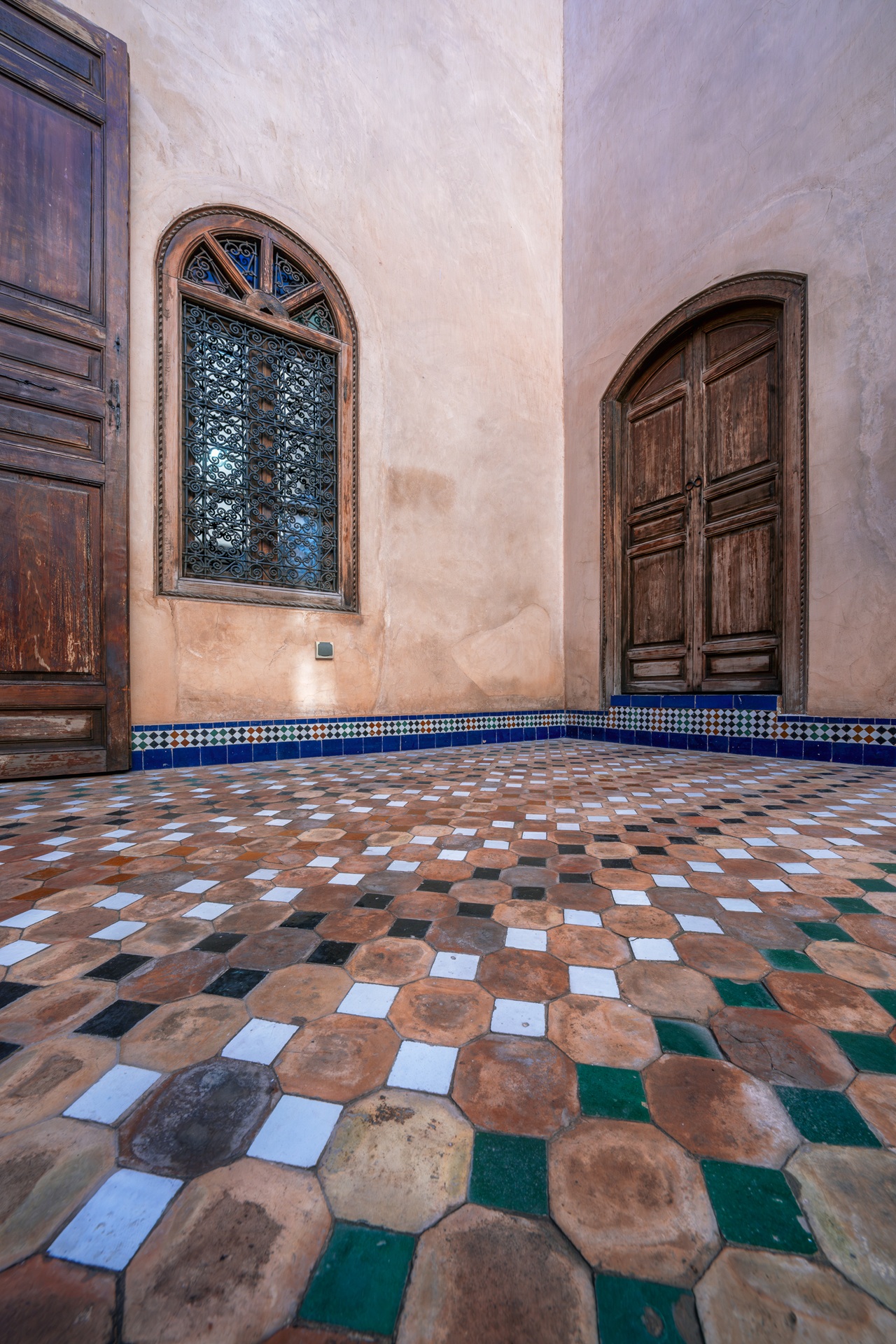
Madrasa Ben Youssef