

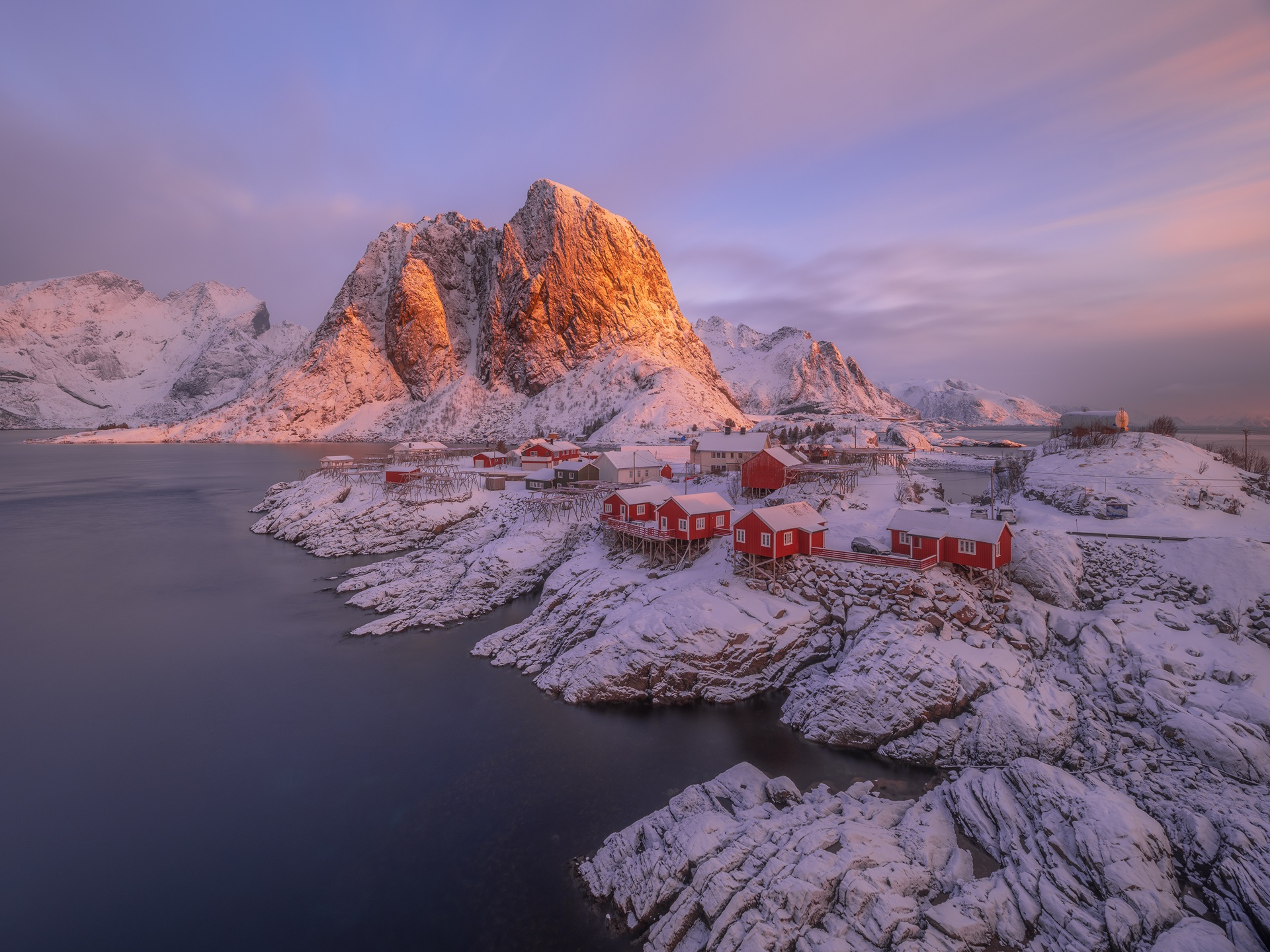
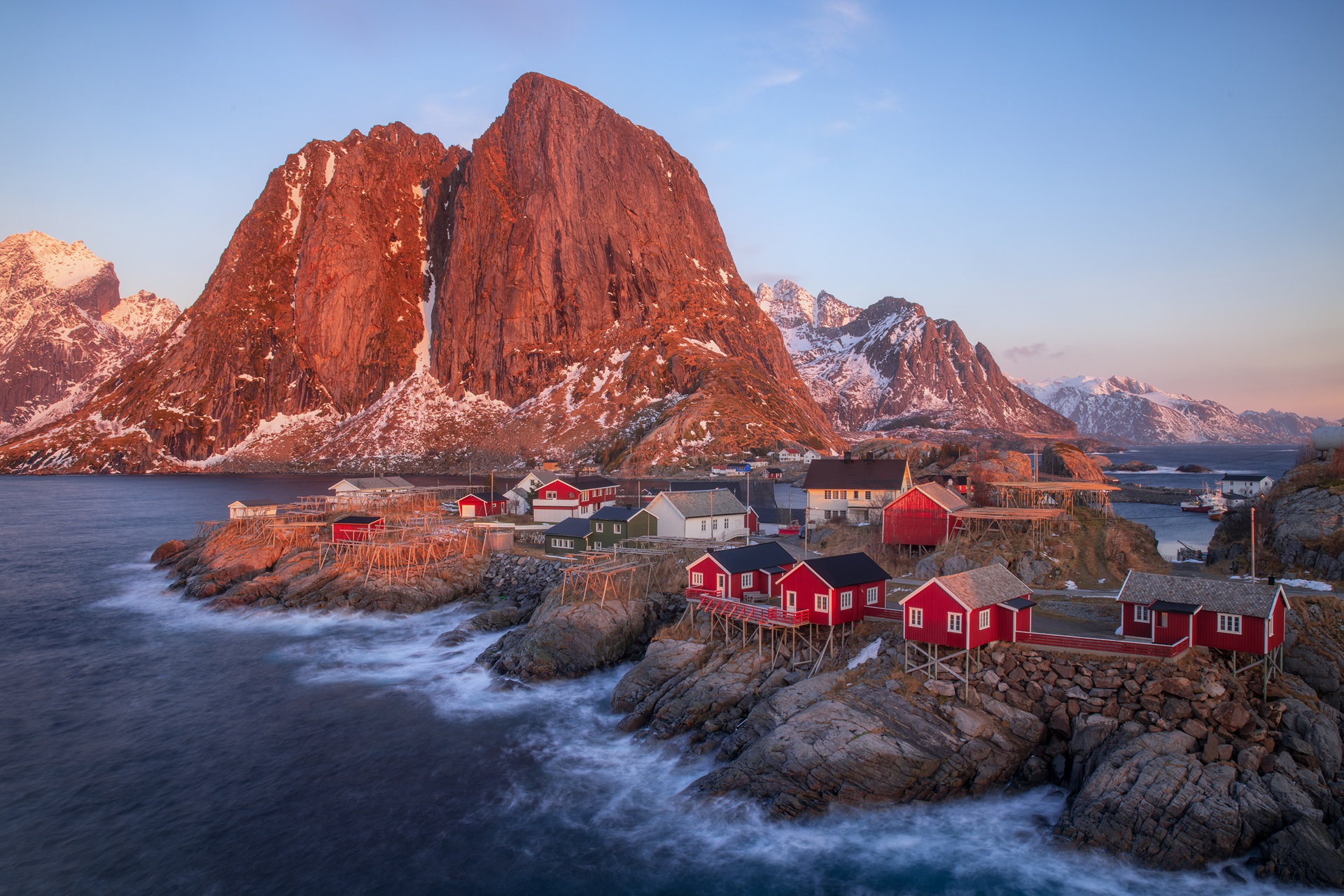
This image captures the iconic landscape of Reine, a picturesque village in the Lofoten Islands, photographed during the serene blue hour. Reine was named “the most beautiful village in Norway” by Allers, the country’s largest weekly magazine, in the late 1970s. The scene embodies everything that defines Lofoten — the classic red cabins, dramatic mountains, and deep fjords of Arctic Norway. These brightly painted seaside wooden cabins, mostly red and yellow, are called rorbuer. Traditionally, they served as seasonal housing for fishermen working in one of the world’s richest cod fishing grounds — a tradition dating back to around the year 1100. Although the fishery remains active today, most of these cabins have been transformed into cozy accommodations for travelers.
Despite being one of the most photographed spots in Norway, with hundreds of images taken here daily, truly exceptional photos from Reine are surprisingly rare. Many believe that it is impossible to take a bad shot in such a location, but this could not be further from the truth. Creating a high-quality image requires a deep understanding of the location, light, weather, and composition, as well as refined technical and post-processing skills. Great photography is far more than buying a plane ticket to Norway and pressing the shutter.
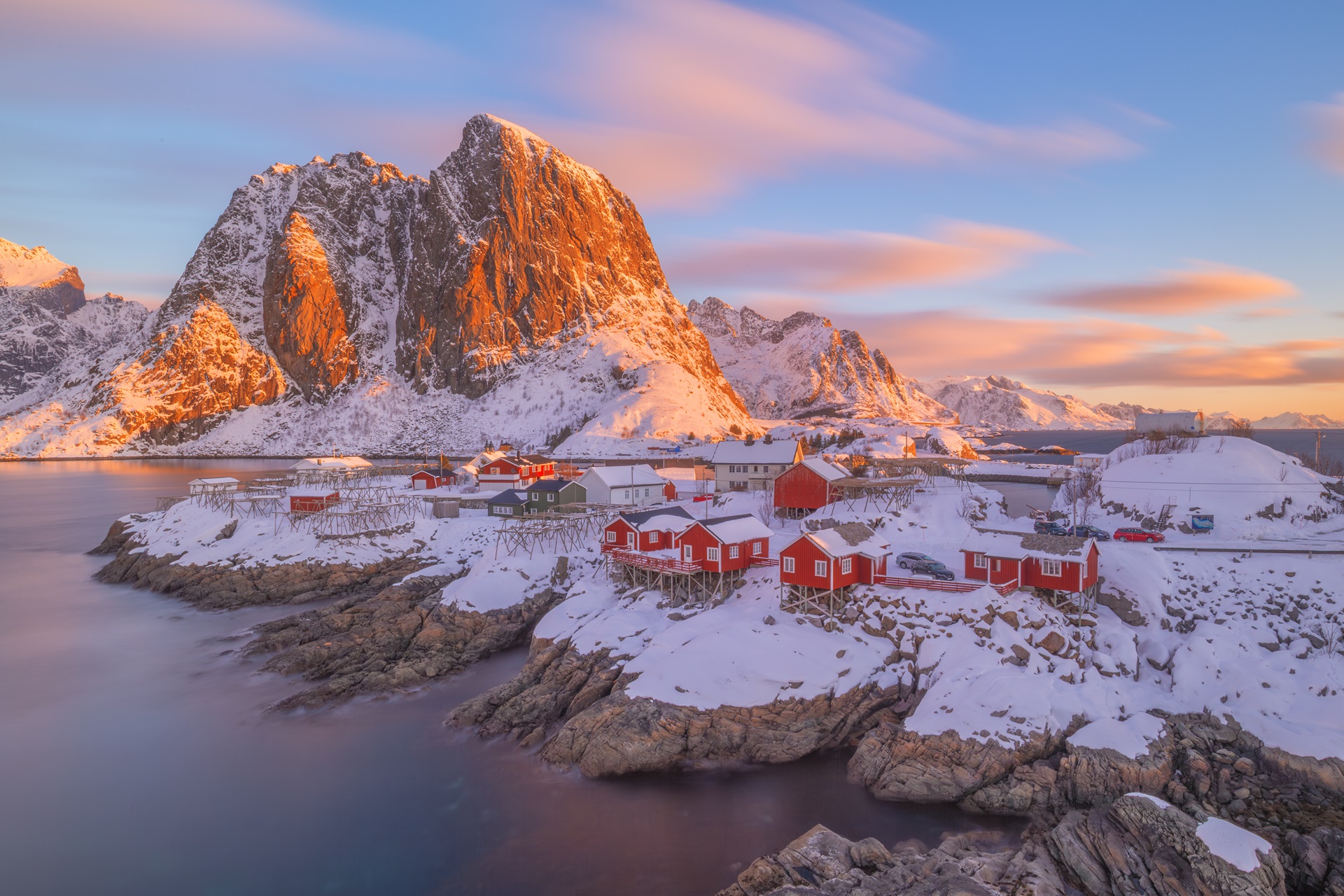
Good light can be found during sunrise, sunset, or blue hour, but the direction and quality of light change dramatically with the seasons. In winter, sunrise during golden hour brings side light from the right, while sunset gives side light from the left. Side lighting is my favorite because it creates highlights and shadows that enhance the three-dimensional form of the mountains.
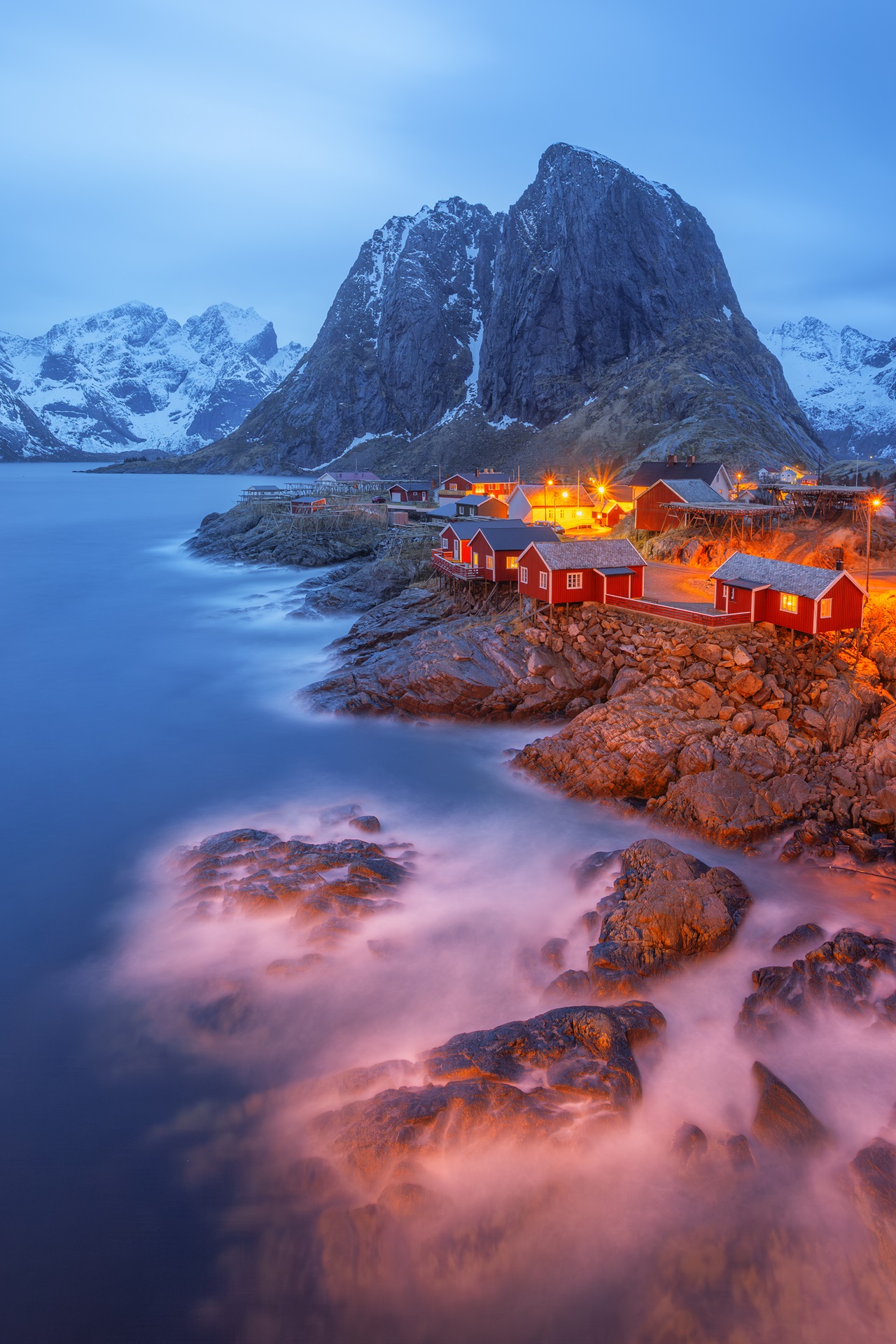
Blue hour, on the other hand, offers a moody atmosphere where the cool blue tones beautifully contrast with the warm red of the rorbuer and the soft streetlights that cast warm reflections on the rocks and water.
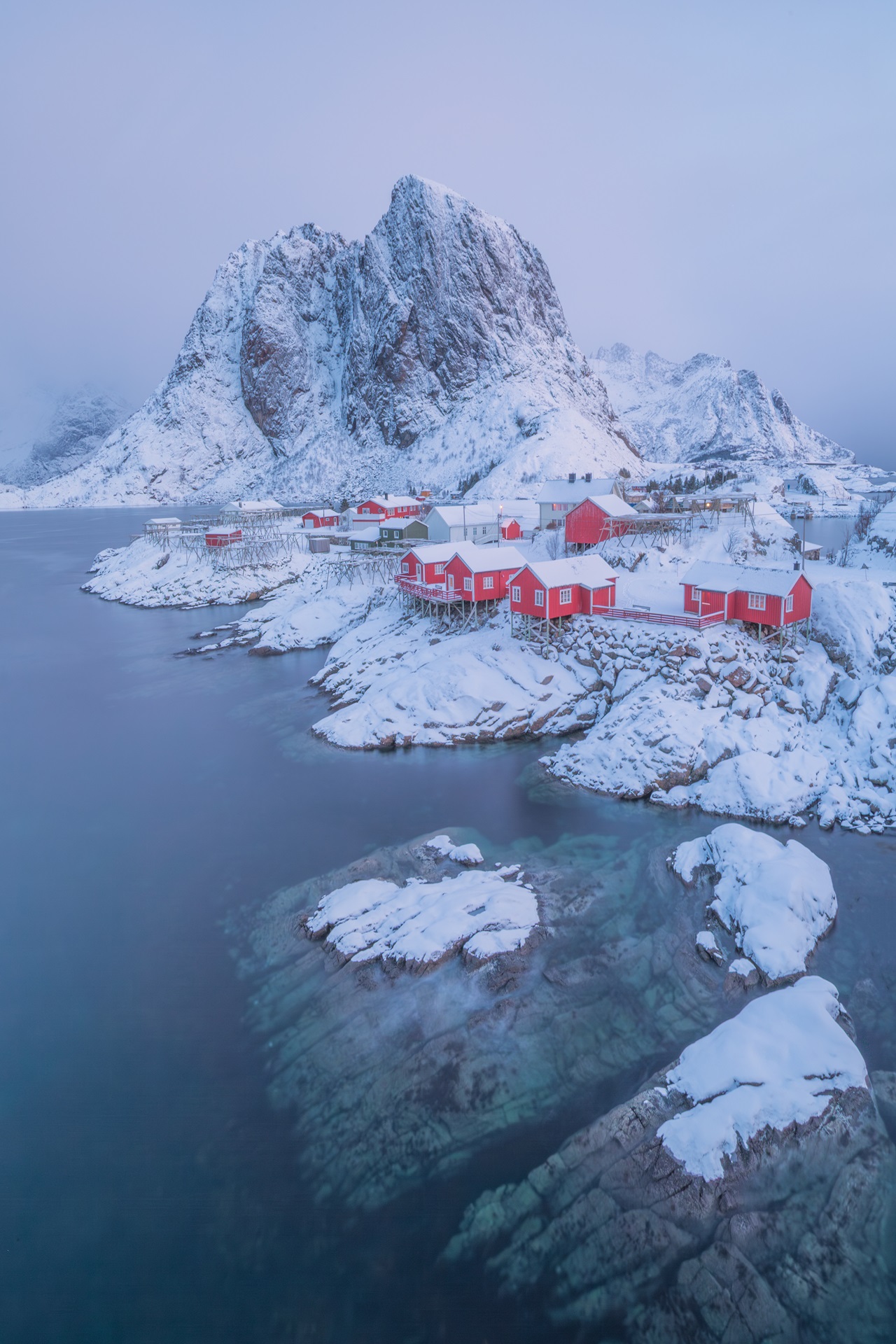
The soft light of an overcast day, together with the gentle snow, evokes a deep sense of serenity and calm.
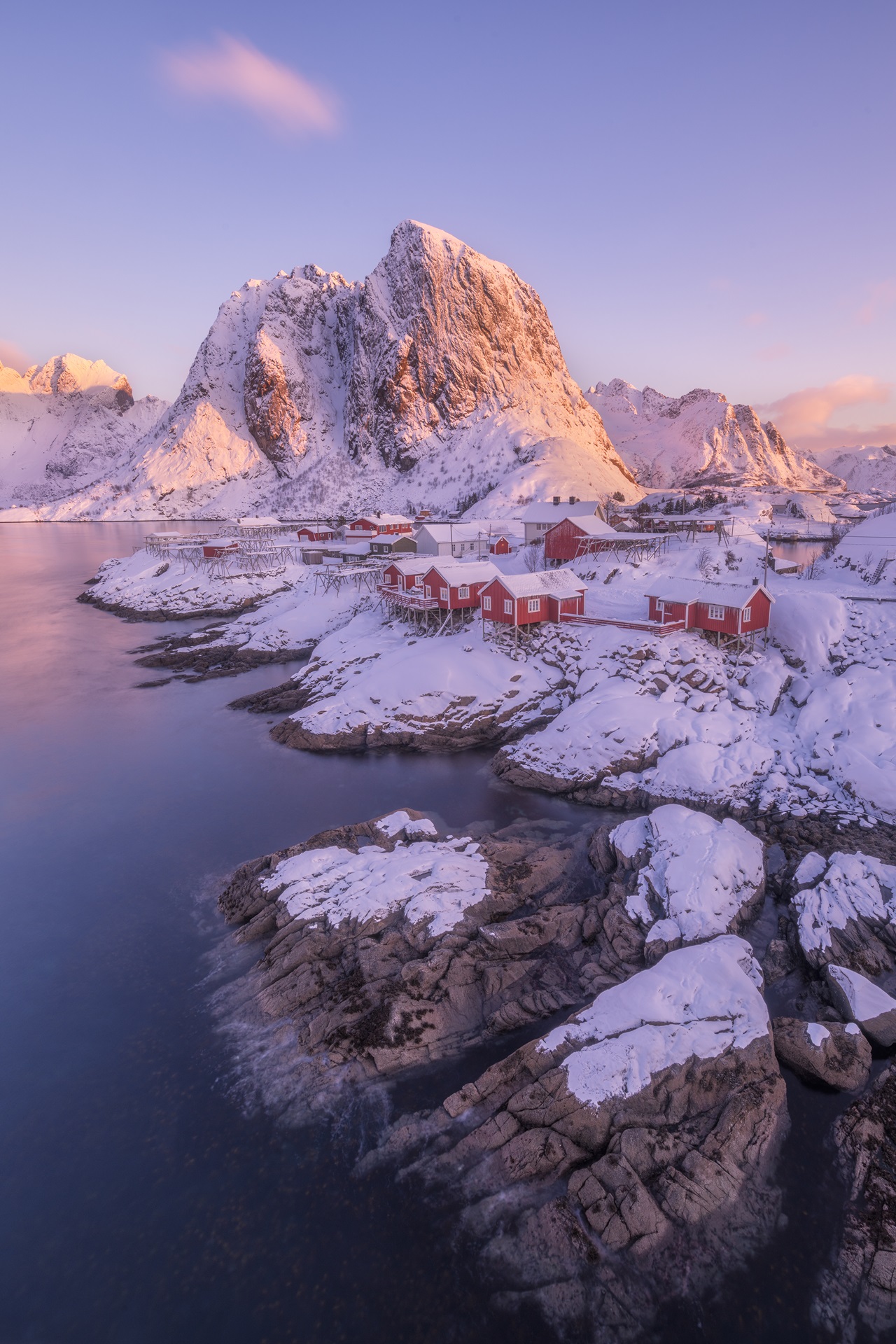
Lofoten consists of multiple islands connected by bridges, facing the Atlantic Ocean and influenced by the Gulf Stream. Although it lies at a high latitude, it’s not as cold as one might expect. However, the weather is highly unpredictable — clouds, wind, rain, and snow sweep in rapidly from the ocean. Because of strong winds and steep mountain slopes, snow does not always remain on the peaks, and the same applies to the rocks near the sea. If you want a pristine snow-covered landscape like the one shown here, visit right after a heavy snowfall, ideally the following morning at sunrise. Snow transforms the dark rock faces into natural reflectors, glowing in golden light. Without snow, the dark rocks tend to absorb light, resulting in a flatter image. If you also want snow on the foreground rocks, look for calm water, low tide, and fresh snow from the previous night.
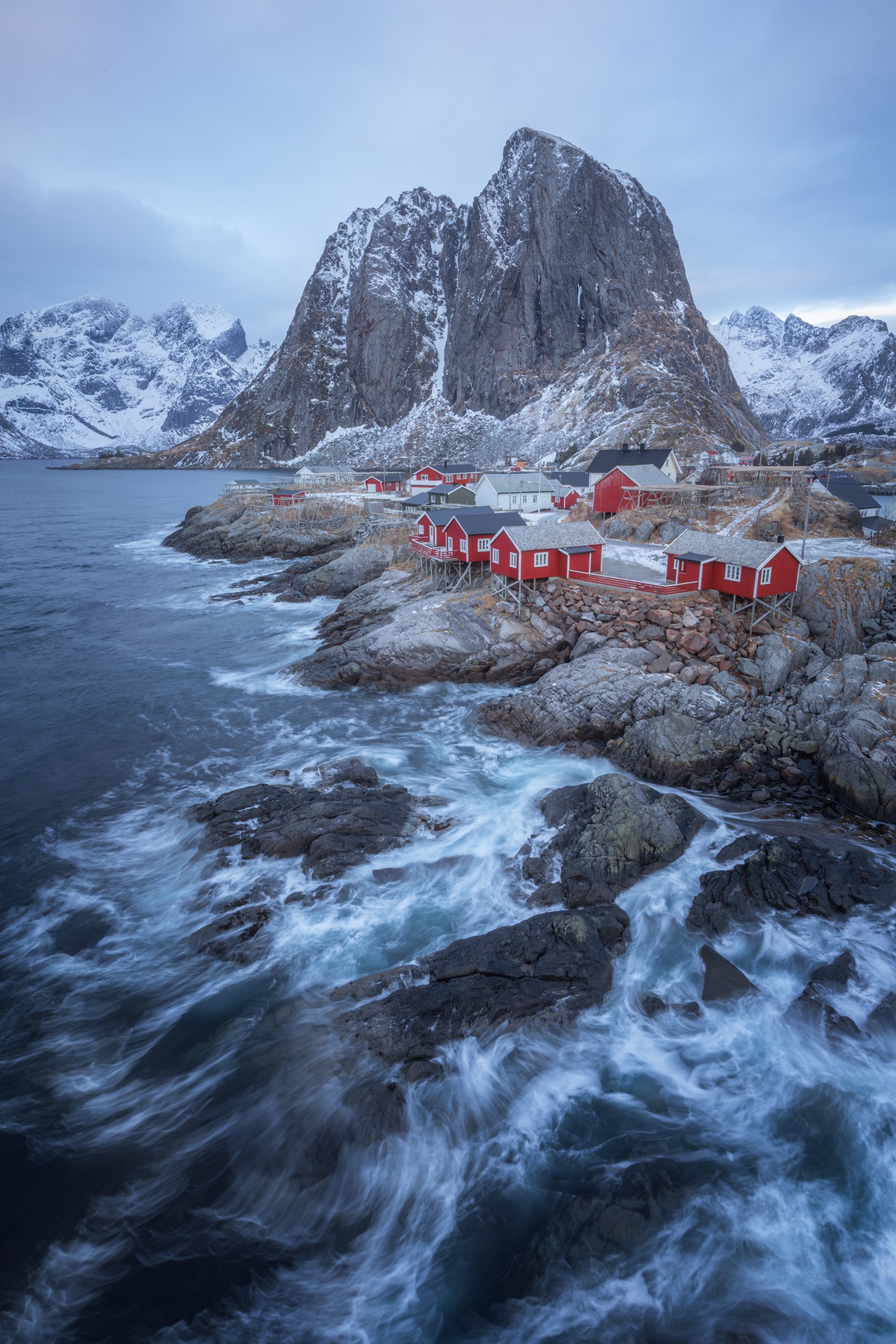
Depending on wind conditions, the water in Reine can range from glass-calm to ferociously choppy. For a clean and minimalist look, use long exposure to smooth the water, removing distracting ripples and simplifying the composition. For a more dynamic scene, try an exposure of 0.5–1 second to capture wave motion, adding energy and movement. The same principle applies to the sky: long exposures emphasize cloud motion, adding a sense of flow and dynamism, while shorter exposures keep the focus on the current moment. Both approaches can work, it depends on your artistic intent.
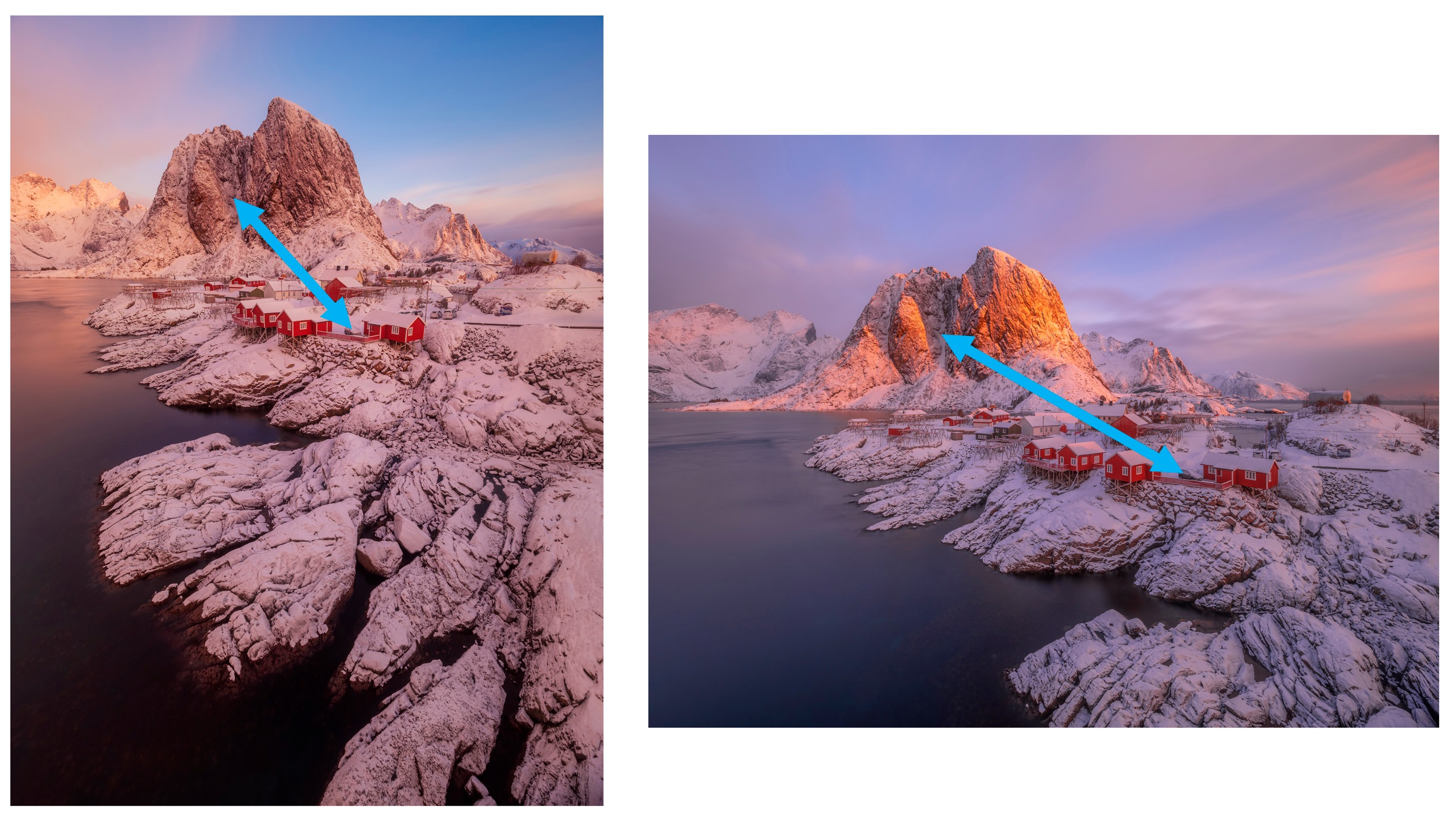
One of the most overlooked factors at this location is camera position and perspective. The classic viewpoint is from the bridge connecting Hamnøy and Toppøya, but even small changes in your position can make a big difference. Standing on the right side of the bridge aligns the mountain and red cabins vertically, perfect for a portrait orientation that includes the snowy rocks in the foreground. Shooting horizontally from here often leaves too much empty space on one side. From the left side of the bridge, the mountain and cabins spread farther apart, making it better suited for landscape orientation. In landscape photography, such subtle positional shifts can completely alter composition — always move around and test different perspectives. Many photographers overlook this step, even experienced ones.
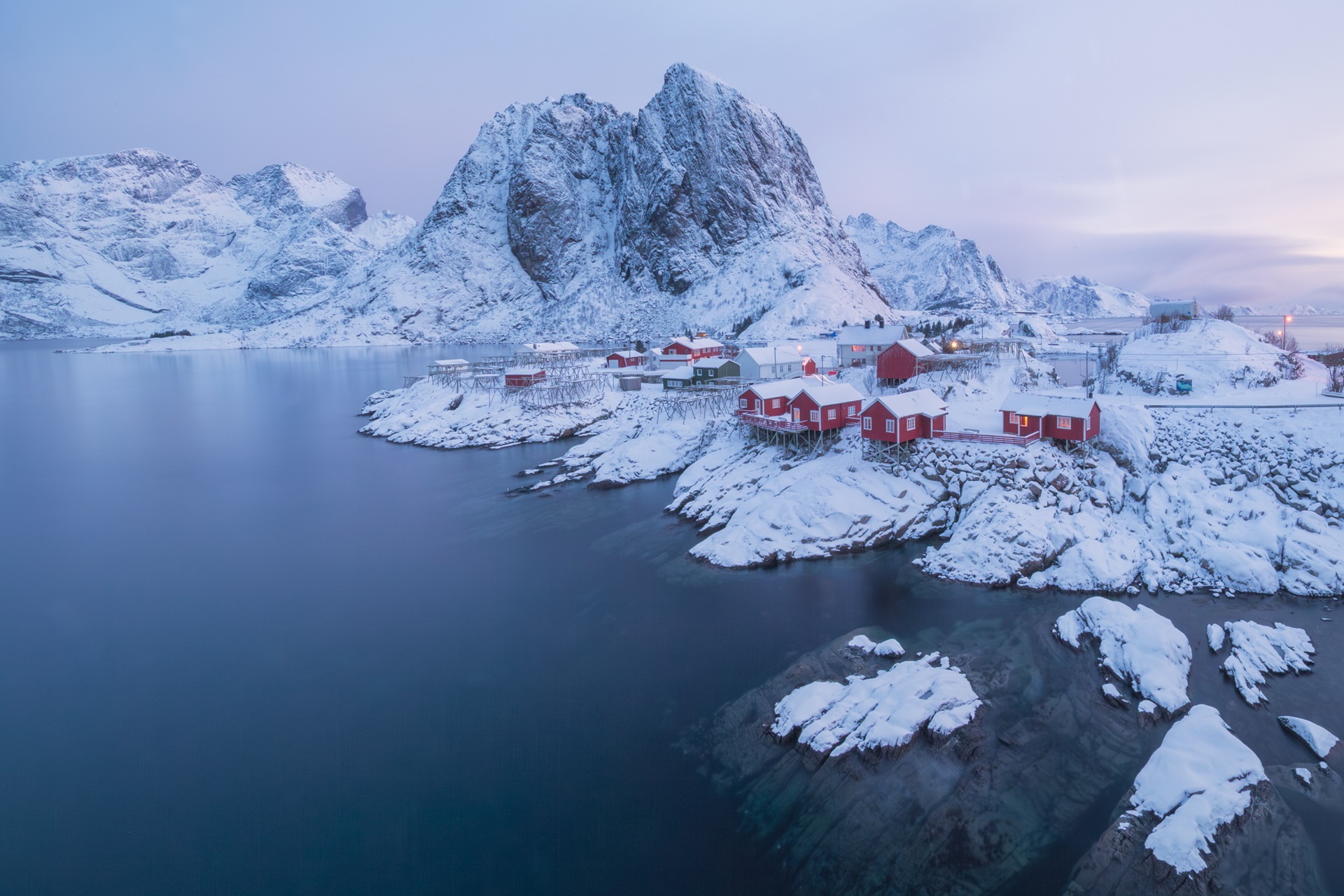
Even in such a beautiful location, nature presents a few compositional challenges. The main mountain, Festhelltinden, dominates the frame, creating a strong visual weight on one side with little to balance it. Lower mountain ranges extend toward the left, but the right side feels comparatively empty. Similarly, in the foreground, the cabins and rocks occupy one side, while the opposite side is mostly open water. This makes it difficult to achieve balanced visual weight from the iconic viewpoint.
One solution is to zoom in on the mountain and cabins to fill the frame and achieve harmony.
Another is to photograph the scene after a heavy snowfall and at low tide, when the snow-covered rocks in the lower right corner visually counterbalance the mountain on the upper left.
Another approach is to use the clouds to fill the empty space in the upper right, balancing the composition against the mountain. In this image, I used a long exposure to create streaks of moving clouds, adding motion and dynamism while simultaneously filling that open area.
Even in the most photographed places on Earth, great images do not happen by accident. Without understanding the location, weather, light, composition, and technique, you might end up with a nice postcard, but not a “wow” photograph. Mastery comes from patience, observation, and knowing not just where to shoot — but when and how.