

Ksar Jdid is a traditional settlement in the Ziz Valley of southeastern Morocco, surrounded by extensive date palm groves and rugged desert plateaus. The name Ksar Jdid means “new fortified village” in Arabic. Its traditional earthen architecture reflects the vernacular building techniques of southern Morocco, where locally sourced earth and mud bricks help regulate indoor temperatures in the harsh desert climate. Agriculture, particularly date palm cultivation, is an important part of local life, sustained by water from the Ziz River.
We spent a few hours exploring Ksar Jdid, and I would like to share four of my images and explain why they appeal to me from a compositional perspective. None of these images were staged. They capture genuine moments of everyday life, combining spontaneous human activity with carefully considered photographic composition.
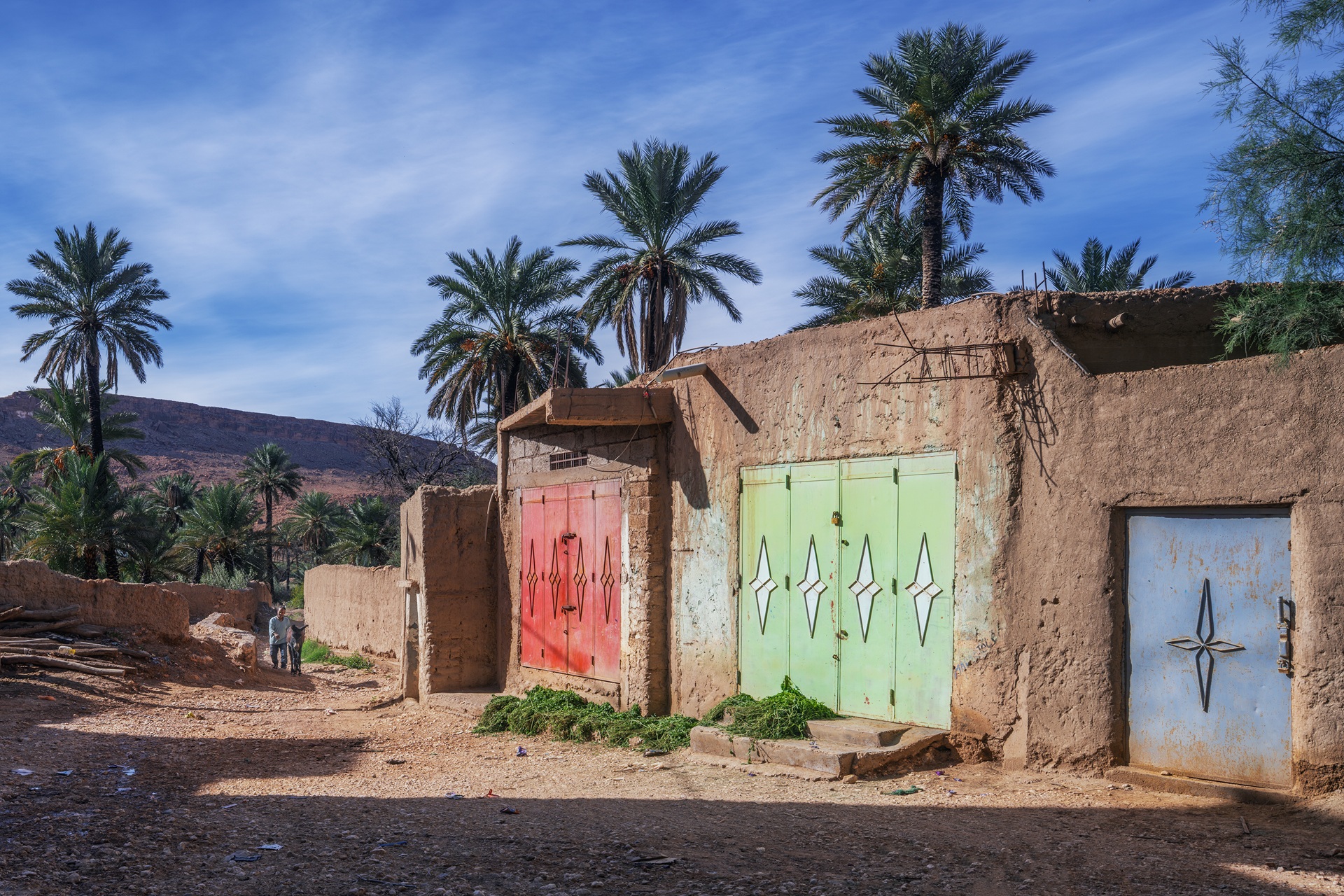
Repetition, Color, and Visual Balance
The three colorful doors form the primary geometric elements of this composition. Their rectangular shapes and repeating diamond motifs establish visual rhythm, while variations in size and color prevent the repetition from becoming monotonous. The red, green, and blue doors stand out against the relatively neutral tones of the earthen walls. The vertical lines of the palm trees complement the rectangular architecture, while their organic shapes contrast with the rigid geometry of the doors. The receding pathway on the left introduces depth, and a villager walking with his donkey provides another point of interest, offering a glimpse into everyday life in Ksar Jdid. Their placement on the left also counterbalances the visual weight of the buildings on the right, creating an asymmetrically balanced composition. These three photographs demonstrate how different compositional techniques can be applied to everyday scenes without staging or interfering with the environment. The challenge is to recognize the visual potential of a scene, find the right perspective, and capture the moment when the human element complements the composition. In travel and documentary photography, observation, anticipation, and timing are just as important as the principles of composition itself.
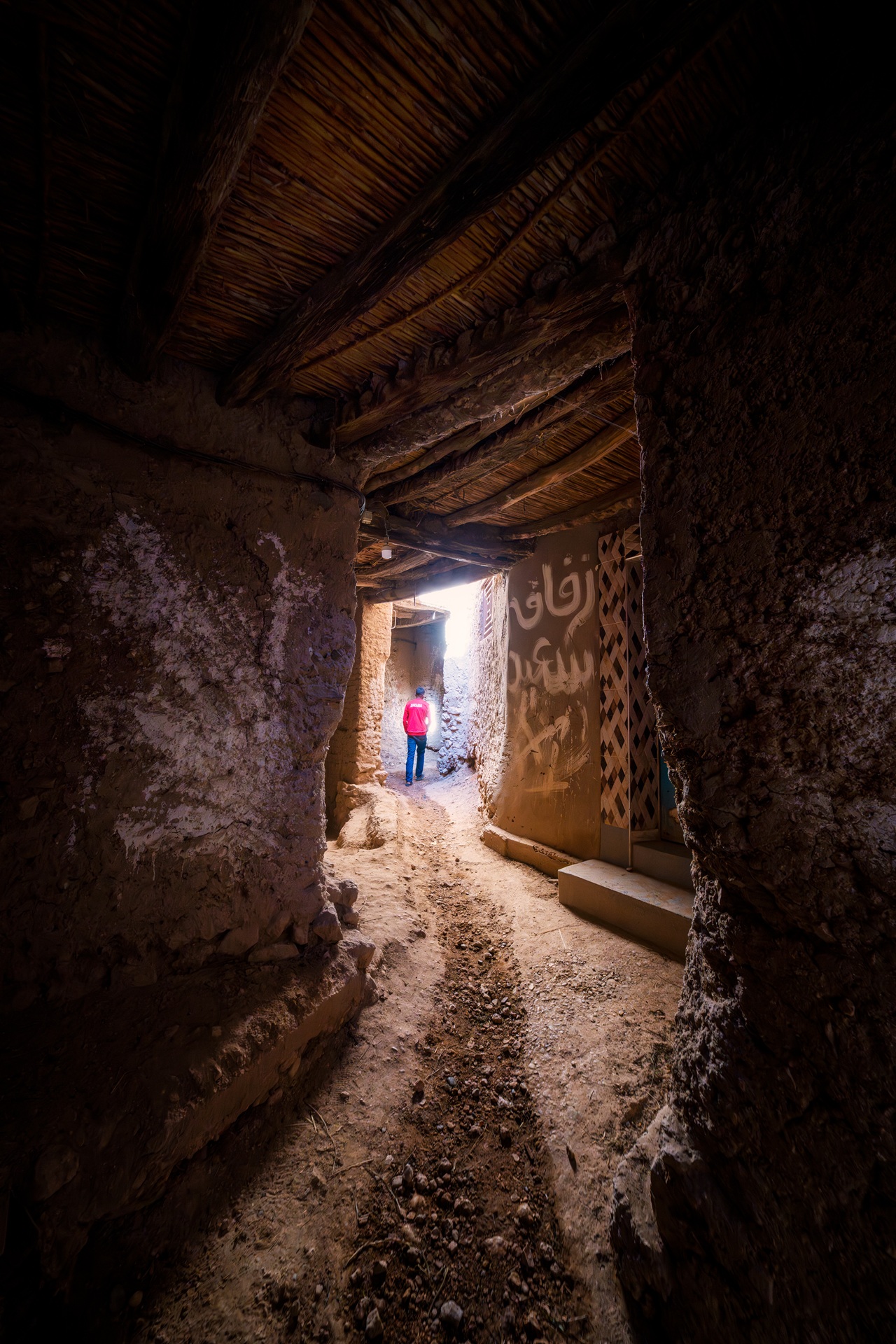
Leading Lines and Light Contrast
The narrow passageway creates a natural arrangement of leading lines. The wooden ceiling beams, earthen walls, and uneven pathway converge toward the illuminated opening, guiding the viewer’s eyes through the composition. The strong contrast between light and shadow establishes a clear visual hierarchy. A boy wearing a bright red shirt and walking through the alley becomes the focal point through both color and placement. His red shirt stands out against the predominantly earthy tones of the surroundings. The surrounding darkness simplifies the composition while preserving the textures of the traditional earthen architecture. This combination of perspective, tonal contrast, and color contrast creates depth, atmosphere, and a sense of movement through the image.
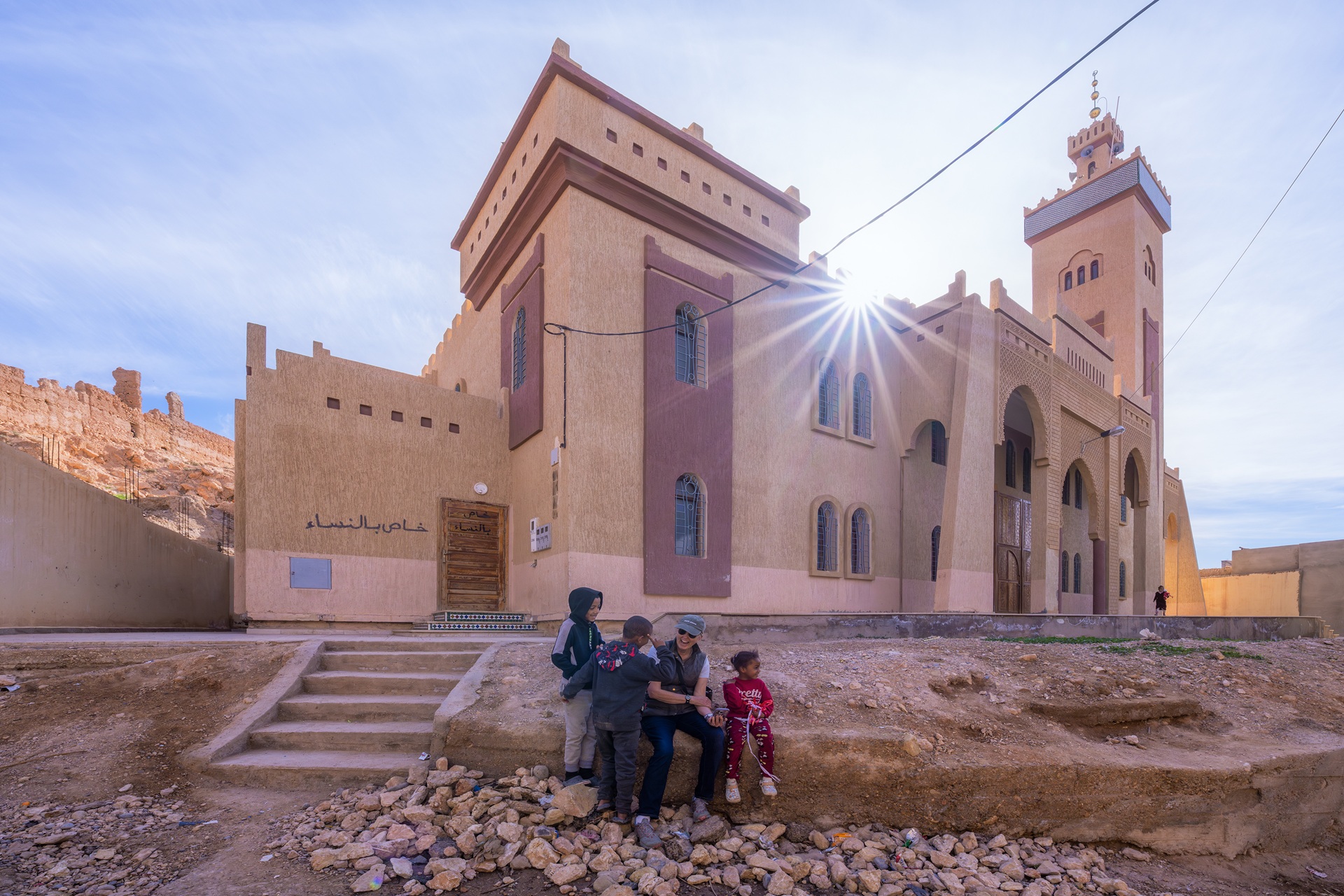
Human Interaction and Environmental Context
One of our photography workshop participants was having a wonderful time interacting with the local children in front of the mosque in Ksar Jdid. Rather than interrupting their spontaneous interaction, I positioned myself to incorporate both the human element and the surrounding architecture into the composition. I carefully adjusted my camera position so that the sun was partially obscured by the edge of the mosque’s roof, creating a sunburst effect. Using a small aperture enhances this effect through the diffraction of light around the aperture blades, producing radiating lines that add visual interest and energy to the image. The wide-angle perspective emphasizes the scale of the mosque while retaining the environmental context. The placement of the group in the lower portion of the frame establishes a sense of scale and creates a visual relationship between the people and the architecture. The sunburst introduces a secondary focal point, balancing the human interaction below. What makes this photograph appealing to me is the combination of architectural composition, creative use of natural light, and genuine human interaction. While the moment itself was spontaneous, the composition was deliberate, demonstrating how careful observation and camera positioning can enhance the visual storytelling of an unstaged scene.
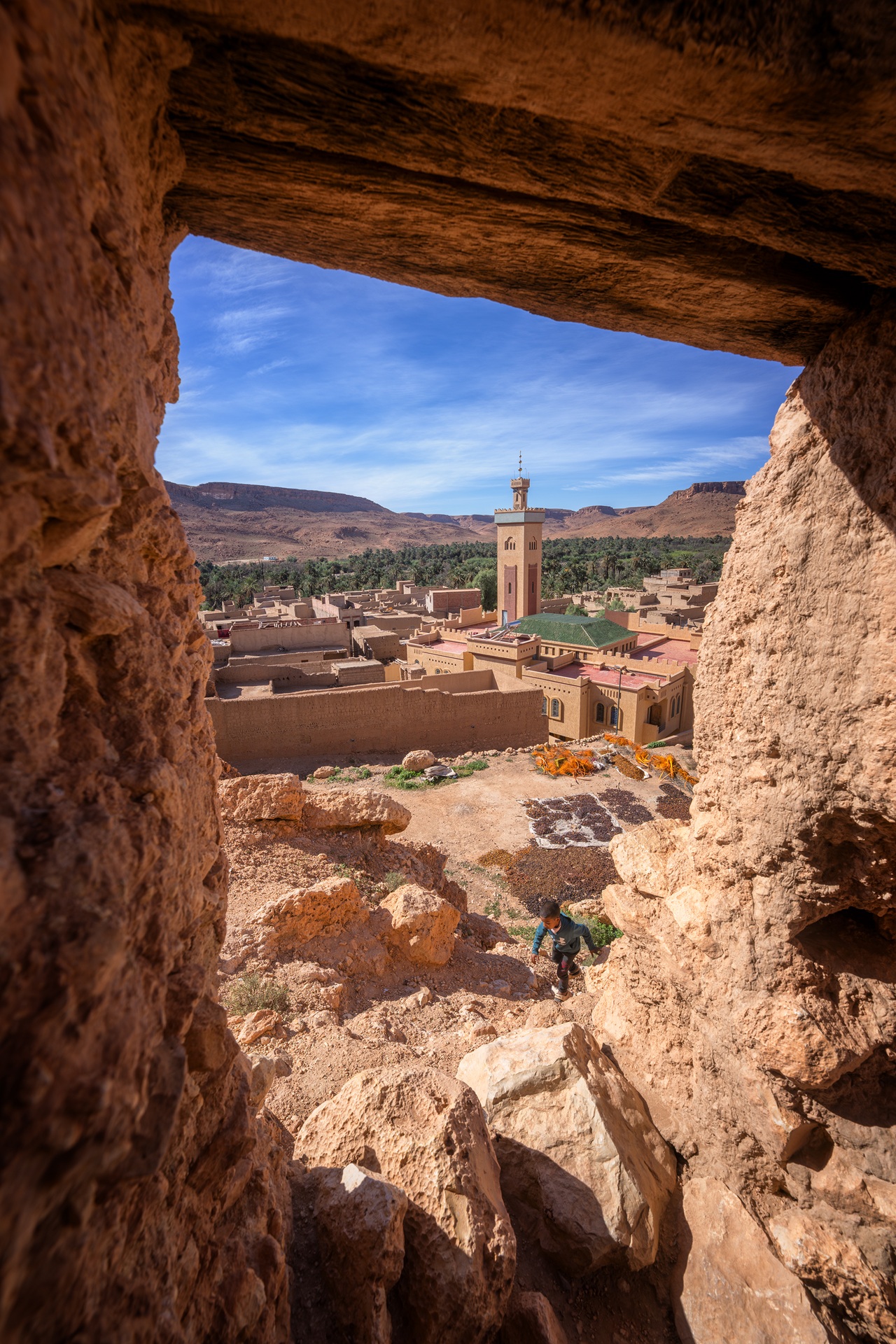
Frame Within a Frame
The opening in the weathered earthen structure creates a natural frame around the village of Ksar Jdid. This compositional technique, known as frame within a frame, directs the viewer’s attention toward the mosque and its minaret while reducing distractions around the main subject. The foreground rocks, village buildings, palm groves, and distant mountains establish multiple layers of depth, creating a strong sense of three-dimensional space. The contrast between the shaded foreground and the sunlit village further emphasizes the subject, while the warm earthy tones complement the blue sky. The presence of a child walking up introduces a subtle narrative element, adds a sense of scale, and brings life to an otherwise static architectural composition.