

Located in southeastern Morocco, Erg Chegaga is one of the country’s largest and most remote sand dune fields. Unlike the more accessible dunes of Erg Chebbi near Merzouga, Erg Chegaga requires an off-road journey across rocky desert plains and dry lakebeds. Stretching approximately 25 miles, its vast landscape is characterized by towering sand dunes continuously shaped by the wind.
For centuries, camel caravans traveled across the Sahara, connecting Morocco with sub-Saharan Africa through ancient trade routes carrying gold, salt, textiles, and spices. The dromedary camel, with its remarkable adaptation to the harsh desert environment, remains an enduring symbol of Saharan culture and nomadic traditions.
From a photographic perspective, one of the most fascinating characteristics of the Sahara is the interplay of light and shadow. During sunrise and sunset, the low angle of sunlight illuminates one side of the dunes while leaving the opposite side in deep shadow. This dramatic contrast transforms the landscape into a series of abstract compositions, emphasizing the flowing curves, repetitive patterns, fine textures, and sculptural forms of the sand dunes.
What makes Erg Chegaga particularly rewarding for photography is its constantly changing appearance. As the sun moves across the sky, the same landscape reveals entirely different patterns, textures, and compositions. The dunes themselves become a natural canvas, continuously sculpted by wind and transformed by light.
The wind shapes the desert; the light reveals its beauty.
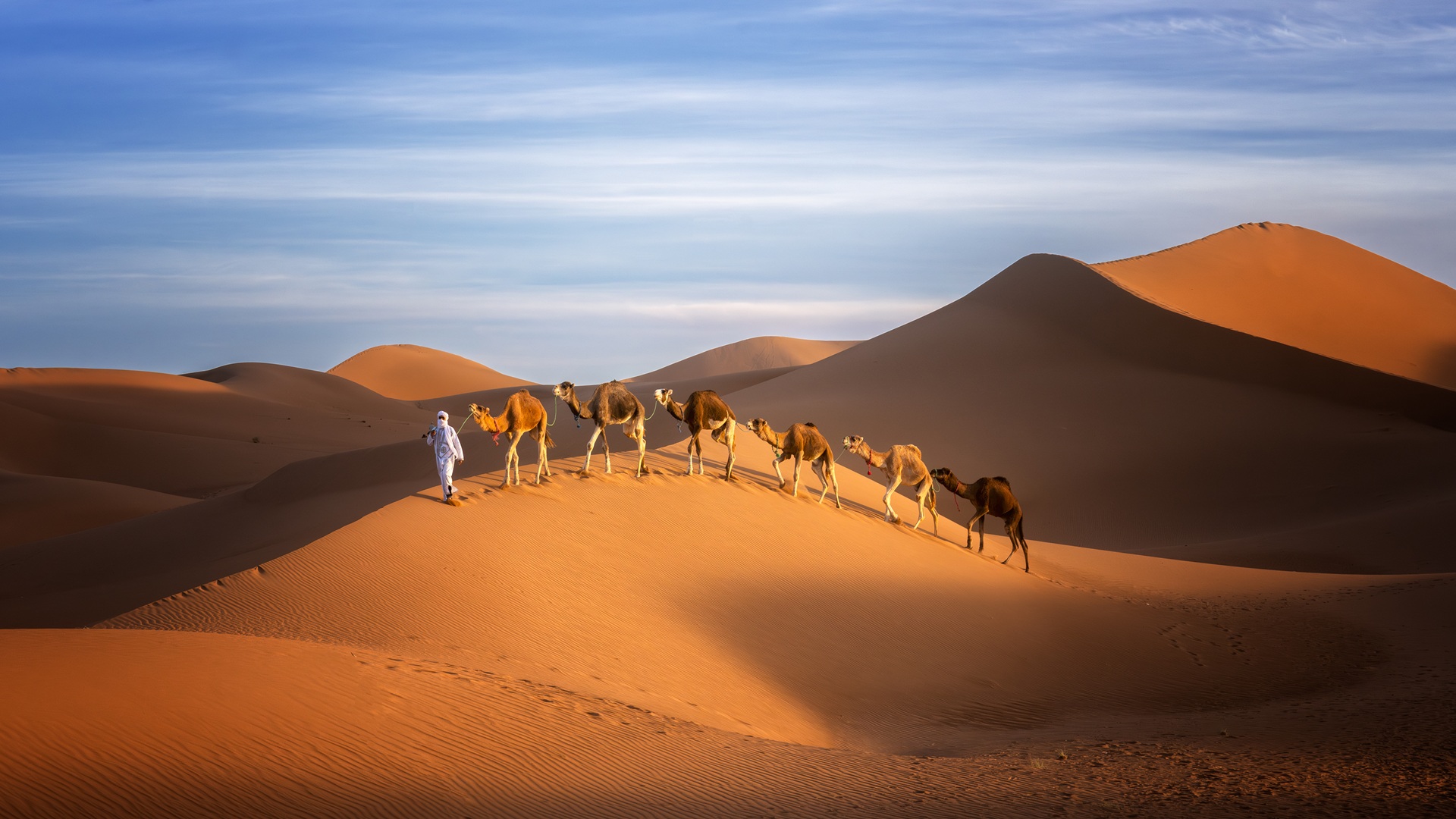
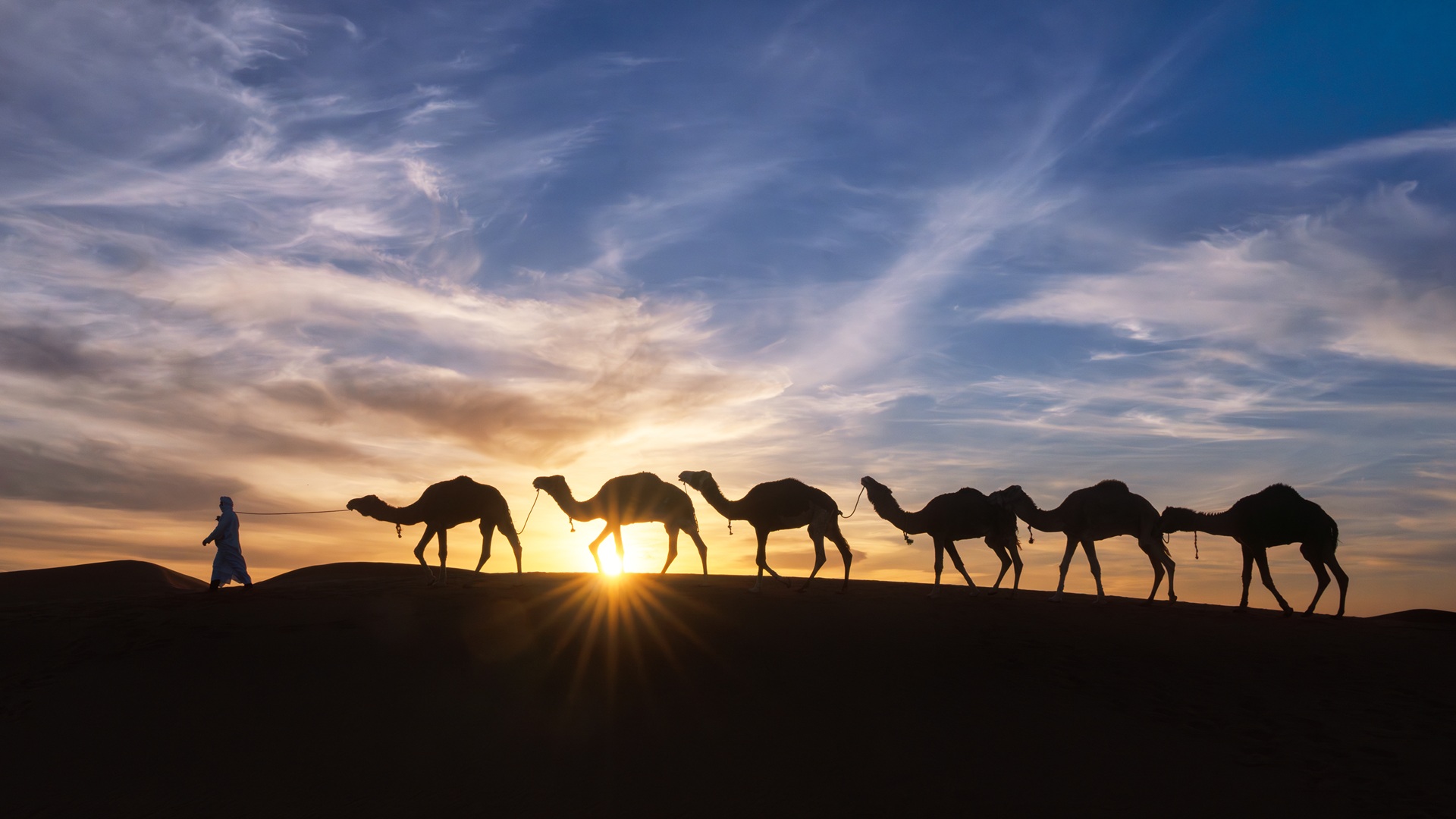
Introducing human and animal elements adds a different dimension to the portfolio. A camel caravan crossing the crest of a dune provides a sense of scale, visual rhythm, and cultural context. When photographed against the rising or setting sun, the silhouettes simplify the composition while emphasizing the distinctive forms of the camels and their relationship with the landscape.
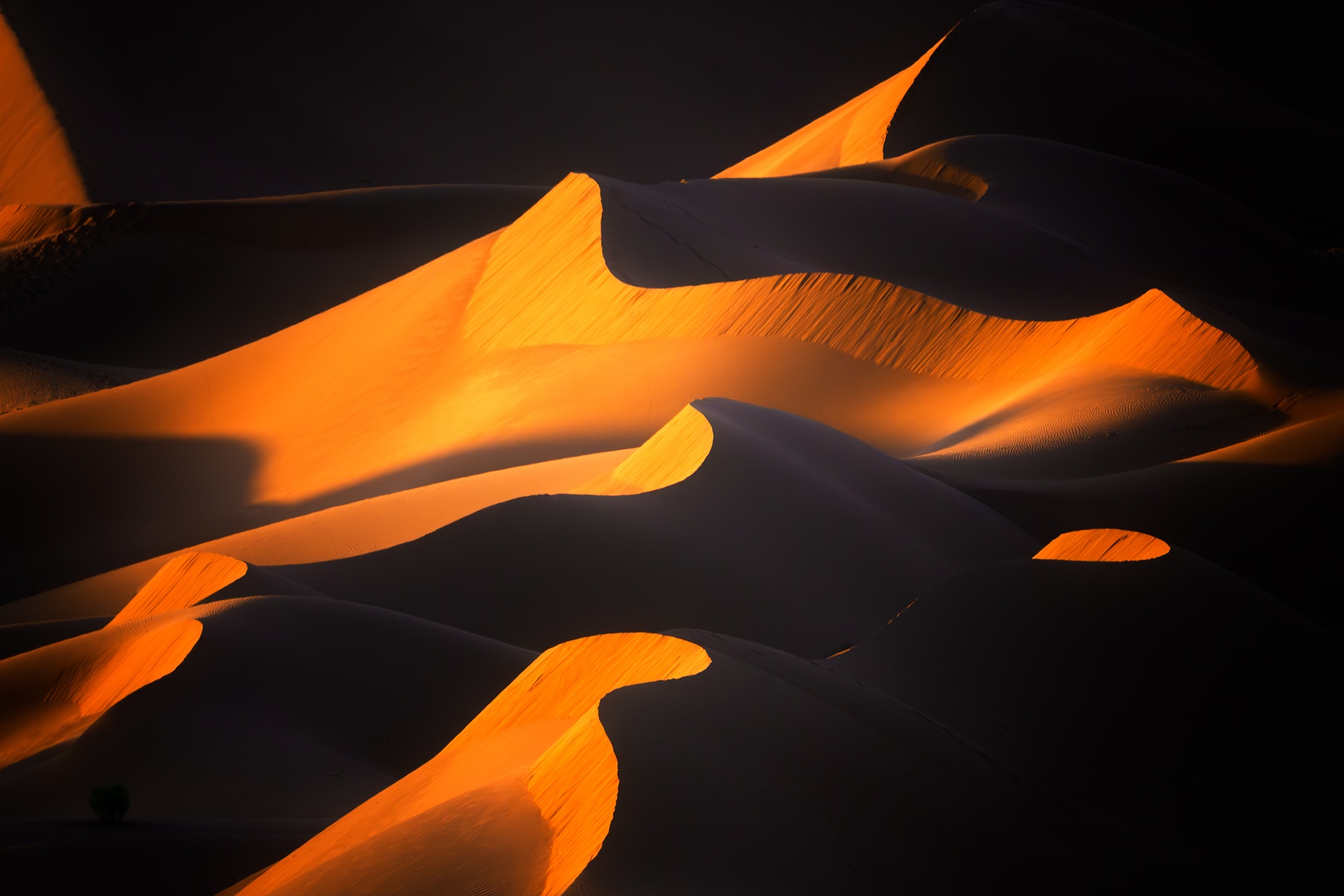
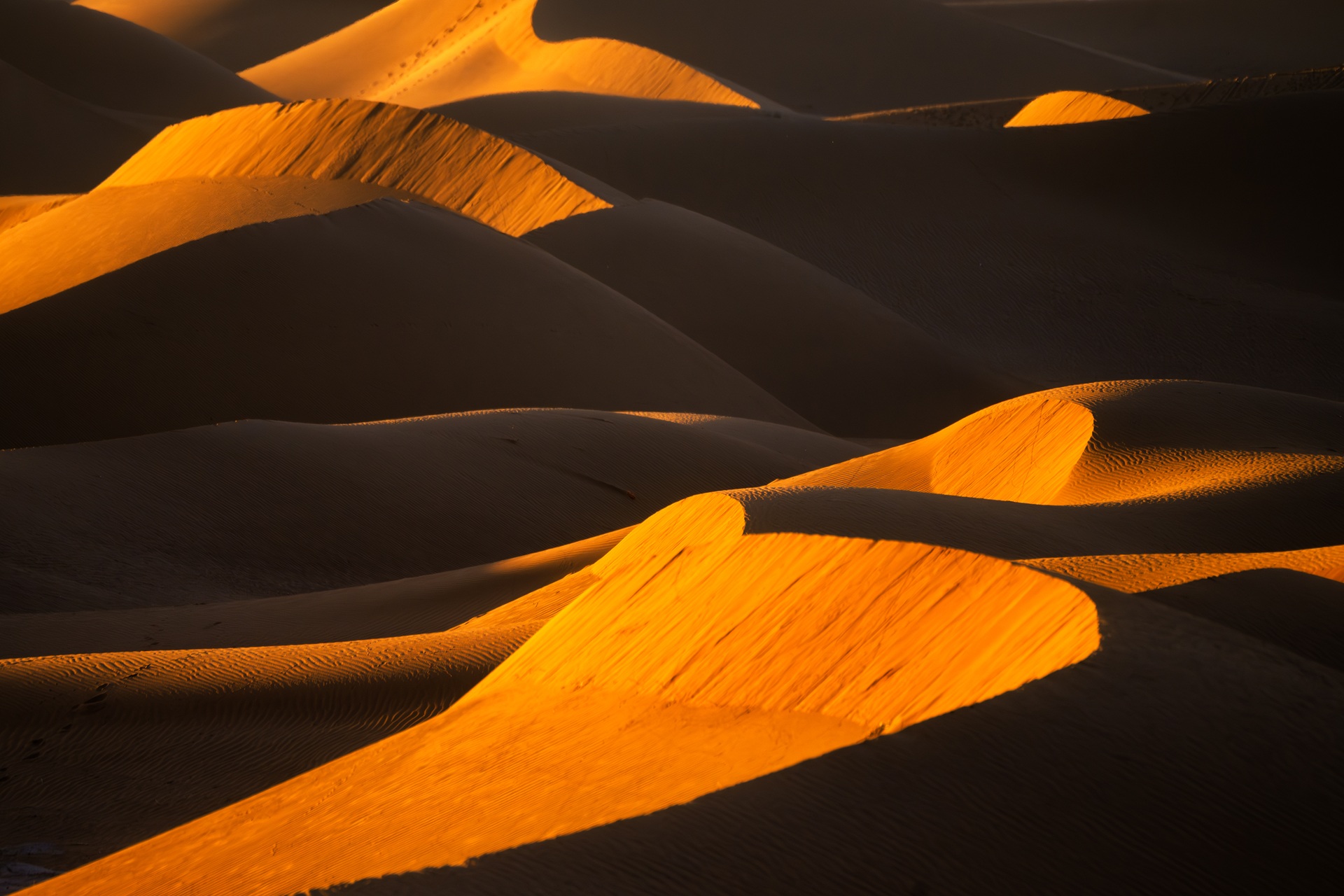
Unlike conventional landscape photography, where recognizable landmarks often serve as focal points, photographing sand dunes is largely about visual relationships. By isolating sections of the landscape with a telephoto lens, photographers can eliminate the horizon and surrounding distractions, creating compositions that resemble abstract paintings. The golden-orange tones against the deep shadows further enhance the sense of depth and dimensionality.
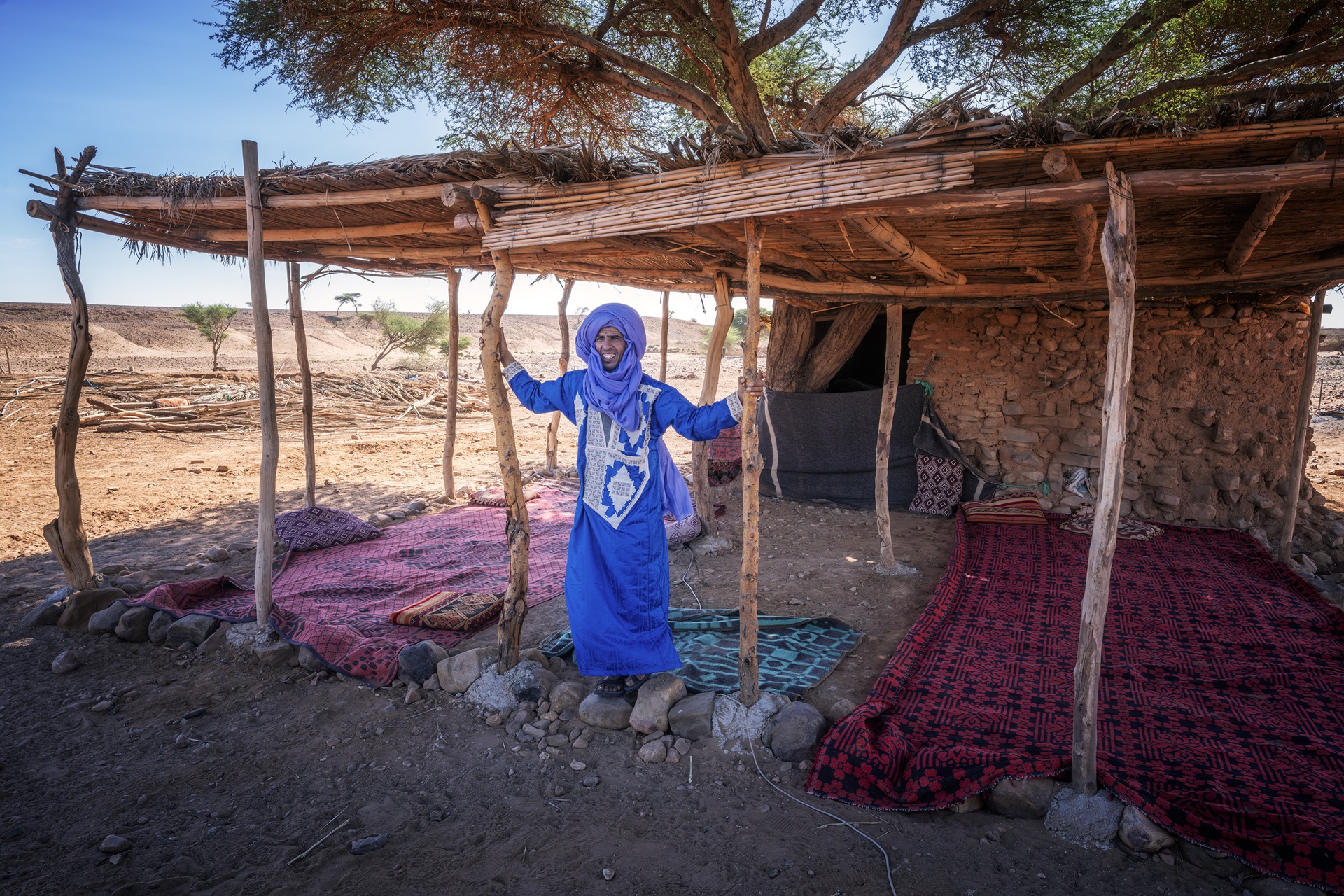
Beyond the dunes, traditional desert shelters, clothing, and everyday activities offer opportunities to document the relationship between people and their environment. The vibrant blue of traditional desert garments creates a striking color contrast against the warm, earthy tones of the Sahara.