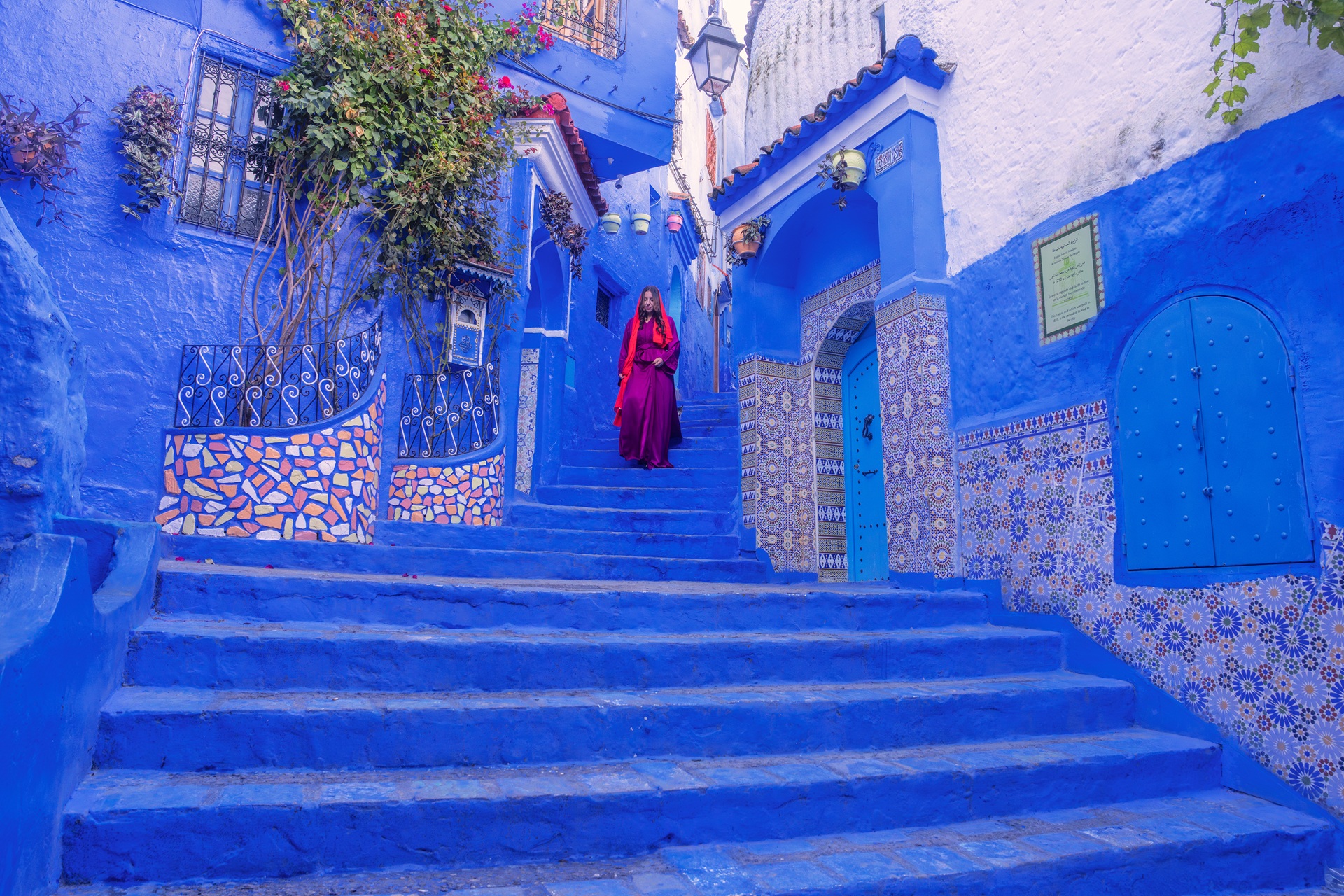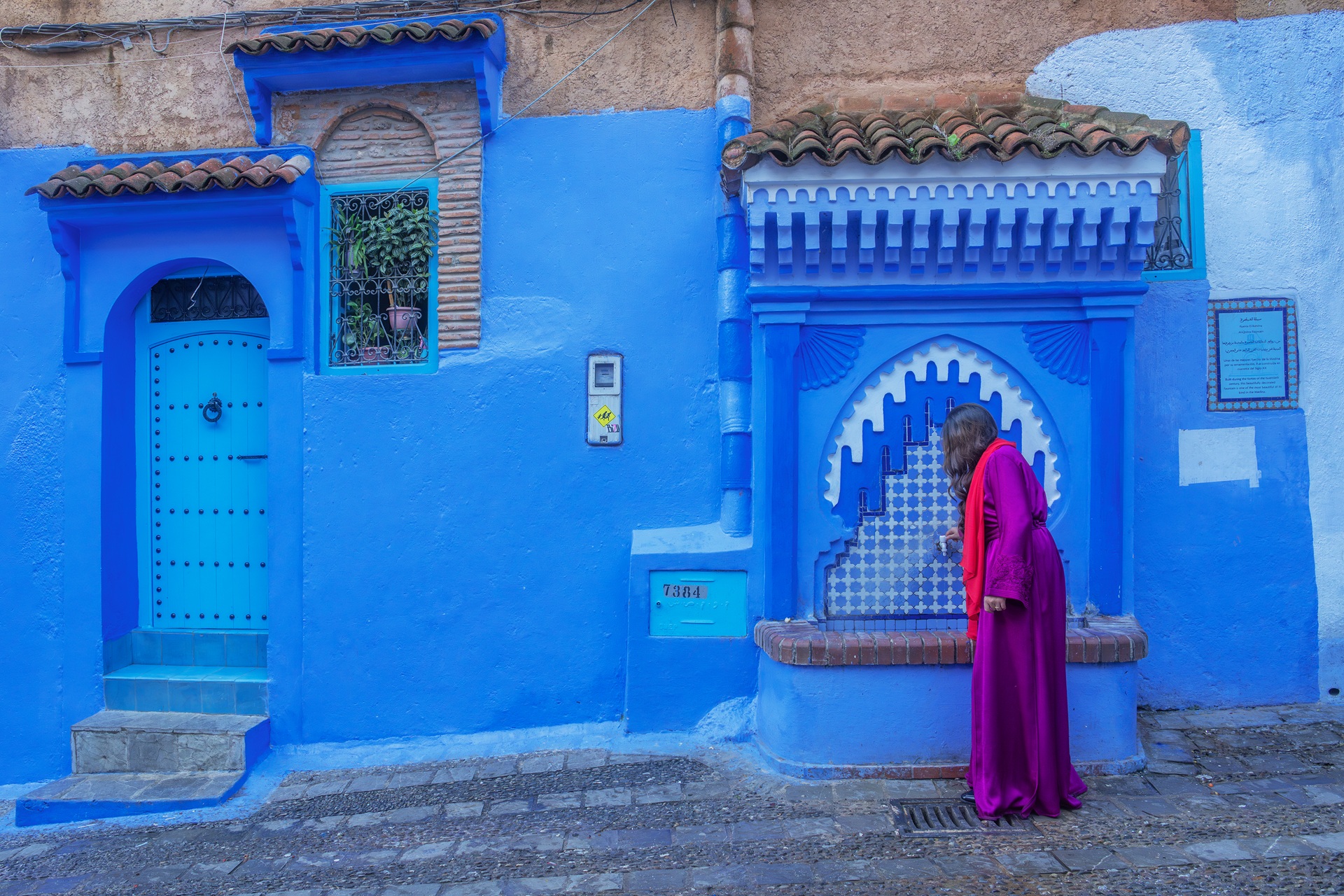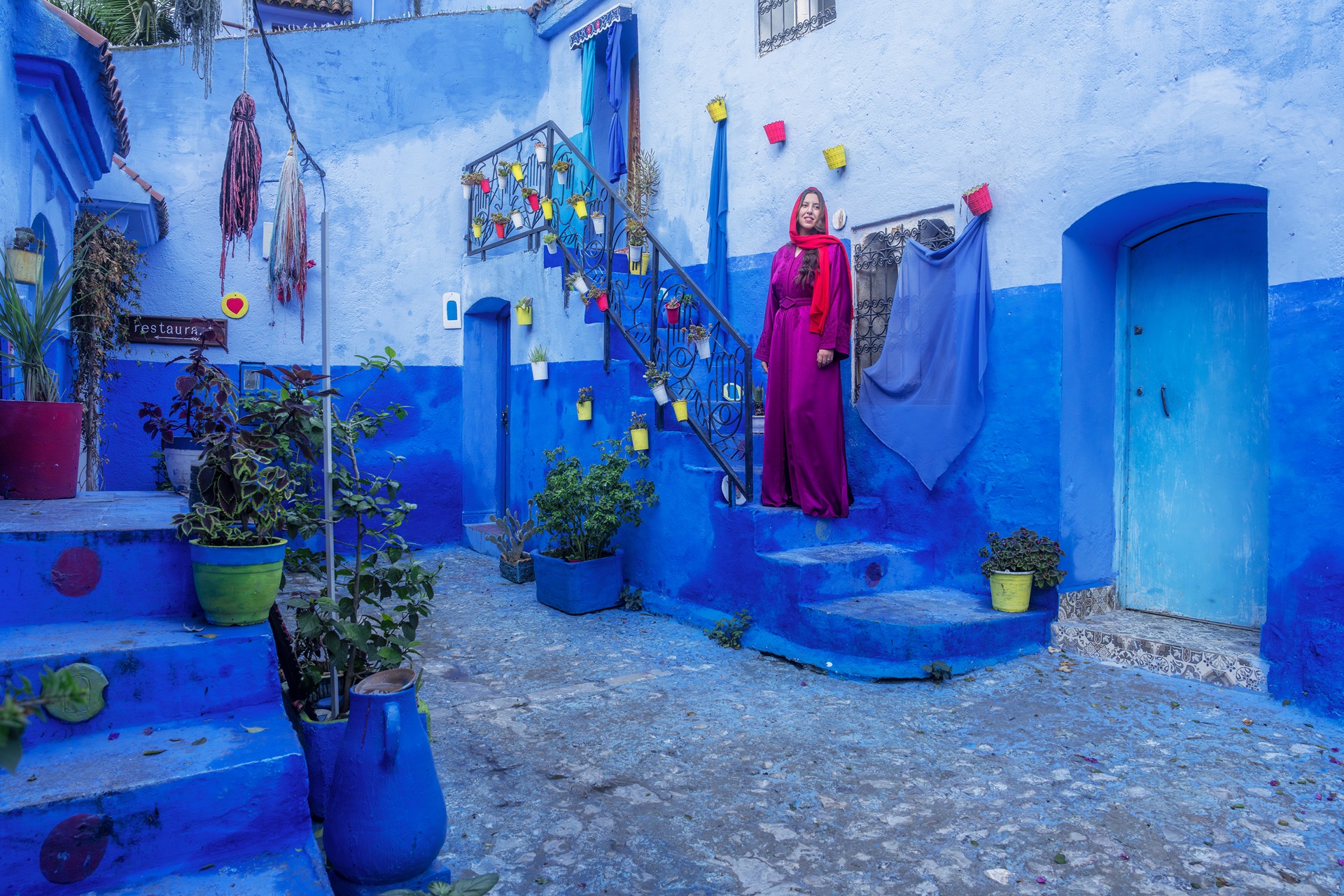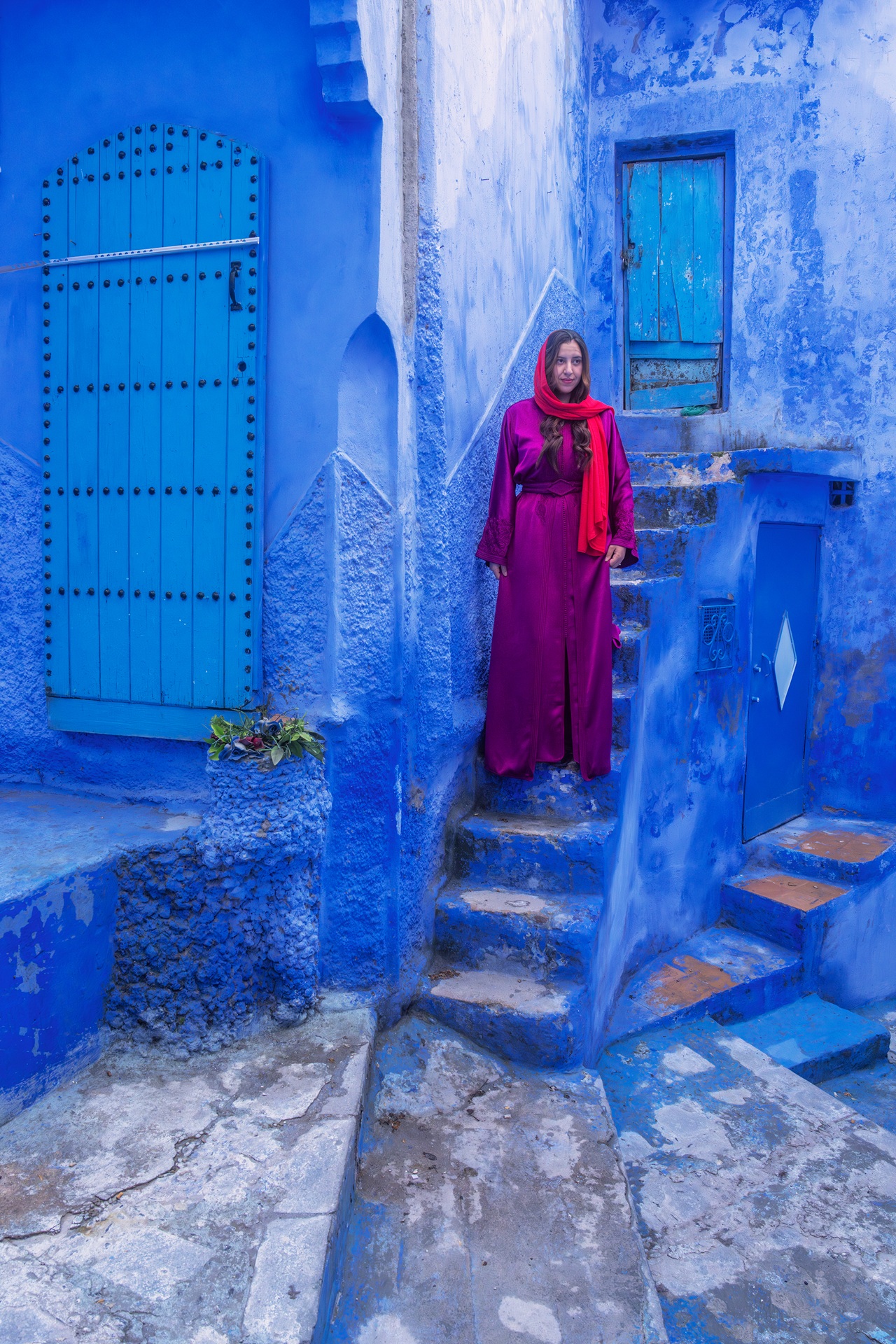

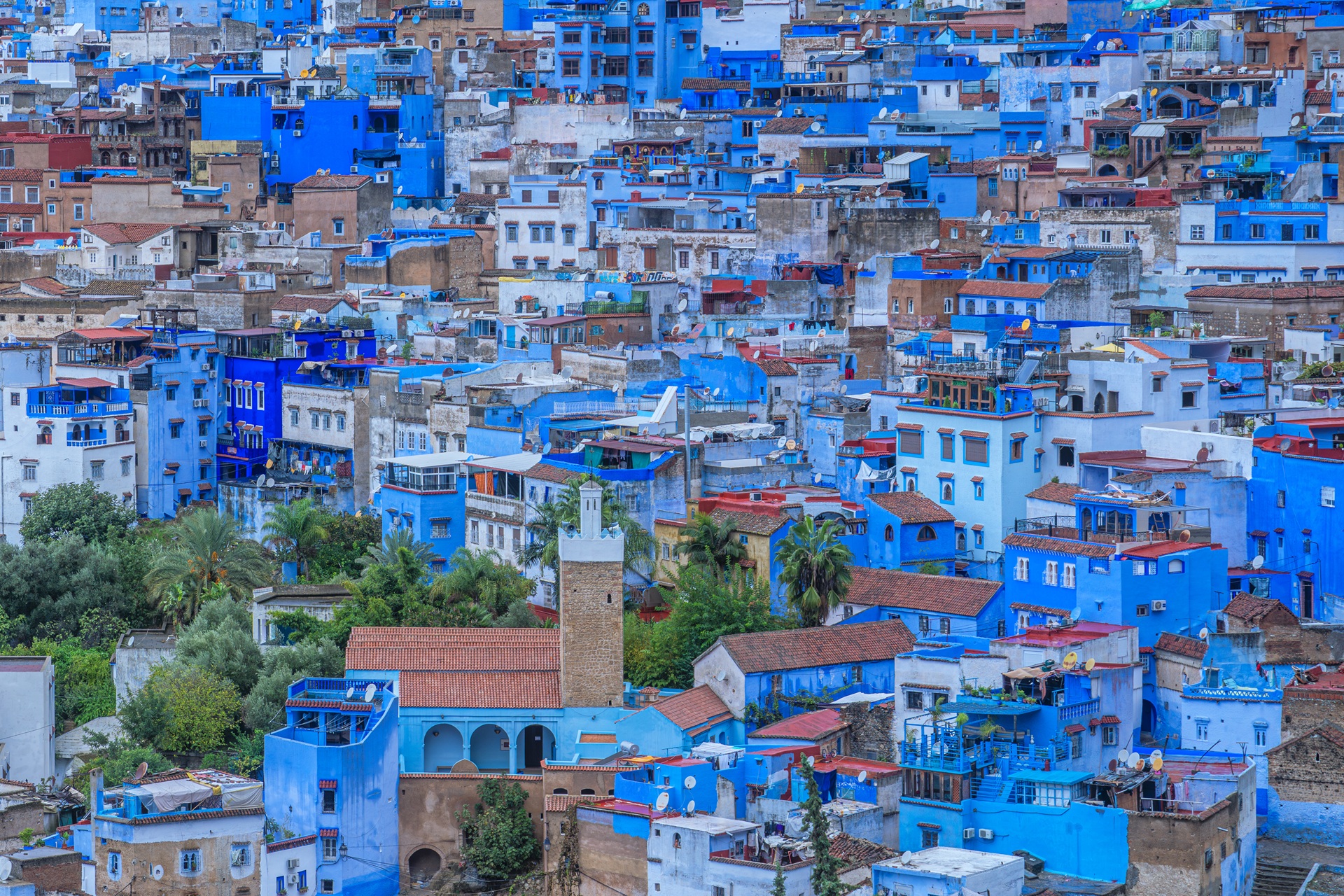
Chefchaouen, nestled in the Rif Mountains of northwestern Morocco, is a charming mountain city famously known as the “Blue City” or the “Blue Pearl of Morocco.” Founded in 1471, the city had a population of approximately 46,168 residents as of 2024. Located between Tétouan and Ouazzane, Chefchaouen is renowned for its enchanting blue-painted medina, narrow winding alleyways, and traditional architecture.
The exact origin of the blue tradition remains uncertain. One popular theory attributes it to Jewish residents who associated blue with the sky, heaven, and divinity. Other explanations suggest that blue was used to keep buildings cool or repel mosquitoes, although these claims lack strong scientific evidence. Founded in 1471, Chefchaouen was not originally entirely blue. The tradition expanded over the 20th century, and tourism has helped preserve and spread the distinctive blue appearance seen today.
Photographing in Chefchaouen is always fun. The vibrant blue walls, narrow alleyways, distinctive architecture, everyday life of the locals, and interactions between residents and tourists make the city an excellent place to practice street photography.
One of the challenges is finding a compelling composition that brings together colors, architectural elements, light, and shadows while incorporating people as an integral part of the image. The placement of a human figure, the color of their clothing, their gestures, and their direction of movement can significantly influence the visual balance and storytelling of an image.
Sometimes, it takes patience to wait for the perfect moment when someone walks into a carefully composed scene. Other times, it takes a little luck when an unexpected interaction or spontaneous moment unfolds within the frame. The key is to recognize the photographic potential of a scene, anticipate what might happen, and be ready to capture the moment when the visual elements come together.
The three photographs below are entirely unstaged. They illustrate how observation, composition, anticipation, timing, and sometimes a little luck come together in street photography. While we can control our composition, we cannot always control what happens within it, and that unpredictability is part of what makes street photography so enjoyable.
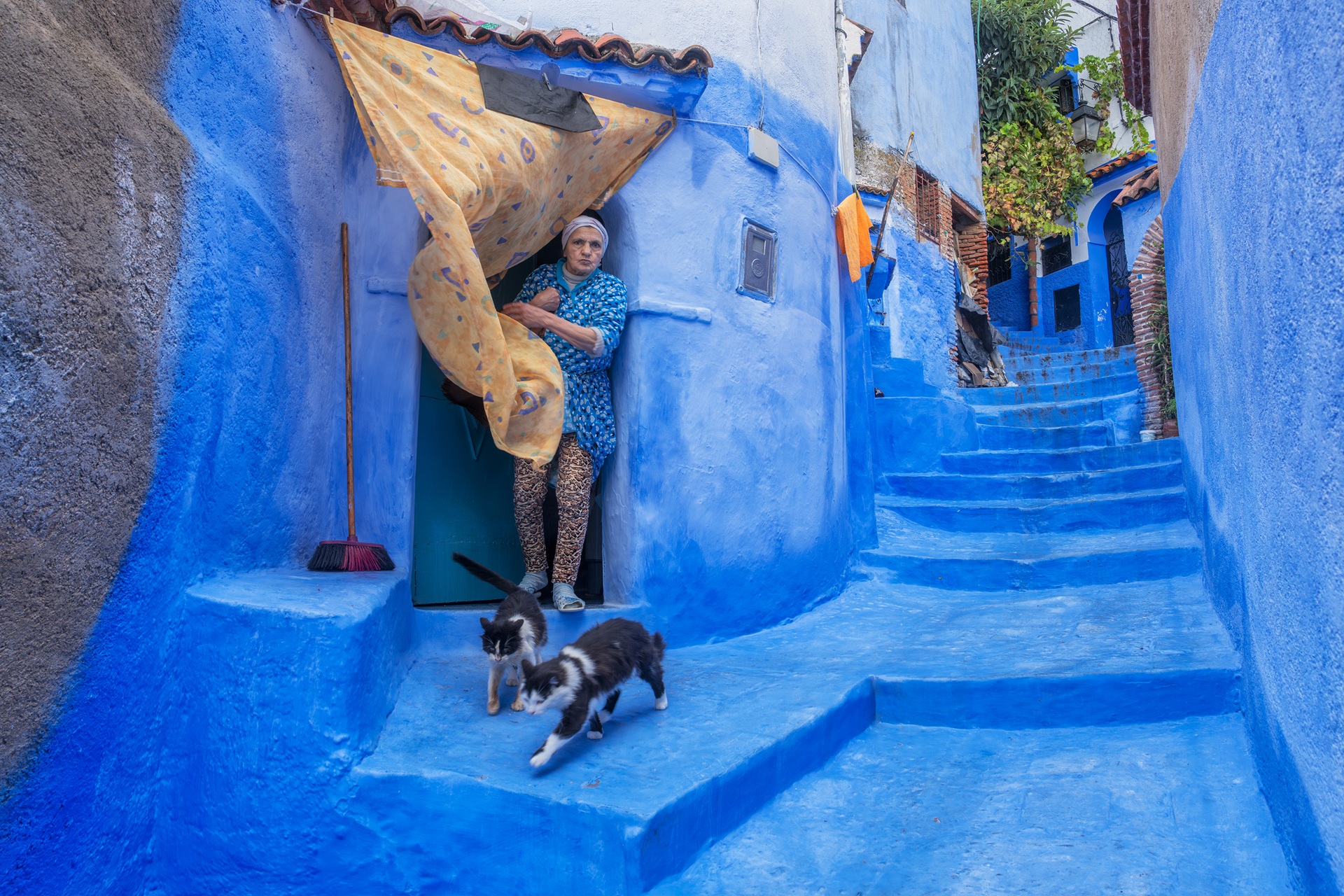
While carefully composing this image, I was waiting patiently for the cats to move into positions that would complement the composition. All of a sudden, a lady came out and started yelling at me. Although I did not understand what she was saying, my original intention was to photograph the cats, not her. From a photographic perspective, her unexpected appearance introduced a new narrative element, transforming a carefully composed scene into a spontaneous moment of street photography. This is one of the fascinating aspects of street photography: we can carefully plan our composition, but we cannot always anticipate what will unfold within the frame. Sometimes, the unexpected moment creates a more compelling image than the one we originally envisioned. At the same time, it is important to remain sensitive to the people we encounter and respect their wishes even when photographing in public spaces.
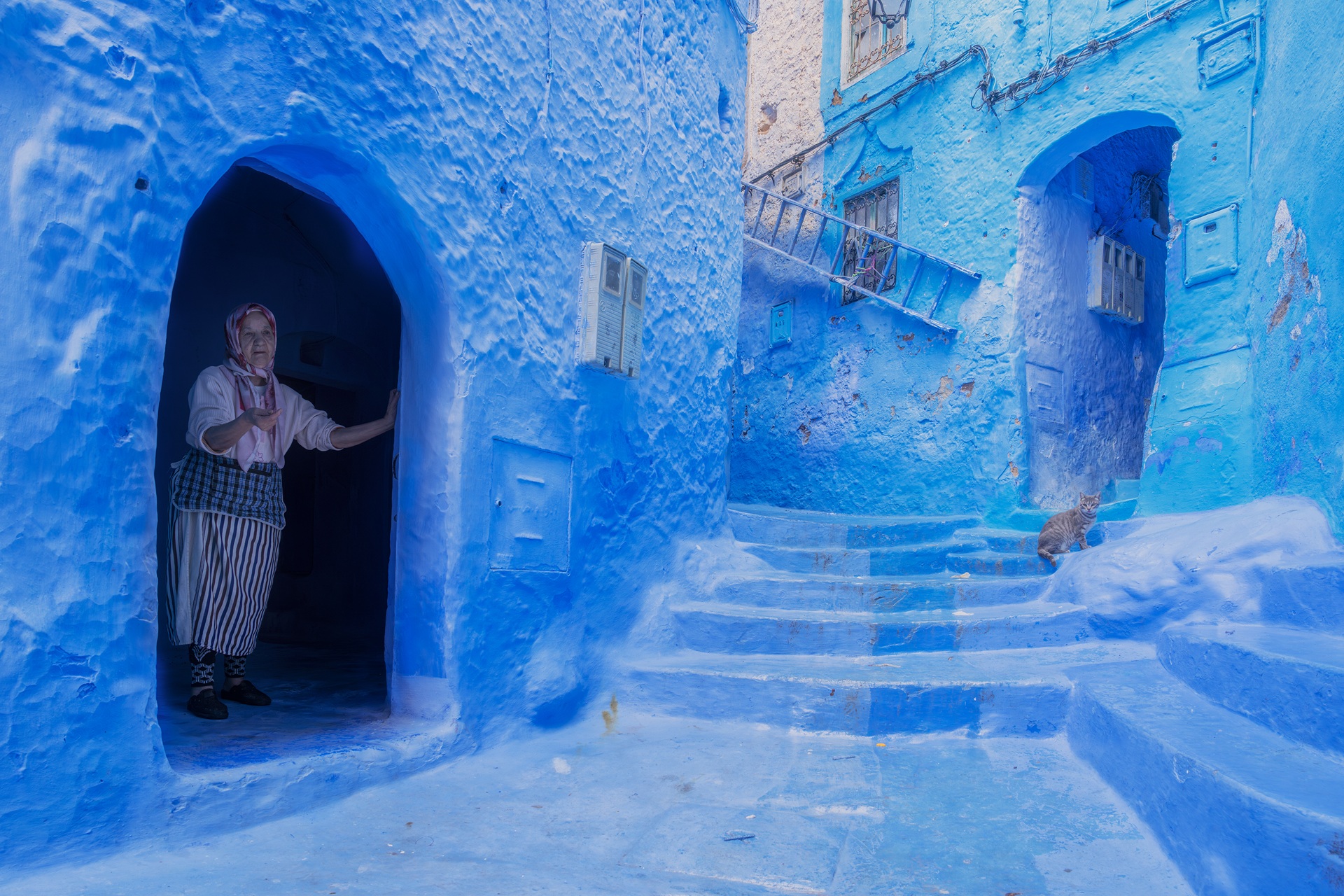
Our group was photographing around this house in Chefchaouen. Shortly after the other participants left, a lady came out and asked for money. I captured the moment when she raised her hand, gesturing for payment. We subsequently gave her some money. To me, this encounter reflects one of the consequences of mass tourism. As popular destinations attract increasing numbers of visitors and photographers, the relationship between tourists and local residents can become increasingly transactional. For tourists, these colorful streets and traditional houses are picturesque photographic opportunities, but for the residents, they are their homes and part of their everyday lives. Beyond its visual composition, this photograph tells a story about the changing dynamics between tourism and local communities. Street and documentary photography are not always about capturing beautiful scenes; they can also reveal the social realities and complexities of the places we visit.
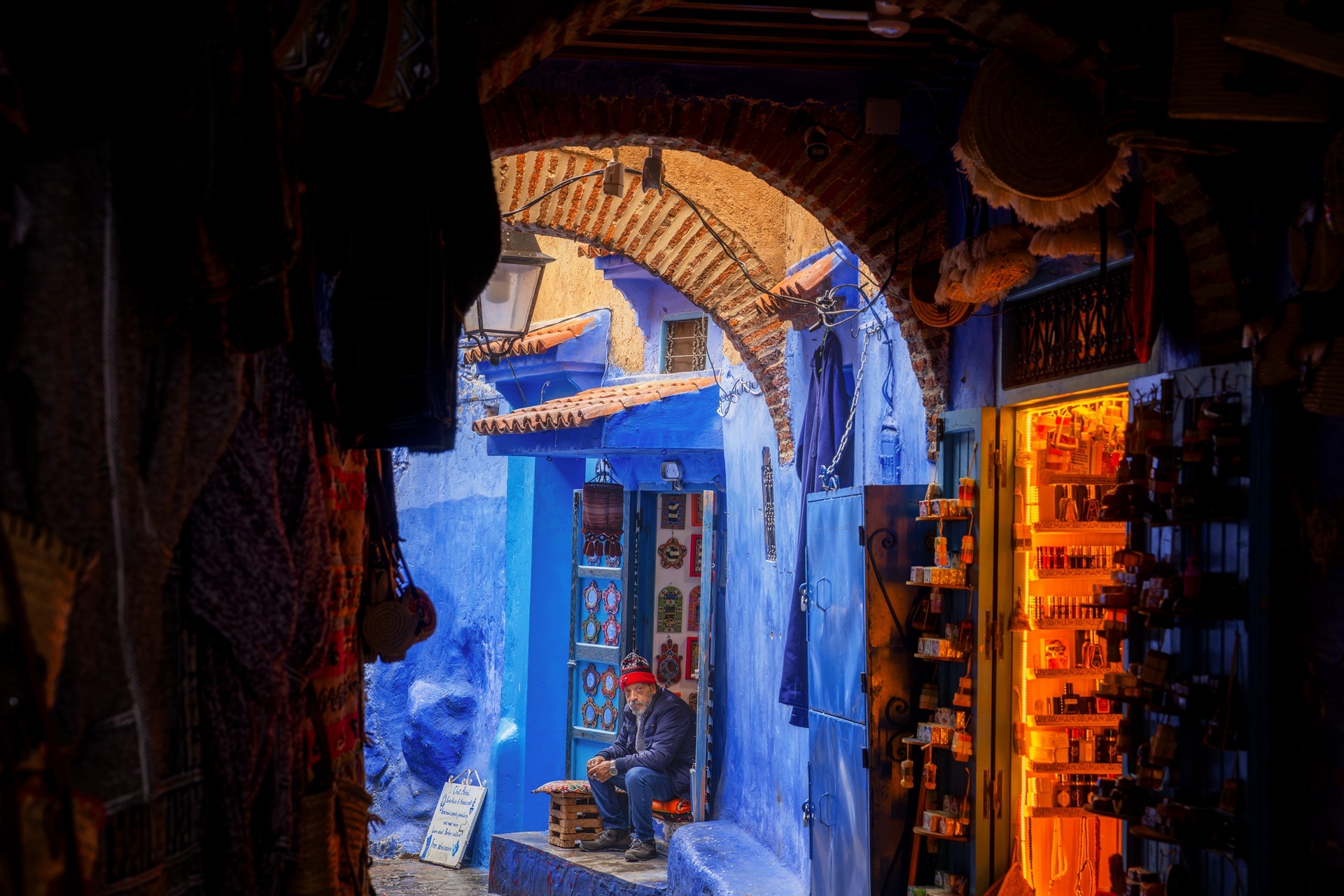
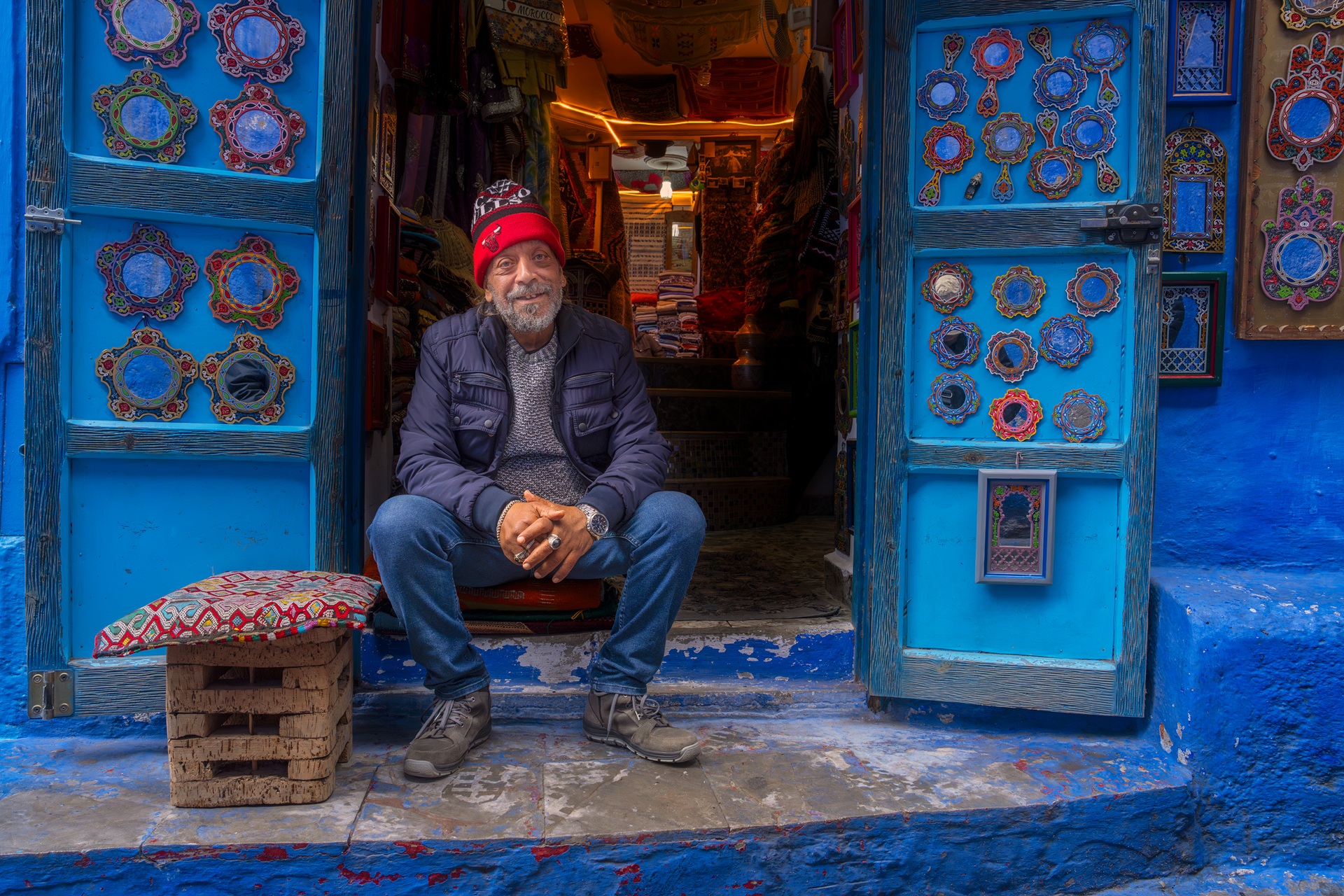
I initially photographed this shop owner from a distance. As we passed by his shop, he started chatting with us. After a friendly conversation, I asked if I could take his portrait. He agreed on the condition that I purchase something from his shop. I explained that I did not have any cash but was willing to pay a slightly higher price by credit card. We agreed on the arrangement. However, things took an unexpected turn when his wife came out and angrily insisted that no photographs could be taken unless I purchased something in cash. There was no room for negotiation. The shop owner, with a sense of humor, told me there was nothing he could do because his wife was the boss, jokingly adding, “Happy wife, happy life!” We respected their decision and moved on. Encounters like this are part of the experience of travel and street photography. They reveal the complexities of human interactions, cultural differences, and the increasingly commercial relationship between tourists and local communities in popular destinations. Not every photographic opportunity works out as planned, but sometimes the story behind the photograph is just as interesting as the image itself.
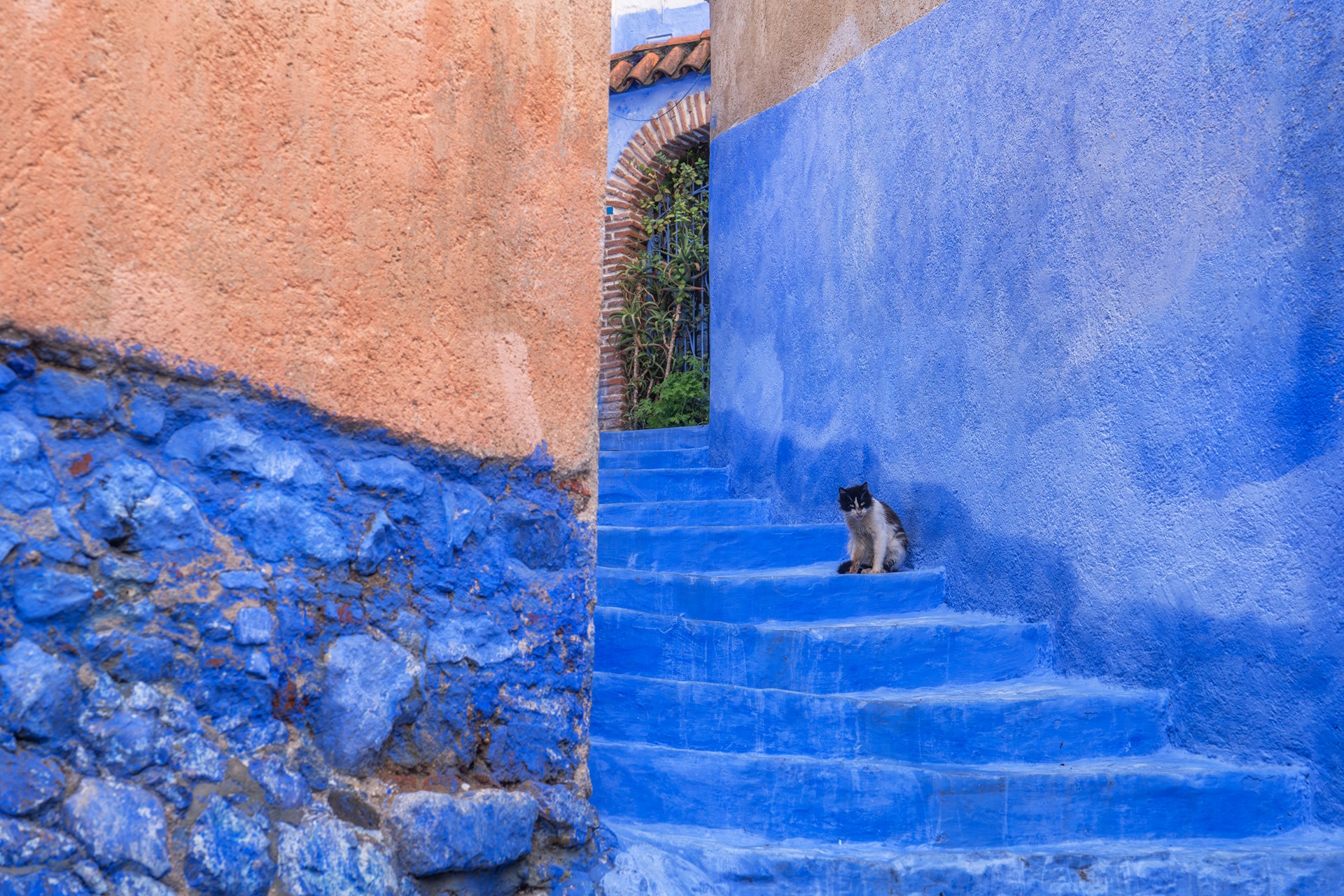
Cats are everywhere in Morocco, and Chefchaouen is no exception. Cats are an integral part of the city’s everyday life. They are also some of the easiest photographic subjects to find, making them wonderful natural models for street photography. Incorporating cats into a composition can add character, visual interest, and a sense of life to an otherwise static architectural scene. Their presence often complements the geometric patterns, vibrant colors, and textures of Chefchaouen’s architecture. Of course, cats are unpredictable models. Photographing them requires patience, observation, and anticipation. Sometimes, I carefully compose a scene and wait for a cat to move into the ideal position. Other times, their spontaneous movements and curious behavior create unexpected photographic opportunities. Unlike human models, cats rarely follow directions and that is part of the fun.
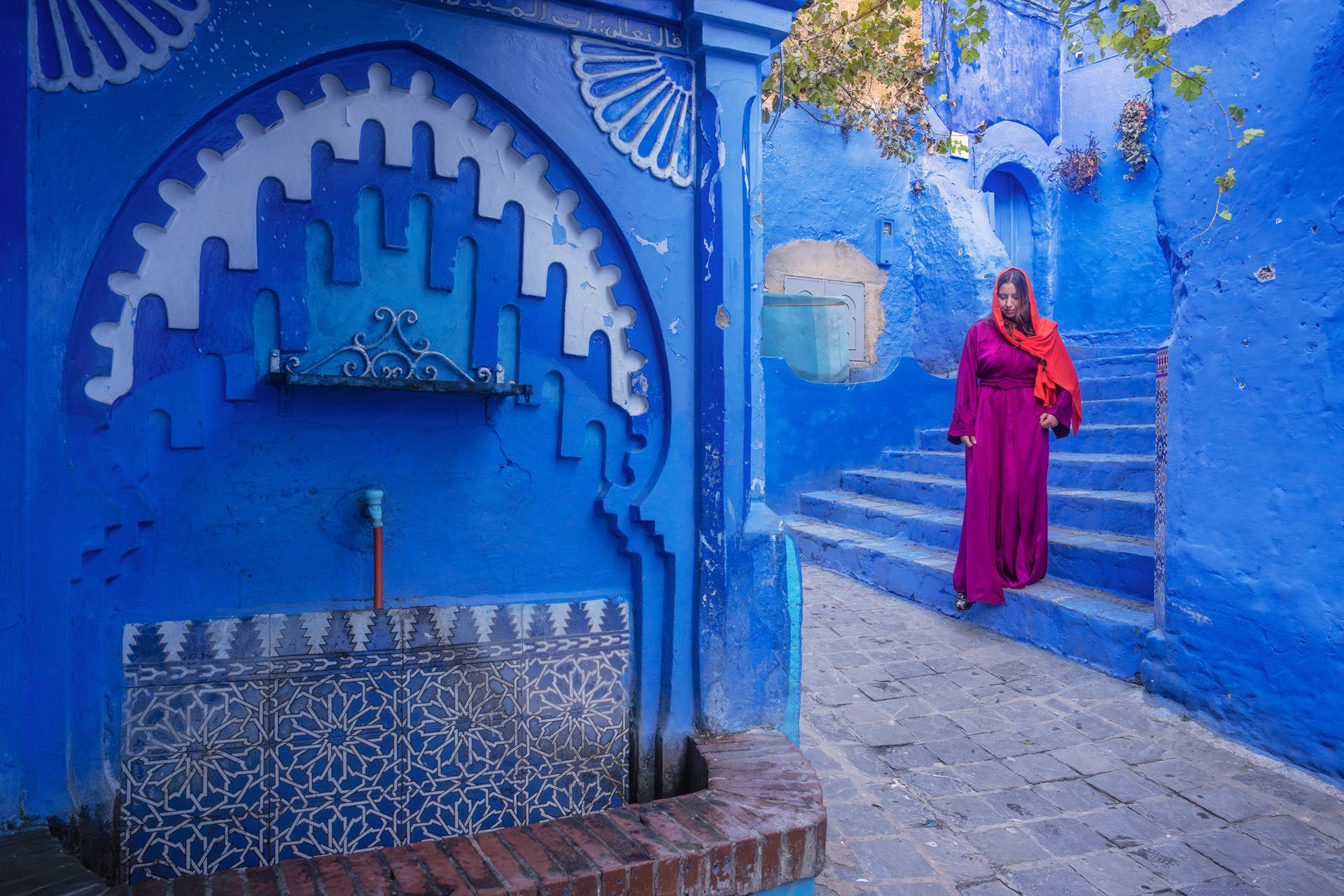
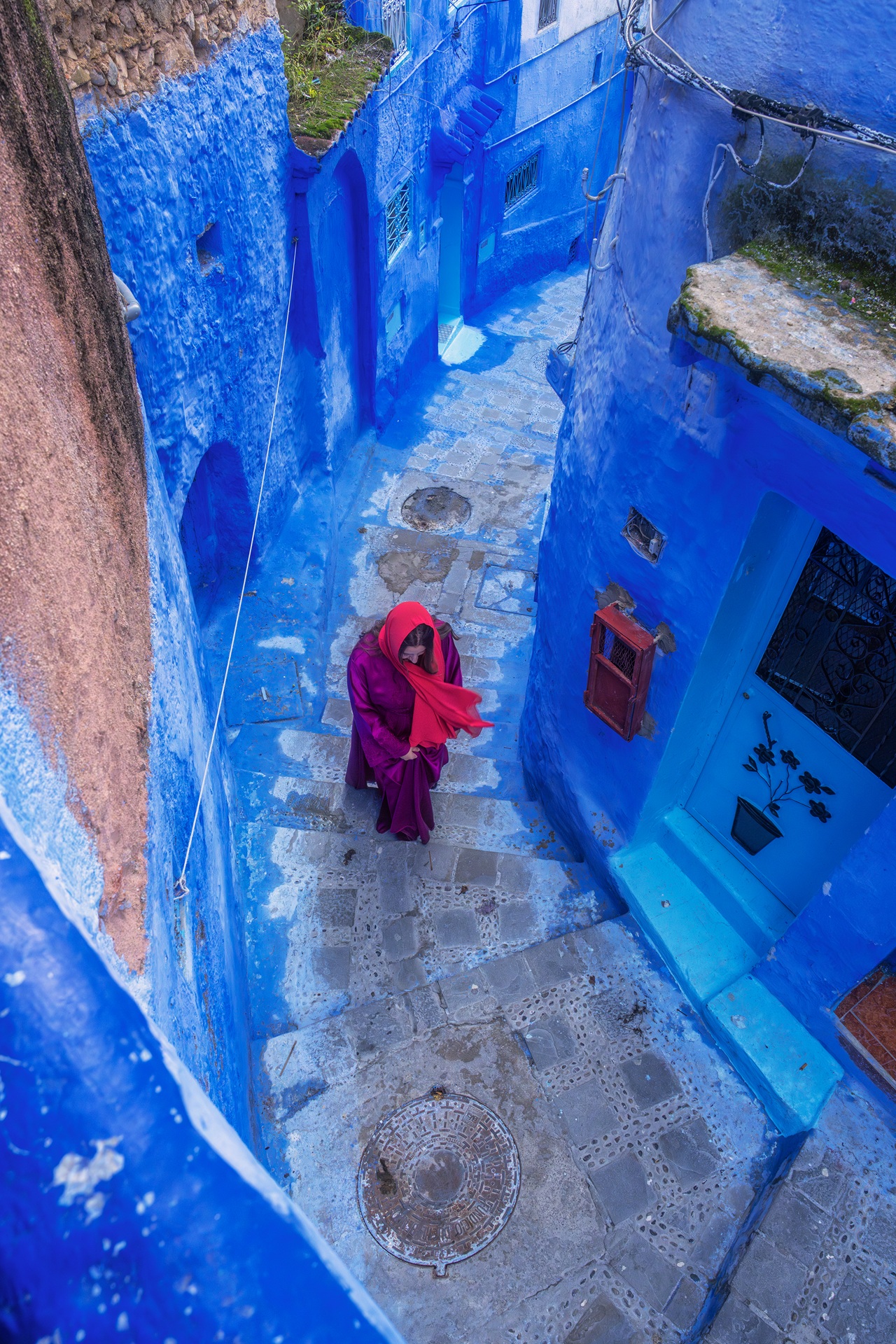
On one of the mornings in Chefchaouen, we hired two models and asked them to wear red dresses, positioning them in carefully selected locations throughout the blue city. The contrast between the vibrant red dresses and the predominantly blue architecture creates a strong visual impact, while the controlled placement of the models allows us to explore different compositions, perspectives, poses, and visual relationships.
Unlike the street and documentary photography discussed above, staged photography gives us greater creative control over the elements within the frame. Instead of waiting for the right person to walk into a carefully composed scene, we can deliberately position the subject, coordinate colors, direct gestures, and experiment with different arrangements to achieve our artistic vision.
Staged photography is also an effective way for photographers to train their photographic eye. Having control over the placement, posture, and movement of a subject allows photographers to experiment with different compositional possibilities and understand how subtle changes can influence visual balance, depth, and storytelling. This experience helps develop visual awareness and compositional instincts that can later be applied to street and documentary photography, where decisions often need to be made within seconds.
Some photographers dislike staged photography, arguing that it is artificial or lacks authenticity. However, I believe that staged and documentary photography serve different purposes. Documentary photography aims to capture reality as it unfolds, while staged photography provides a platform for creative expression and visual interpretation. Neither approach is inherently superior to the other.
Although these photographs are staged, they can still convey a sense of place, highlight local architecture and cultural elements, evoke emotions, and tell stories through carefully constructed visual narratives. The difference is that these stories are presented within a controlled environment rather than captured spontaneously.
What matters is being transparent about how the images were created. A staged photograph should not be presented as an authentic documentary moment, but that does not diminish its artistic value. Both approaches require an understanding of composition, light, color, perspective, and visual storytelling.