

Founded in 1070 by the Almoravids, Marrakech became an important center of commerce, craftsmanship, and cultural exchange. Its historic medina, designated a UNESCO World Heritage Site in 1985, is a labyrinth of narrow alleyways, traditional workshops, and bustling souks. Many of these markets are organized according to specialized trades, including metalworking, leathercraft, woodworking, textiles, and spices. Artisans continue to produce intricately decorated brass lanterns, traditional leather slippers known as babouches, and handmade musical instruments using techniques passed down through generations.
Although Marrakech is renowned for its vibrant colors, I believe this portfolio is particularly effective in black and white. The souks are visually complex environments filled with merchandise, intricate craftsmanship, architectural details, and human activities. Removing color reduces visual distractions and allows the viewer to concentrate on the essential elements of each composition.
The interplay of light and shadow is one of the strongest visual characteristics of these images. Artificial lighting, narrow passageways, partially illuminated storefronts, and dark interiors create dramatic tonal contrasts, depth, and atmosphere. Black and white also emphasizes the rich textures, repetitive patterns, geometric forms, and intricate details of traditional Moroccan craftsmanship that might otherwise be overshadowed by color.
There are numerous visual elements within each frame, many of which are unavoidable in such a crowded environment. Monochrome shifts the emphasis from the colorful merchandise to the people, their activities, and their relationship with the surrounding environment. The craftsmen and merchants become the central subjects rather than competing for attention with their surroundings. Applying a strong vignette further subdues peripheral distractions and directs the viewer’s attention toward the main subject.
From an artistic perspective, black and white gives the portfolio a timeless, documentary quality and a consistent visual identity. It also evokes a sense of nostalgia and an old-world aesthetic that complements the historic atmosphere of the medina, where many traditional trades and ways of life have endured for centuries. Rather than simply documenting the colorful appearance of Marrakech, this approach captures the character, atmosphere, and everyday life within its historic souks.
Color describes what we see; black and white can reveal how we see it.
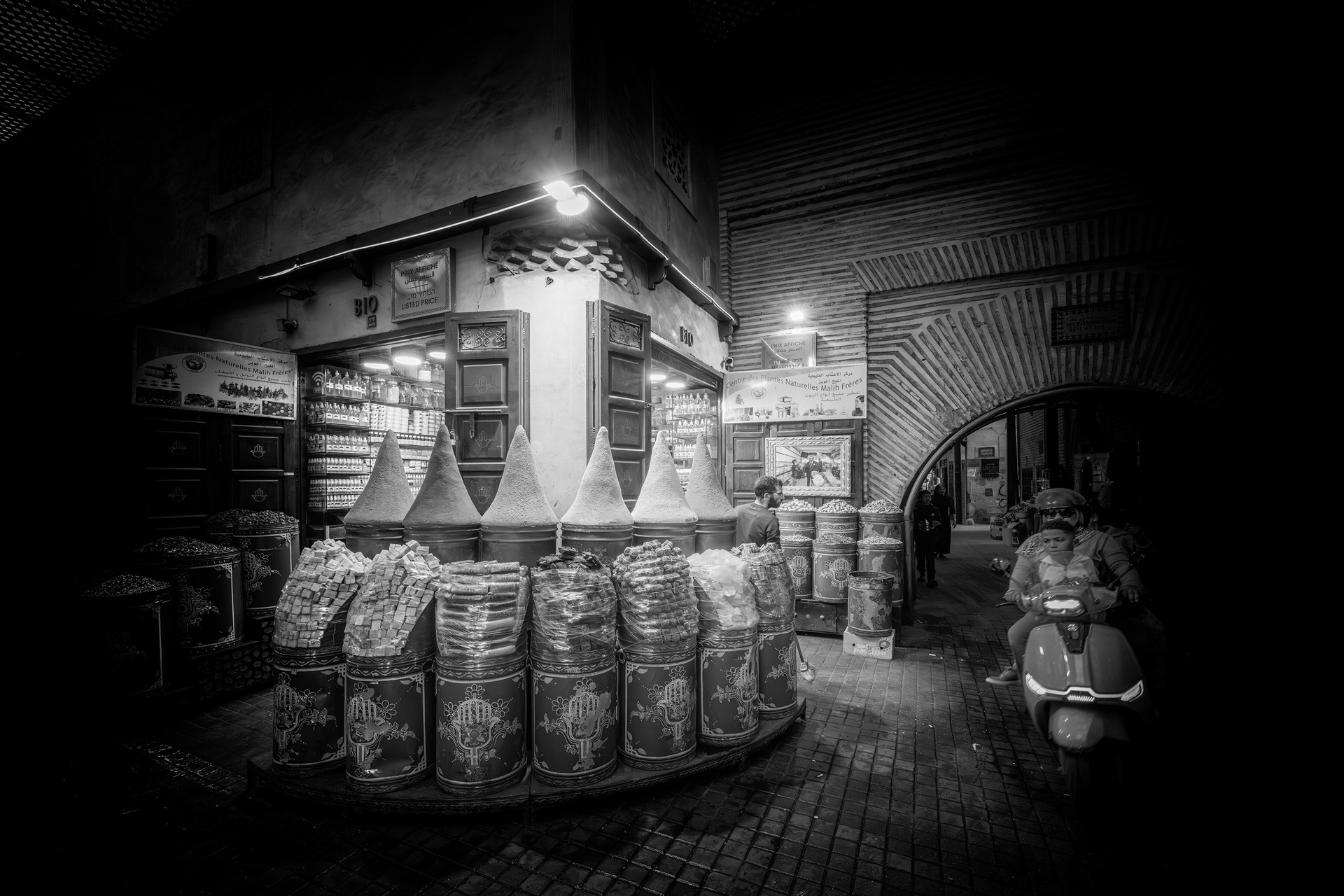
A traditional spice shop along the narrow alleyways of Marrakech’s historic medina, where centuries-old commerce and modern everyday life coexist.
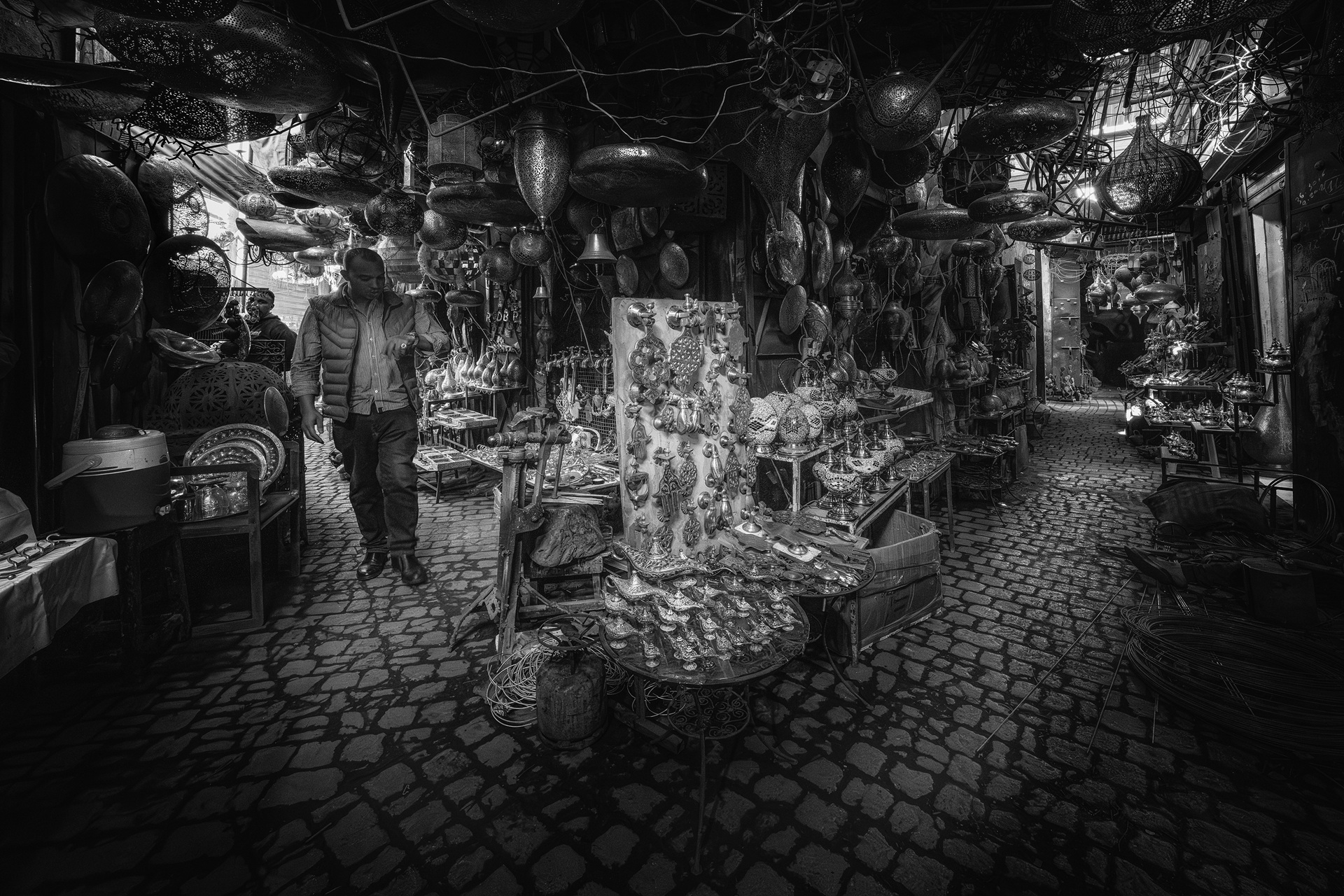
A traditional metalwork souk in the medina of Marrakech, filled with intricately crafted lanterns, decorative brassware, and handmade ornaments.
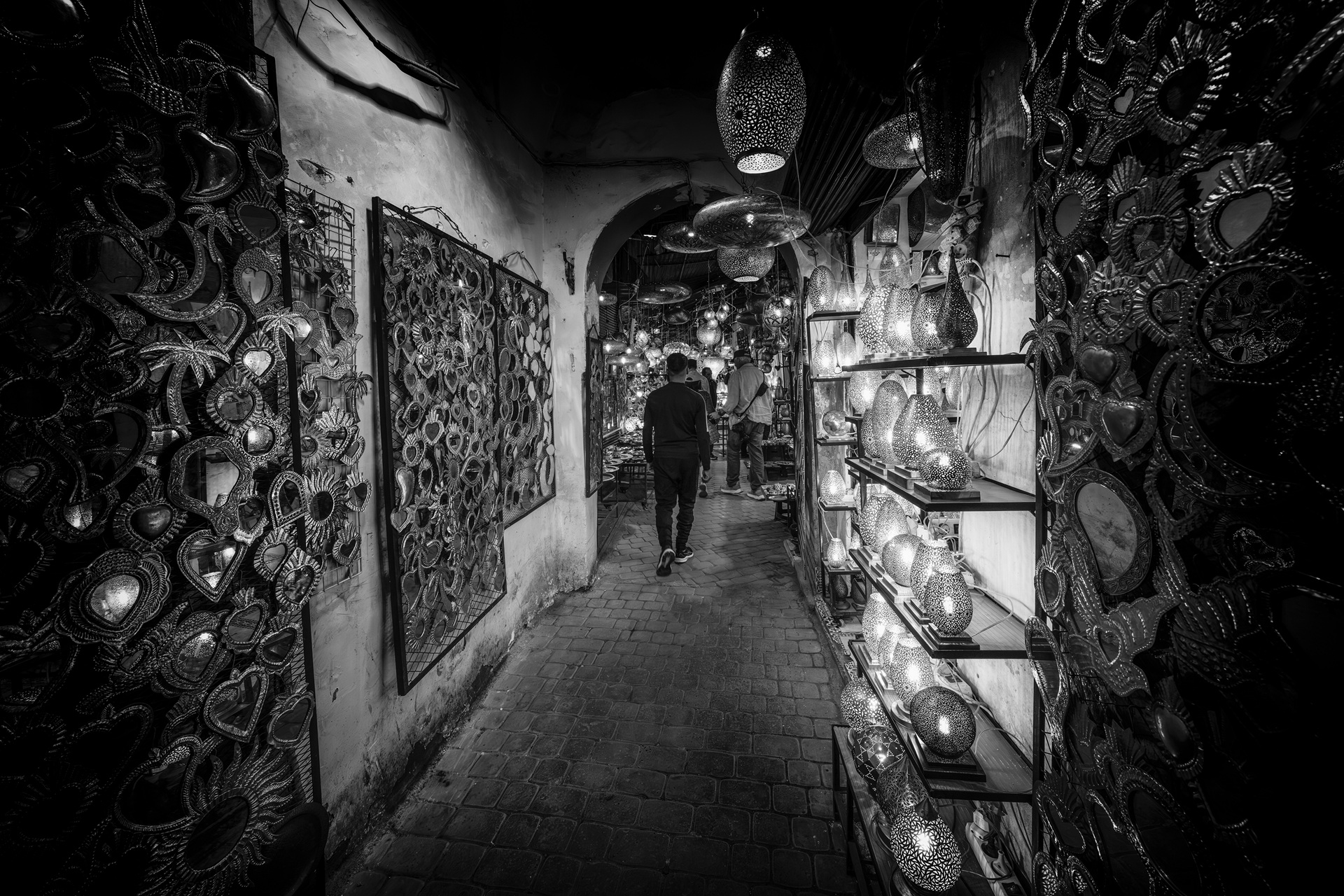
A narrow passageway in Marrakech’s historic medina, illuminated by intricately crafted Moroccan lanterns and lined with decorative handmade mirrors.
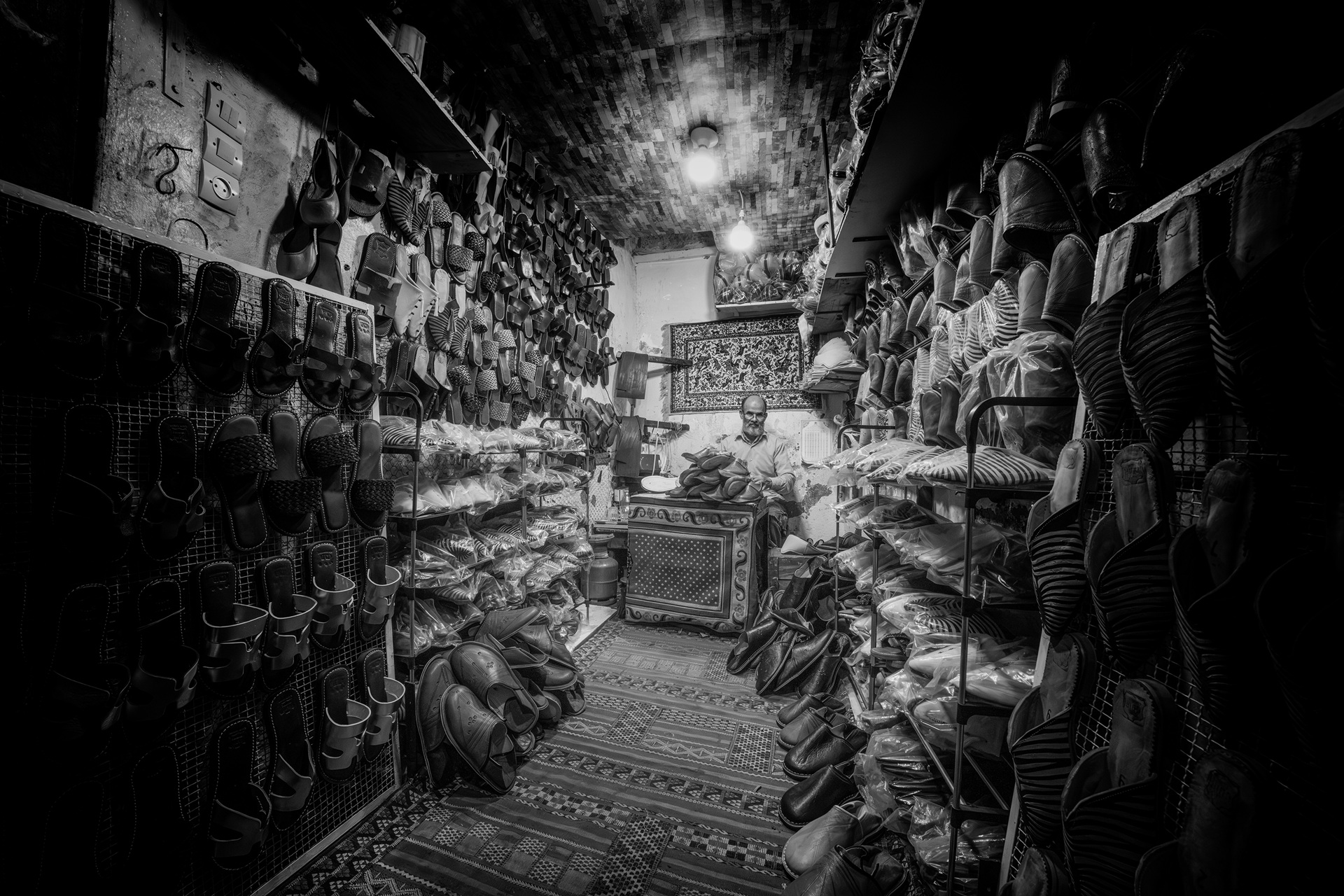
A merchant surrounded by traditional Moroccan leather slippers, known as babouches, in a small shop within the historic medina of Marrakech.
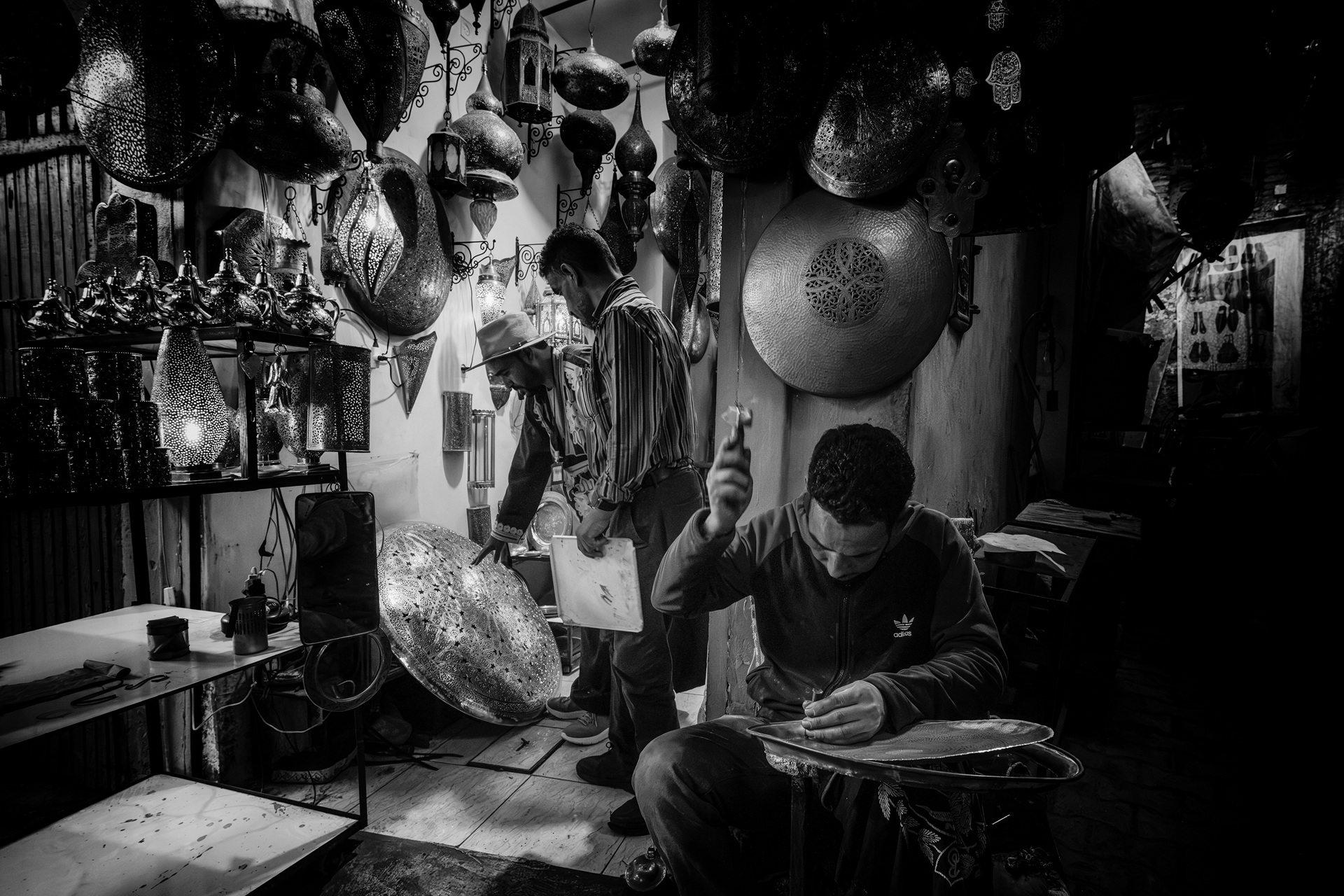
A metalworking artisan handcrafting intricate decorative metalware in the historic medina of Marrakech, preserving traditional craftsmanship passed down through generations.
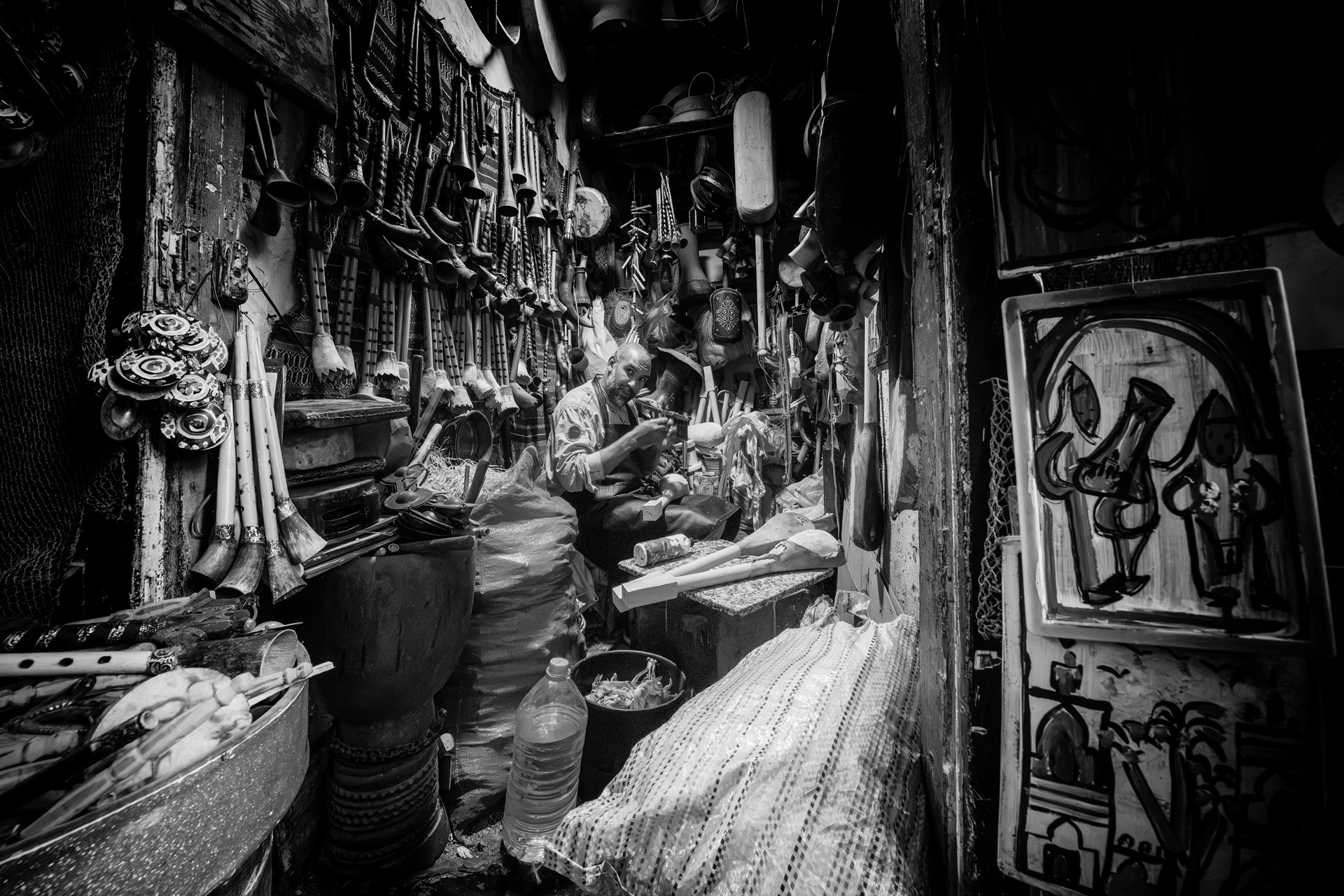
An artisan crafting traditional Moroccan musical instruments in a small workshop within the historic medina of Marrakech, surrounded by handmade string, wind, and percussion instruments.