

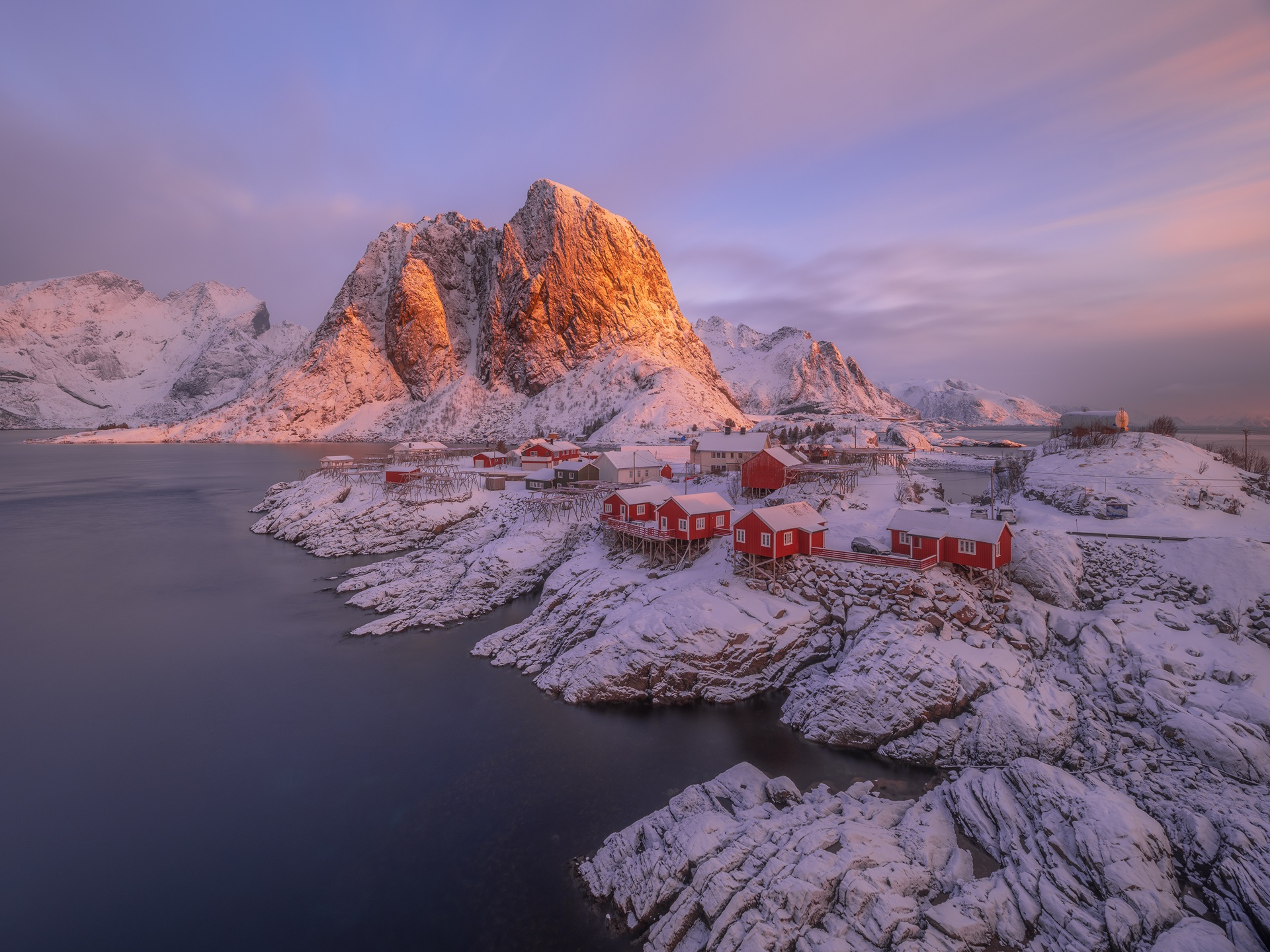
Fujifilm GFX 50R + Canon 11-24mm @24mm, NiSi 10-stops ND filter, ISO-100, f/16, 60s
Hamnoy is one of the most iconic photography locations in the Lofoten Islands of northern Norway. The scene embodies everything that defines Lofoten: classic red cabins, dramatic mountains, and deep fjords of Arctic Norway. These brightly painted seaside wooden cabins, mostly red and yellow, are called rorbuer.
Traditionally, they served as seasonal housing for fishermen working in one of the world’s richest cod fishing grounds, a tradition dating back to around the year 1100. Although the fishery remains active today, most of these cabins have been transformed into cozy accommodations for travelers.
This guide explains how to photograph Hamnoy, including the best viewpoints, lighting conditions, and compositional ideas.
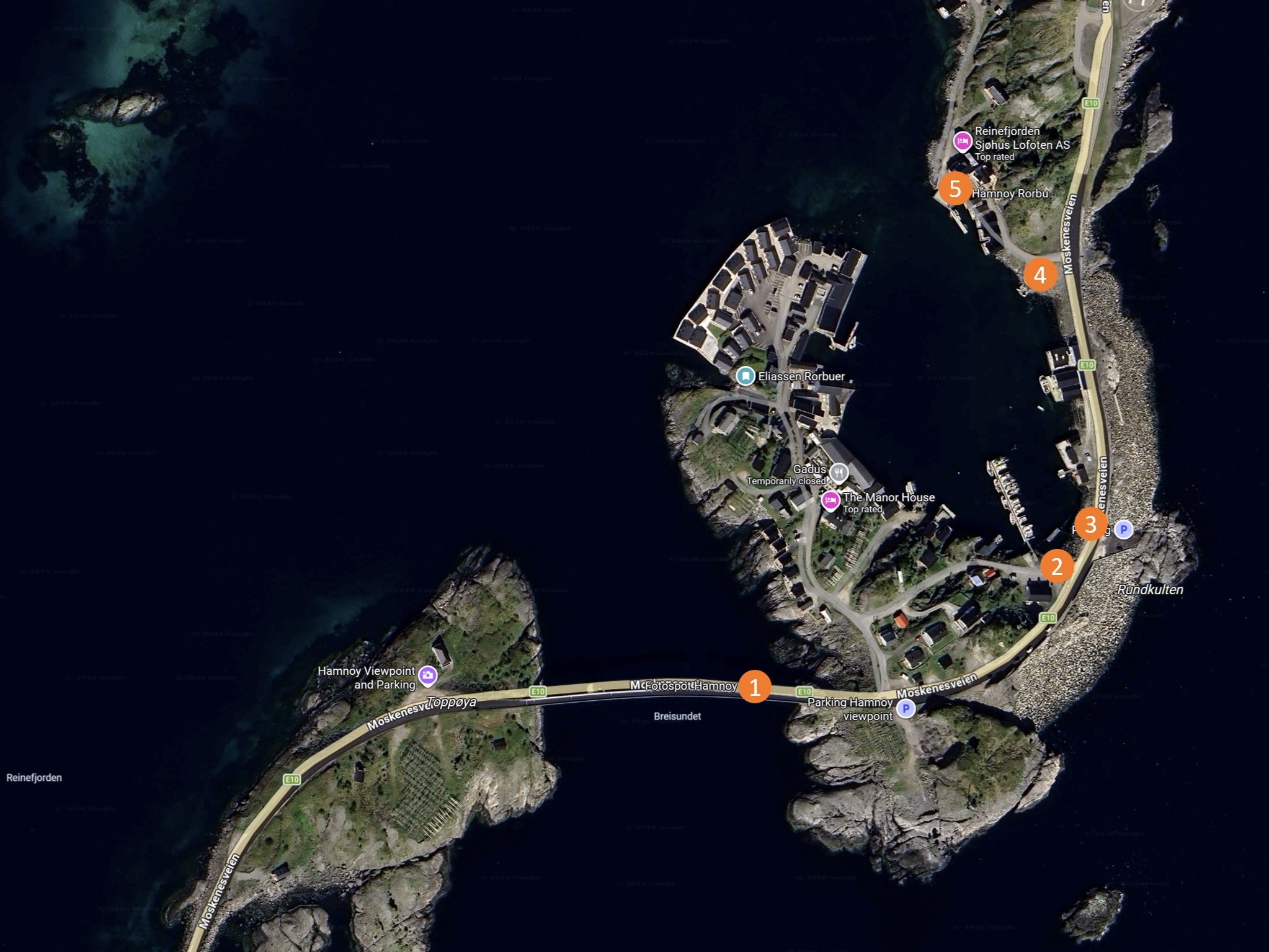
PHOTO LOCATIONS
1. Classic Hamnoy Bridge Viewpoint
The most famous photography spot is located on the bridge that connects Hamnoy to the main road (E10). From this bridge, photographers look directly toward the red cabins of Eliassen Rorbuer with Festhelltinden rising behind them. This viewpoint works exceptionally well because of its strong composition, where the cabins form a visual anchor and the mountains create a dramatic background.
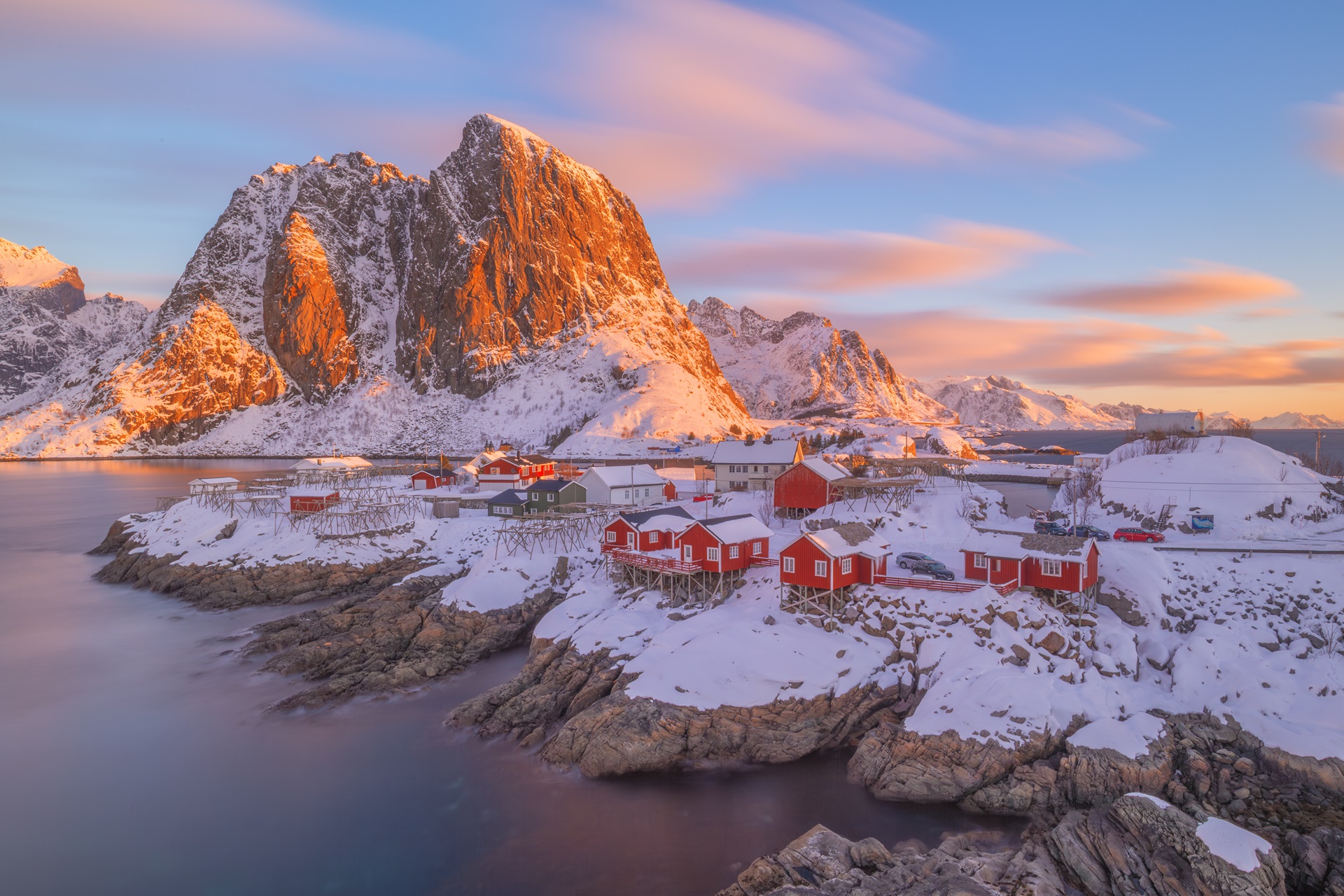
Canon EOS 5D III + Canon 11-24mm @20mm, NiSi 10-stops ND filter, ISO-100, f/20, 100s
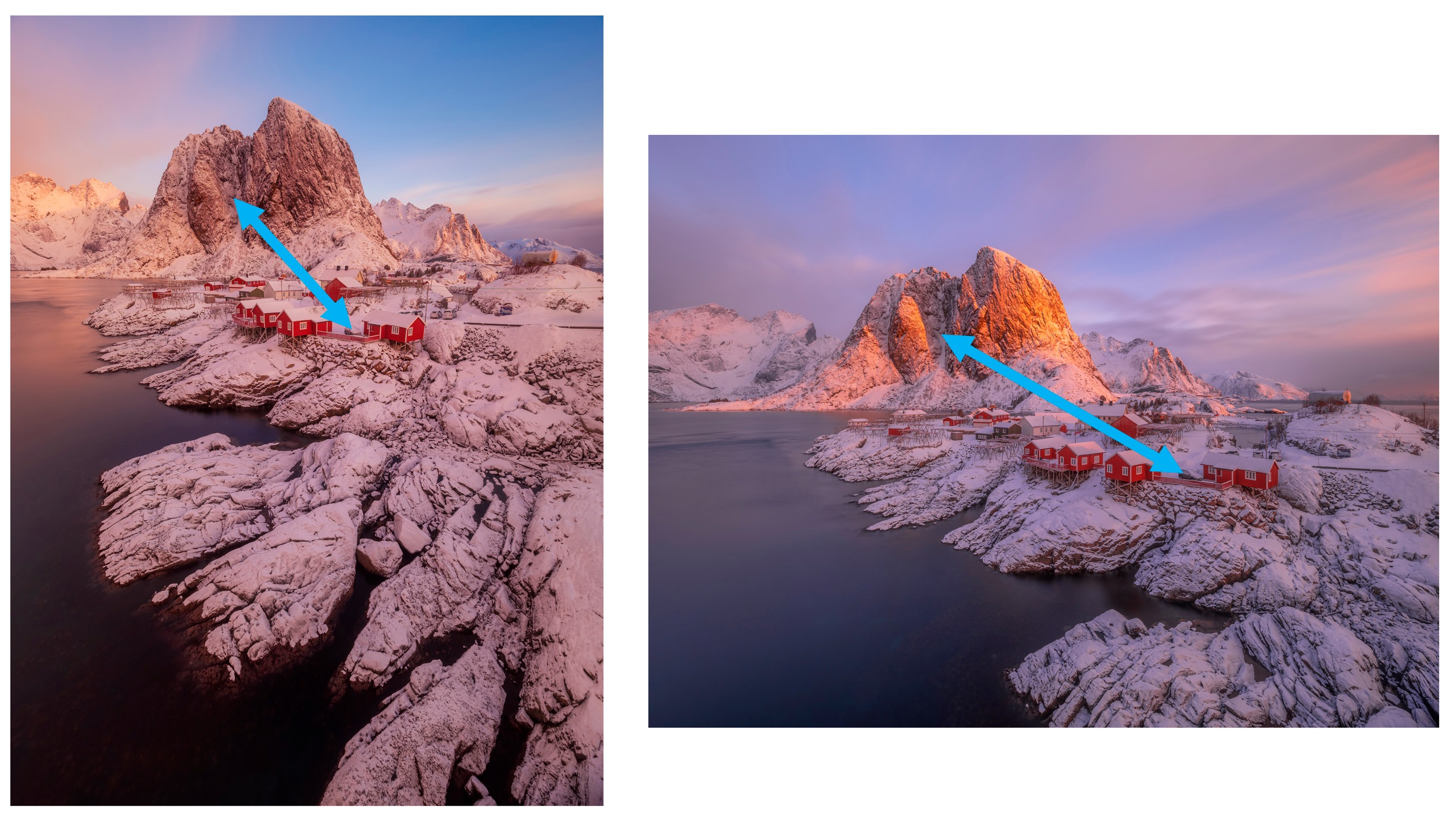
One of the most overlooked factors at this location is camera position and perspective. The classic viewpoint is from the bridge, but even small changes in position can make a significant difference. Standing on the east side of the bridge aligns the mountain and red cabins more vertically, which works well for a portrait orientation, especially when including snowy rocks in the foreground. Shooting horizontally from this position often leaves too much empty space on one side. From the west side of the bridge, the mountain and cabins spread farther apart, making it better suited for landscape orientation. In landscape photography, such subtle positional shifts can completely alter the composition, so it is always worth moving around and testing different perspectives, even at well-known locations.
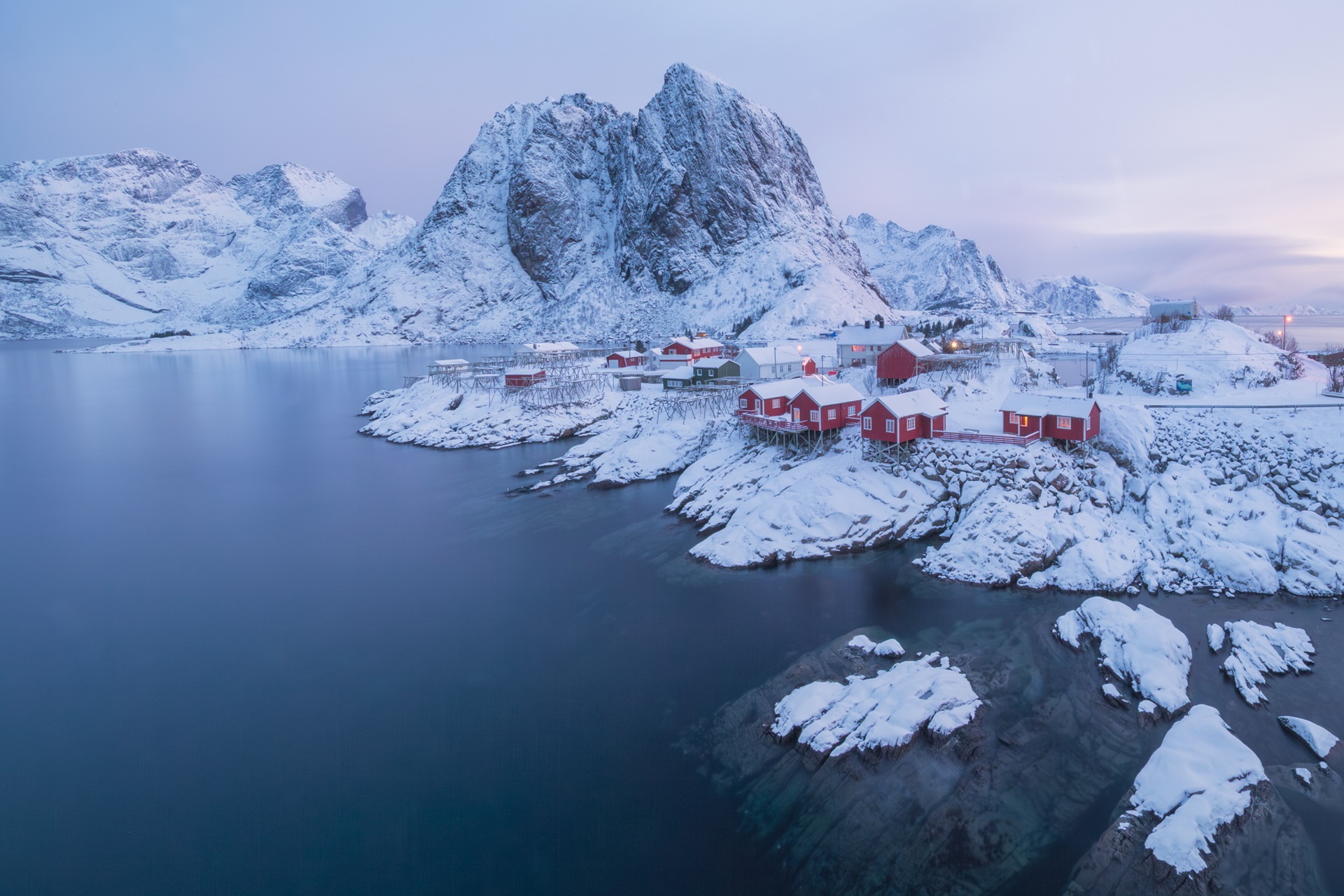
Canon EOS 5D III + Canon 11-24mm @12mm, NiSi 10-stops ND filter, ISO-100, f/20, 200s
Even in such a beautiful setting, the scene presents compositional challenges. The main mountain, Festhelltinden, dominates one side of the frame, creating strong visual weight with little to balance it. Lower mountain ranges extend toward the left, but the right side can feel comparatively empty. Similarly, in the foreground, the cabins and rocks tend to occupy right side, while the left side is mostly open water. This makes it difficult to achieve balanced visual weight from the iconic viewpoint.
Canon EOS 5D III + Canon 11-24mm @20mm, NiSi 10-stops ND filter, ISO-100, f/20, 100s
One effective solution is to zoom in on the mountain and cabins to fill the frame and create a more harmonious composition. Clouds can also play an important role. Using a long exposure to create streaking clouds allows you to fill the empty space while adding motion and a sense of dynamism to the image.
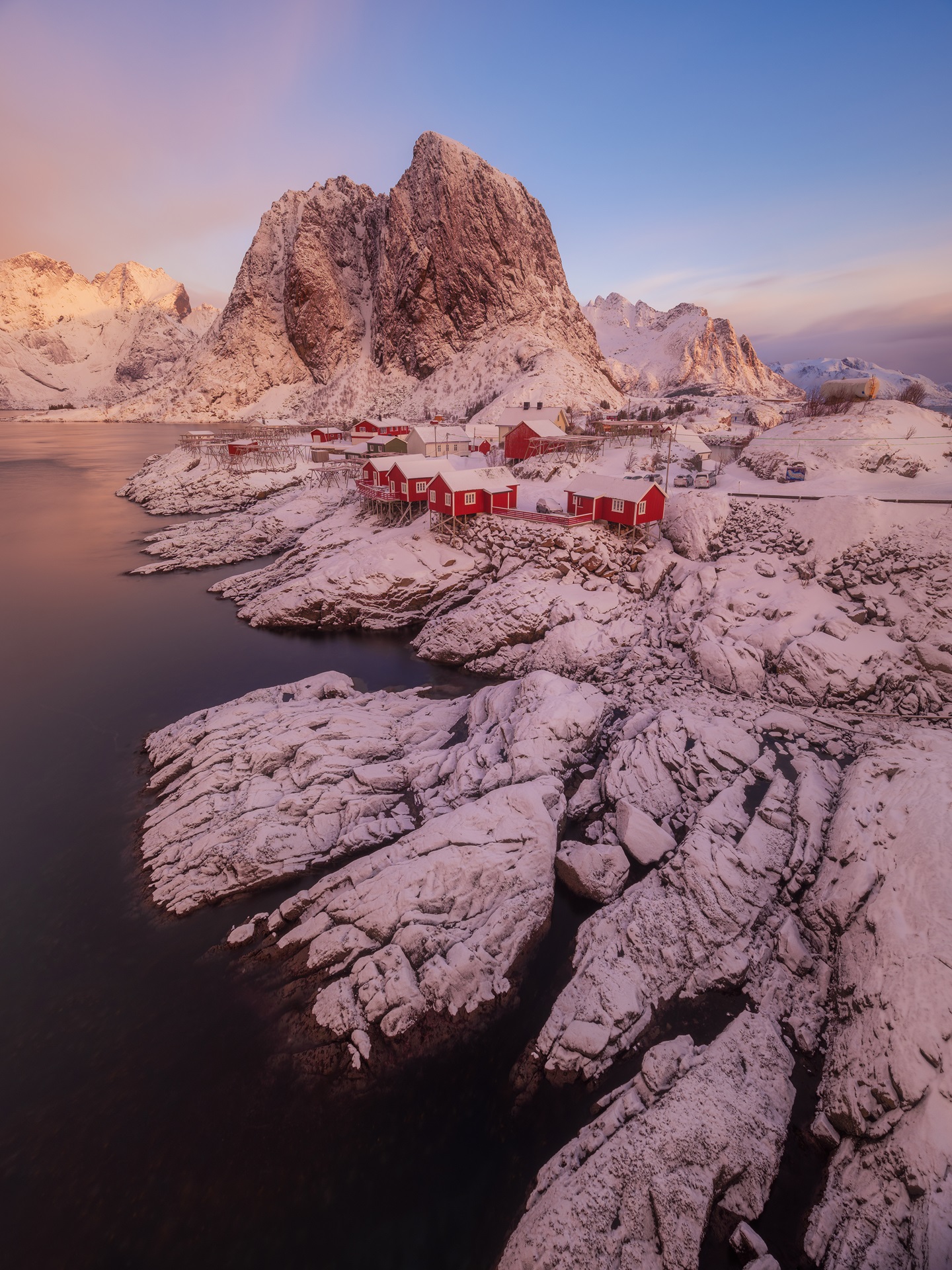
Fujifilm GFX 50R + Canon 11-24mm @18mm, NiSi ND 10-stops filter, ISO-100, f/13, 60s
Another solution is to photograph after heavy snowfall and at low tide, when snow-covered rocks in the lower part of the frame help counterbalance the mountain.
2. Harbor View toward Festhelltinden
From this location, a wide-angle lens allows for a complete framing of the mountain and the bay. On calm, windless days, reflections of Festhelltinden appear clearly in the water, creating a clean and elegant composition. Personally, I find this scene most appealing after snowfall, when both the shoreline and the mountain are covered in fresh snow. High tide is also preferable, as it reduces the visibility of seaweed in the shallow water and simplifies the foreground. Although I like to use long exposure to completely eliminate ripples even on calm, windless days, one needs to be careful of movement from the rocking boats and wooden platform. A few seconds of exposure is usually sufficient.
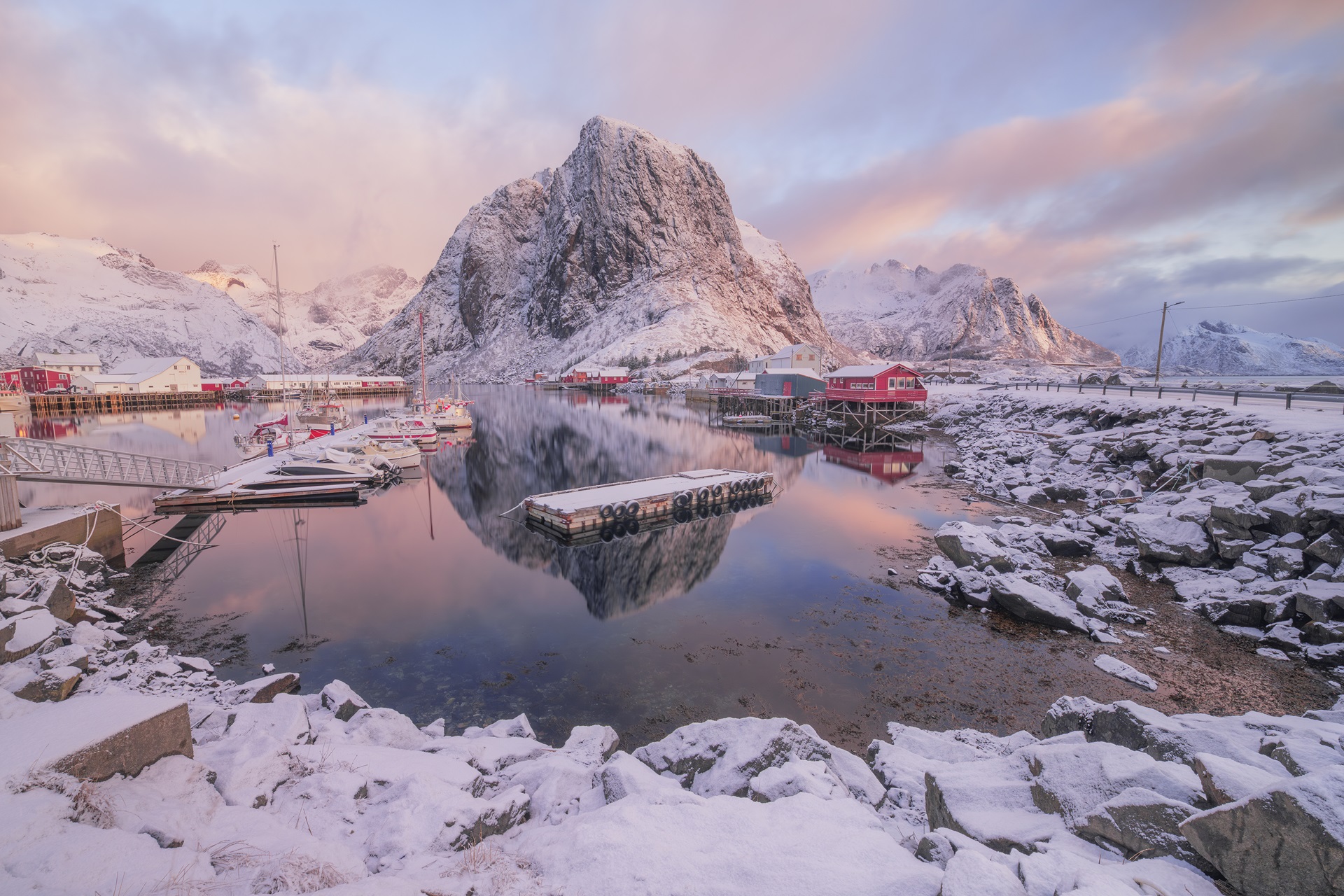
Sony A7RV + Sony 12-24mm @12mm, NiSi 6-stops ND filter, ISO-200, f/10, 5s
3. Harbor View toward Olstinden
This viewpoint offers a beautiful perspective toward the harbor with Olstinden rising in the background. Calm and windless conditions work best, as they allow reflections to form in the water. Again, one needs to be careful of movement from the rocking boats and wooden platform when using long exposure. A few seconds of exposure is usually sufficient.
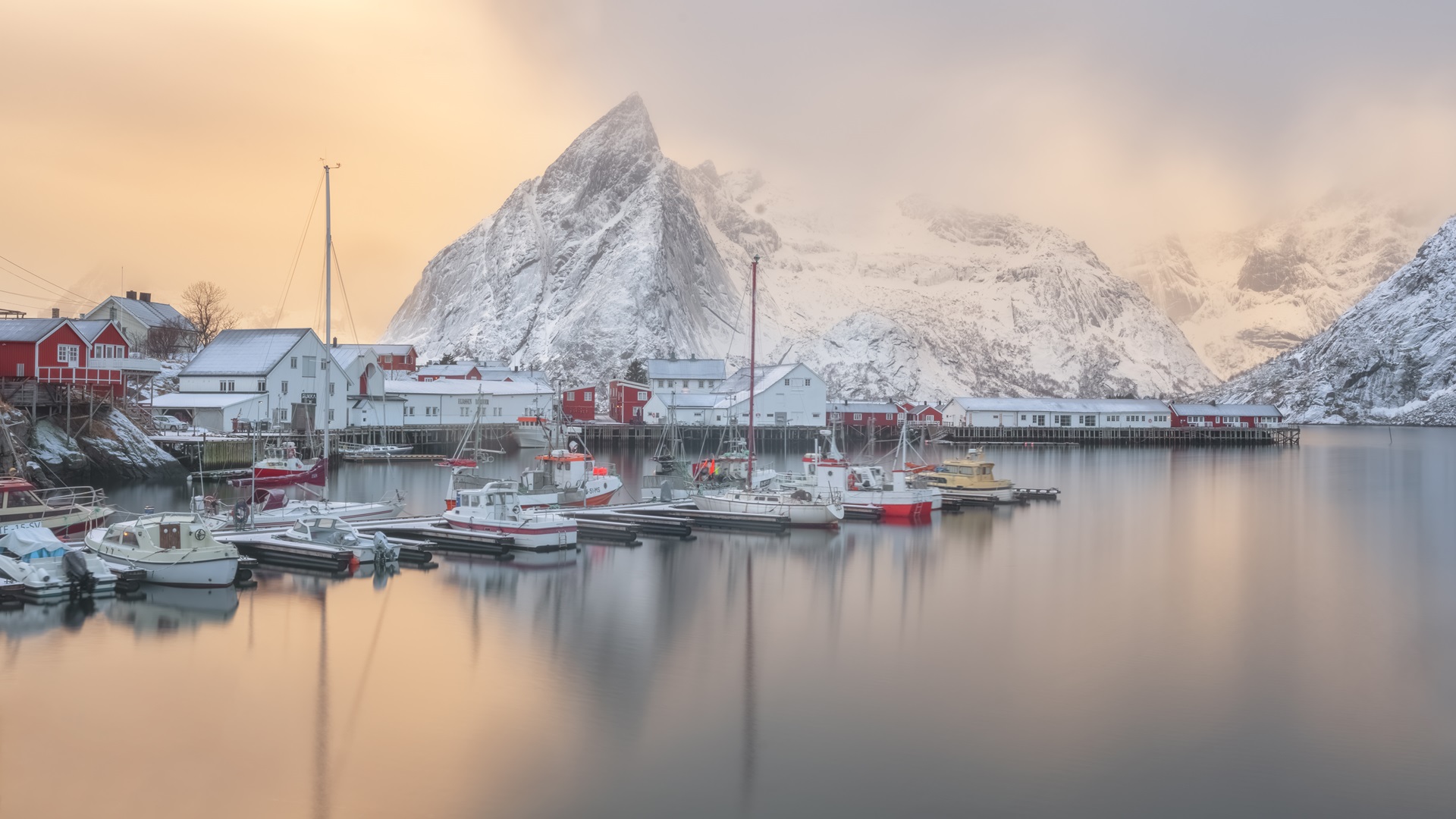
Phase One XT + IQ4 + Rodenstock 23mm, ISO-100, f/16, 5s (image averaging)
4. View from Reinefjorden Rorbuer toward Olstinden and Reinebringen
From the parking area at Reinefjorden Rorbuer, you can capture a panoramic scene that includes the cabins of Eliassen Rorbuer, Olstinden, and Reinebringen. This location works particularly well when the water is calm, allowing reflections to unify the composition. A longer exposure helps eliminate ripples and creates a more refined and harmonious result.
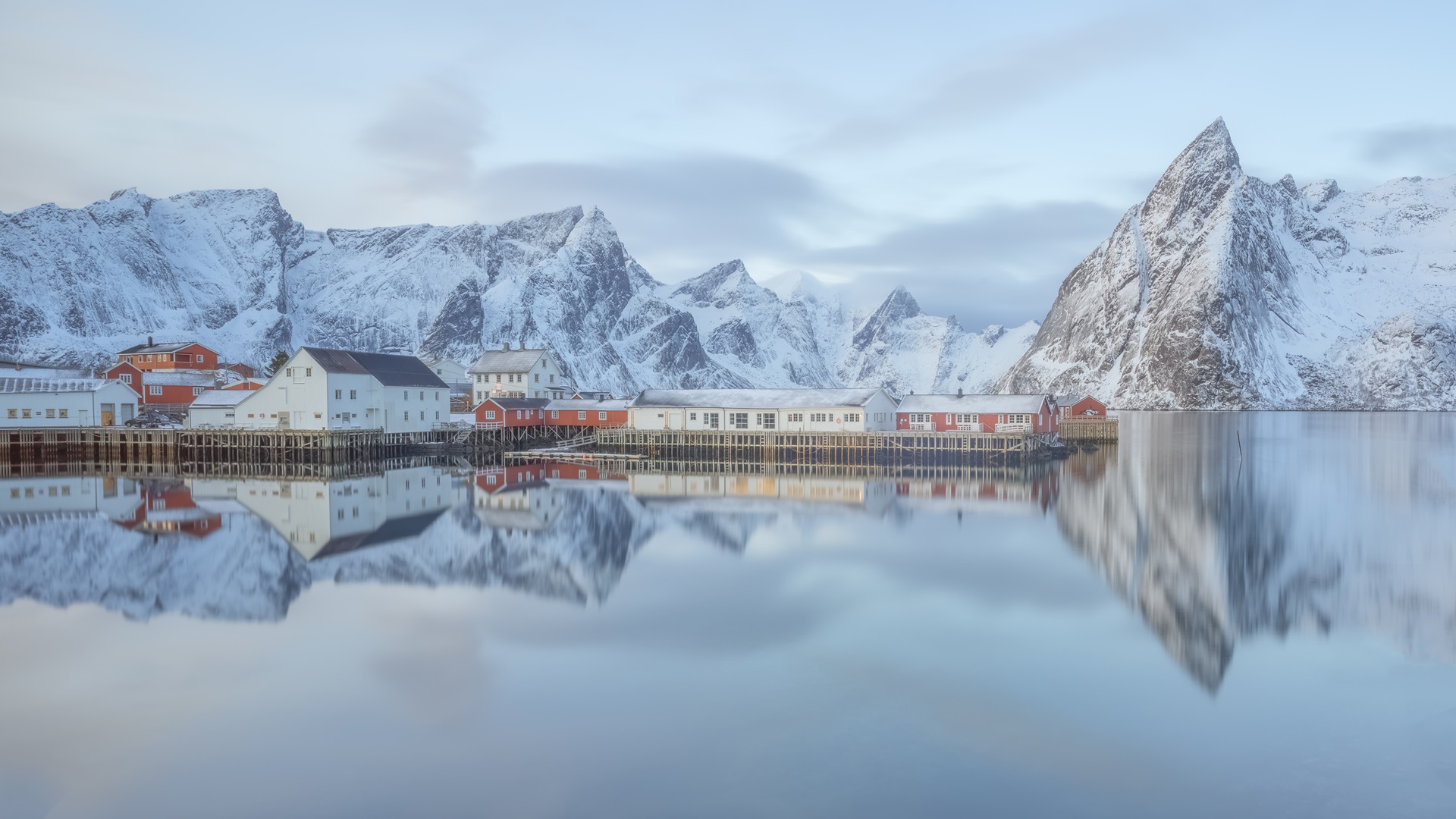
Phase One XT + IQ4 + Rodenstock 23mm, ISO-100, f/18, 30s (image averaging)
5. View from Rorbuer toward Reinebringen
Walking out to the platform near Reinefjorden Rorbuer reveals a striking view of the red cabins of Eliassen Rorbuer with Reinebringen rising in the background. As with many locations in Hamnoy, calm and windless conditions are ideal for reflections. A long exposure further enhances the scene by smoothing the water and reducing visual distractions.
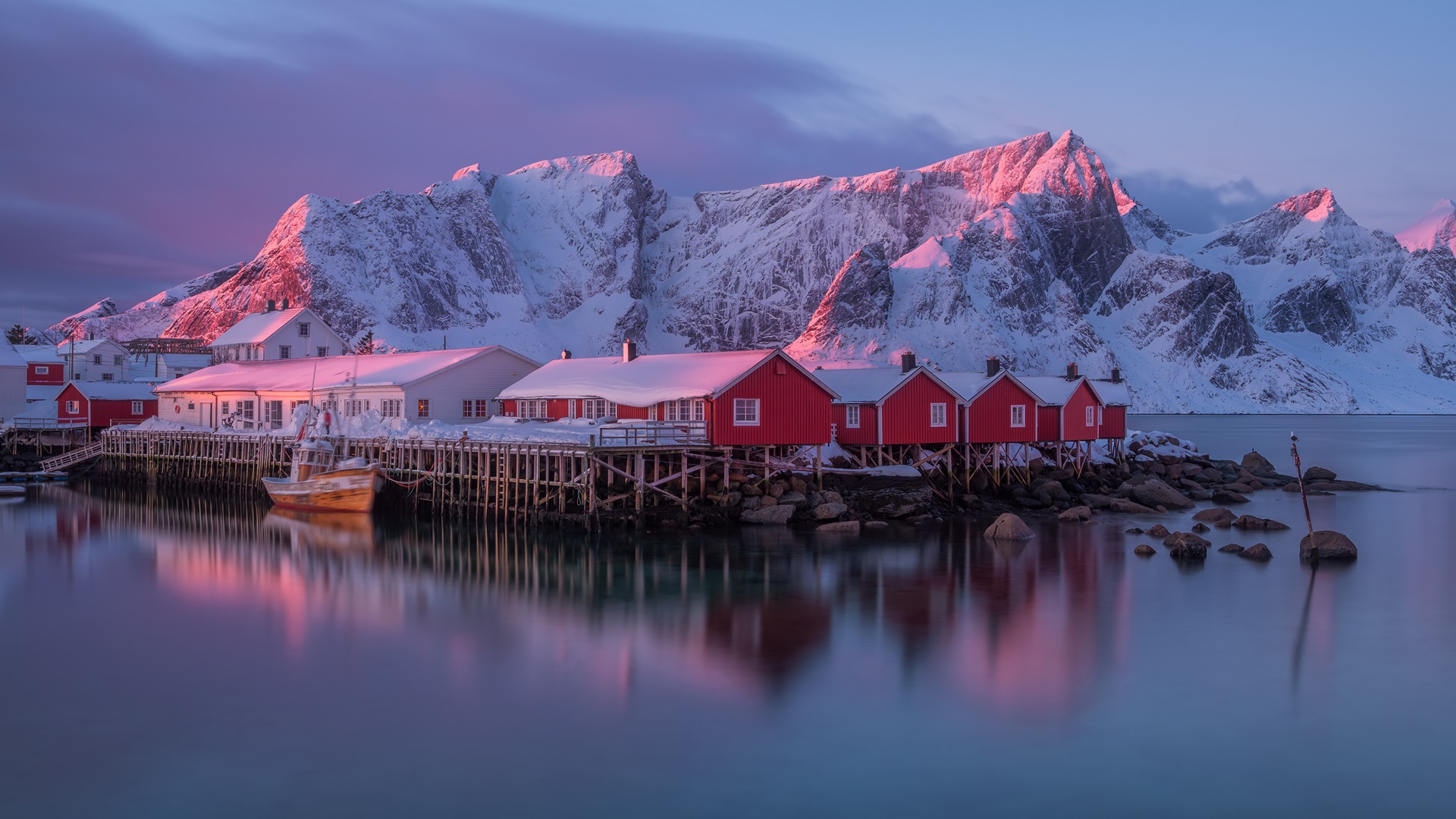
Fujifilm GFX 50R + Fujifilm 32-64mm @46mm, NiSi 10-stops ND filter, ISO-200, f/13, 60s
6. Others
There are many hidden gems in this area waiting to be discovered. Walking down over the rocks from the east end of the bridge allows for a low-angle perspective toward the cabins, with either Festhelltinden or Olstinden in the background. Exploring within Eliassen Rorbuer can also provide interesting viewpoints toward Olstinden. The area rewards curiosity, and some of the most compelling compositions can be found just a short distance away from the main viewpoints.
TIME
Good light can be found during sunrise, sunset, and blue hour, and even overcast day. The direction and quality of light change significantly with the seasons.
Fujifilm GFX 50R + Canon 11-24mm @24mm, NiSi 10-stops ND filter, ISO-100, f/16, 60s
In winter, sunrise during golden hour brings side-front light from the southeast, while sunset provides side-front light from the southwest. Side lighting or side-front lighting are particularly effective because they create highlights and shadows that enhance the three-dimensional form of the mountains.
Canon EOS 5D III + Canon 11-24mm @17mm, NiSi 10-stops ND filter, ISO-100, f/13, 130s
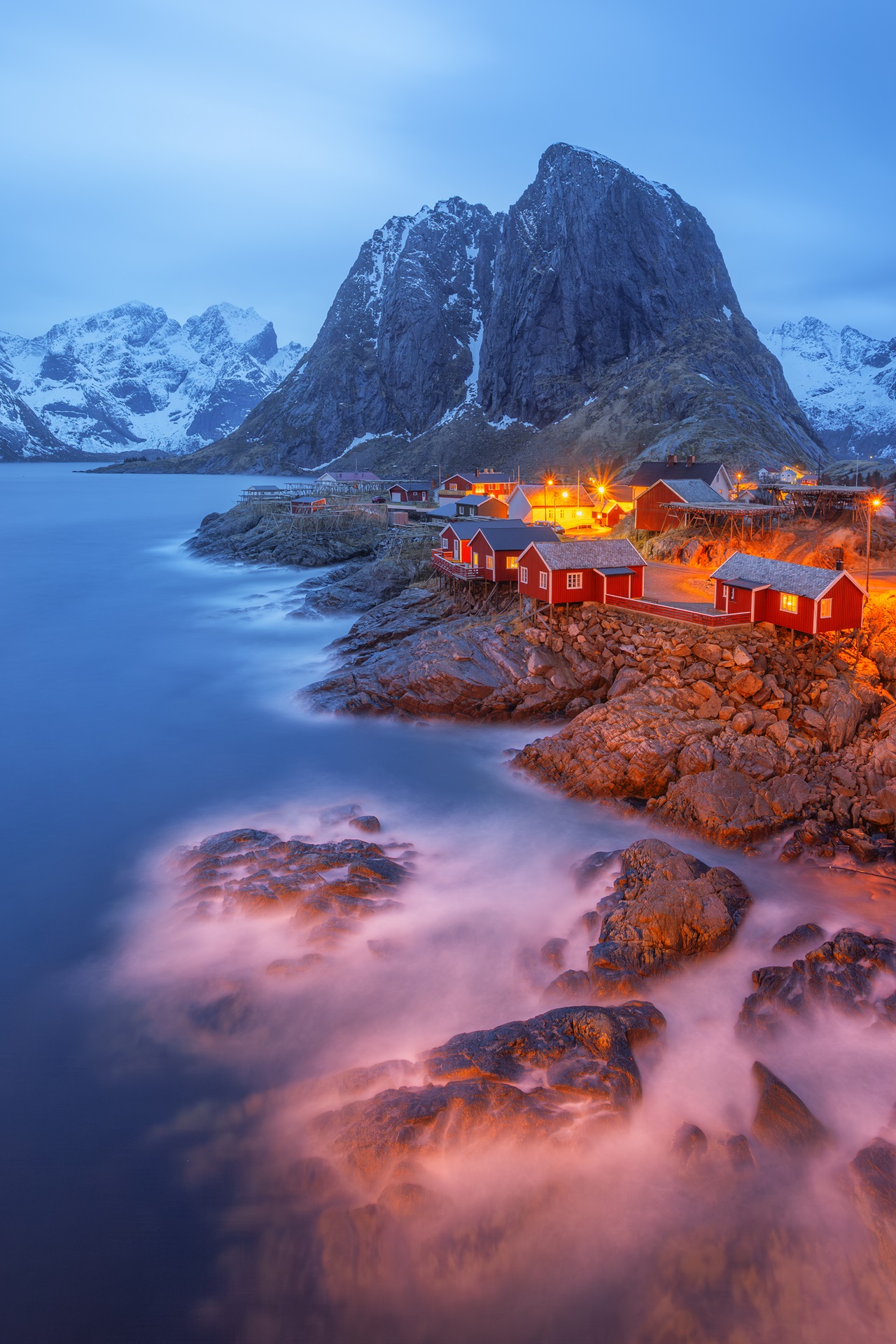
Blue hour offers a more atmospheric and moody interpretation of the scene. The cool blue tones contrast beautifully with the warm red of the rorbuer and the soft glow of streetlights reflecting on the rocks and water. Long exposures during this time can smooth the water and enhance reflections, creating a calm and cohesive image.
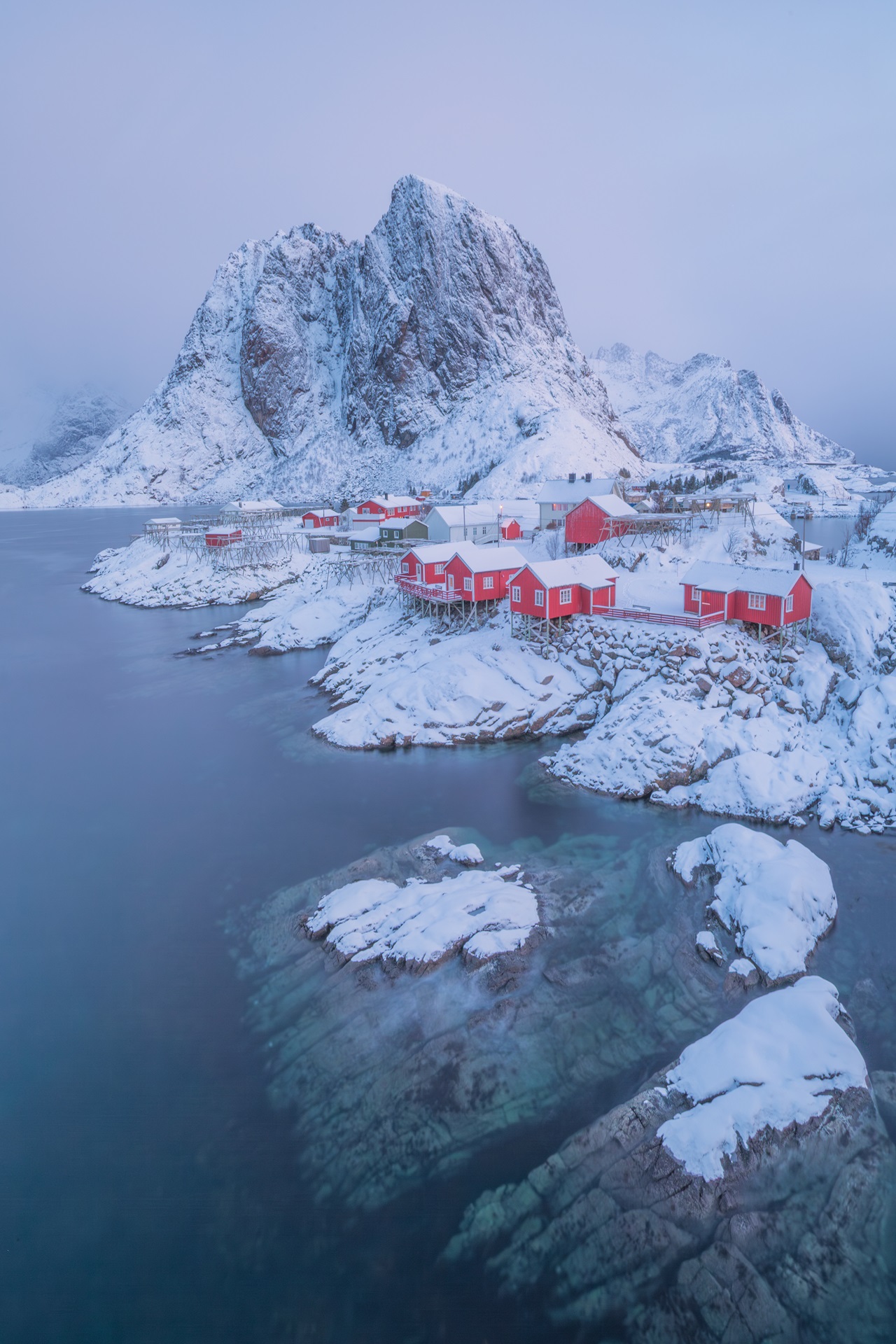
Canon EOS 5D III + Canon 11-24mm @18mm, NiSi 10-stops ND filter, ISO-100, f/16, 90s
Overcast conditions, especially when combined with gentle snowfall, can evoke a strong sense of serenity and stillness, offering a softer and more minimalist approach to photographing the landscape.
AURORA BOREALIS
Hamnøy is also a popular location for photographing the aurora borealis, although it comes with challenges. Light pollution can be significant, especially on the bridge where streetlights are close by, making it more difficult to achieve clean exposures. The lights from the cabins can also easily become overexposed at night. Because of this, strong aurora activity combined with some moonlight is often necessary to produce high-quality images.
The area near Reinefjorden offers slightly better conditions with reduced light pollution, and Olstinden provides a beautiful and dramatic backdrop for aurora photography.
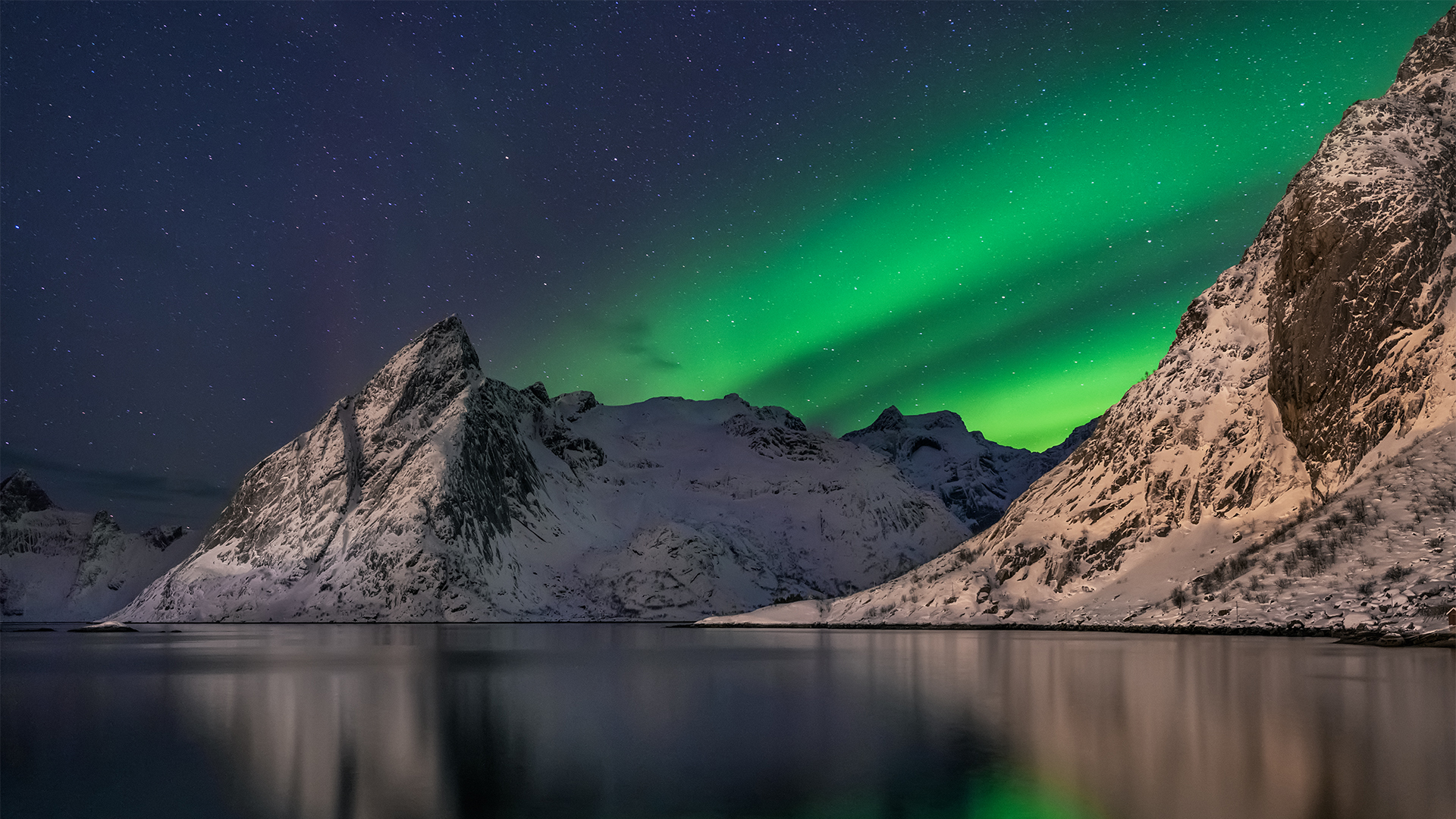
Fujifilm GFX 50R + Fujifilm 32-64mm @32mm, ISO-2000, f/4, 20s
WEATHER
Because of the Gulf Stream flowing past Lofoten, winters here can be relatively mild. Snow is never guaranteed, even in the middle of winter. A single snowfall can blanket the entire landscape, while a day of heavy rain and warmer temperatures can quickly wash it all away. Festhelltinden, being a steep mountain, does not easily retain snow unless it is immediately after a significant snowfall.
Canon EOS 5D III + Canon 11-24mm @20mm, NiSi 10-stops ND filter, ISO-100, f/20, 100s
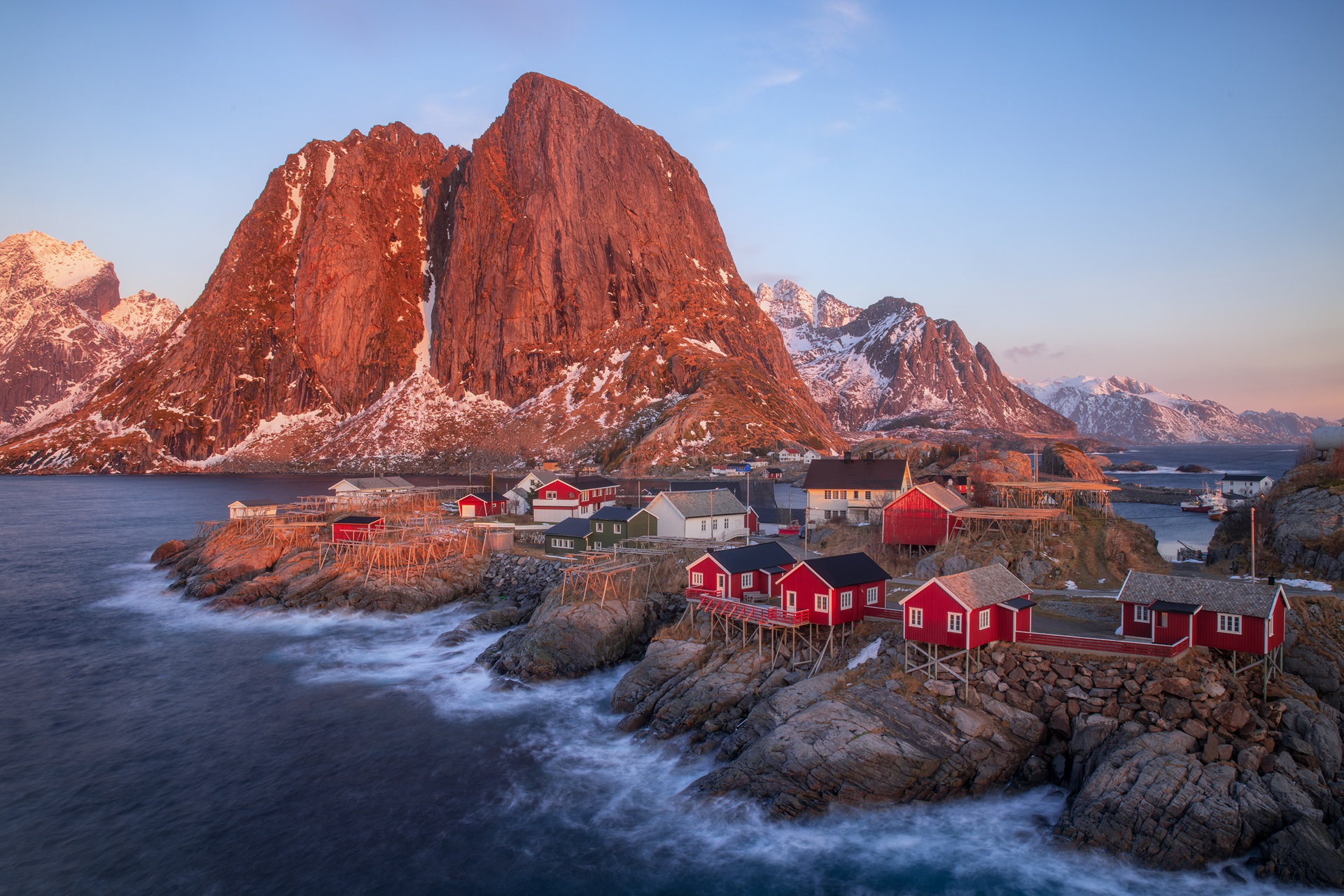
Canon EOS 5D IV + Canon 11-24mm @24mm, NiSi 6-stops ND filter, ISO-100, f/16, 6s
Tides are another important factor to consider. During low tide, rocks along the shoreline become exposed, while at high tide they are submerged beneath the water. If a snowfall occurs just before or around low tide, these rocks can be covered in fresh snow, creating a unique foreground opportunity. This is an especially good time to explore the eastern end of the bridge, where such conditions can work beautifully for portrait-oriented compositions.
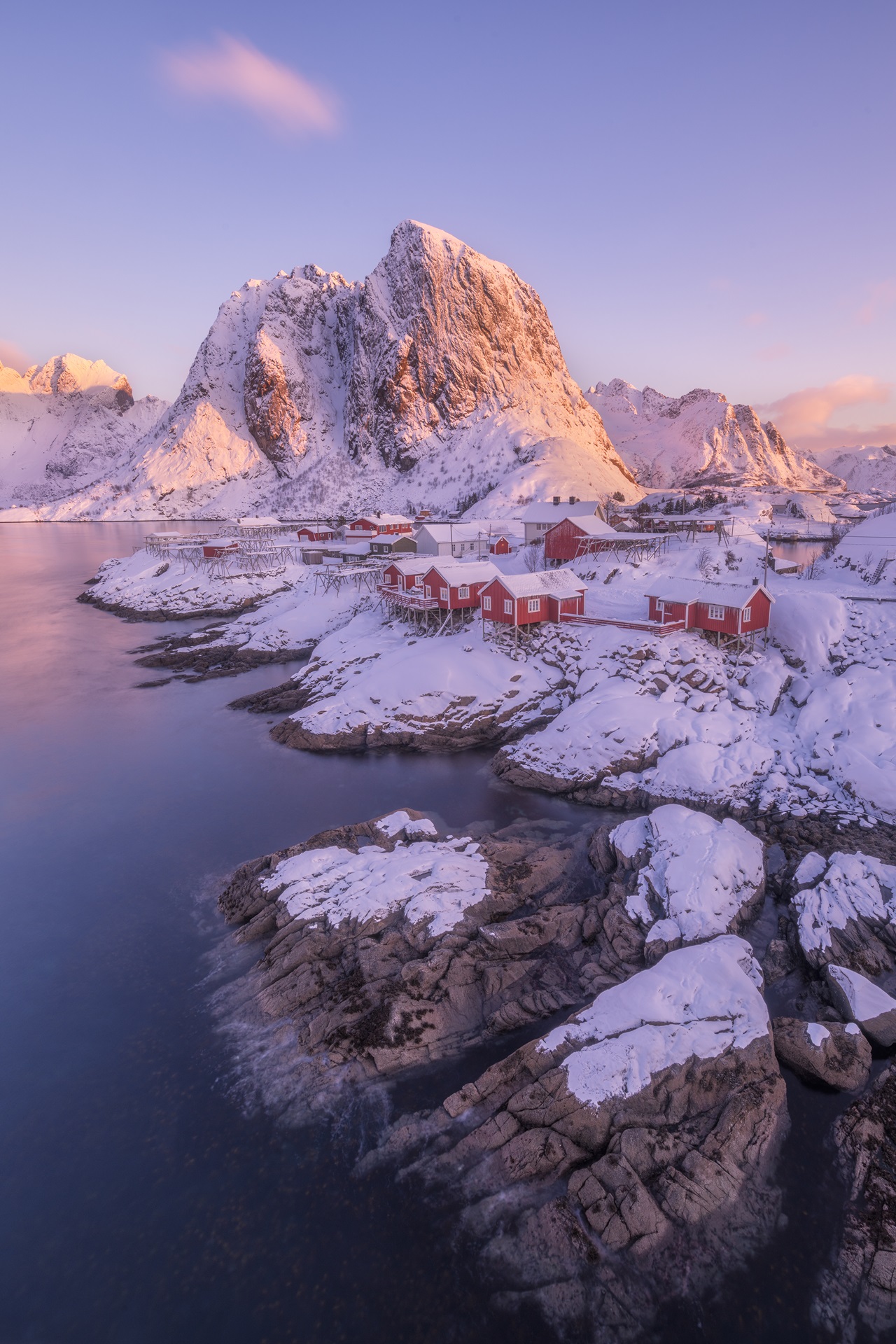
Sony A7RIV + Sony 12-24mm @16mm, NiSi 6-stops ND filter, ISO-50, f/16, 15s
Canon EOS 5D III + Canon 11-24mm @18mm, NiSi 10-stops ND filter, ISO-100, f/16, 90s
Fujifilm GFX 50R + Canon 11-24mm @18mm, NiSi ND 10-stops filter, ISO-100, f/13, 60s
Depending on wind and wave conditions, the water in Hamnoy can range from glass-calm to highly dynamic. For a clean and minimalist look, long exposures can be used to smooth the water, removing distracting ripples and simplifying the composition.
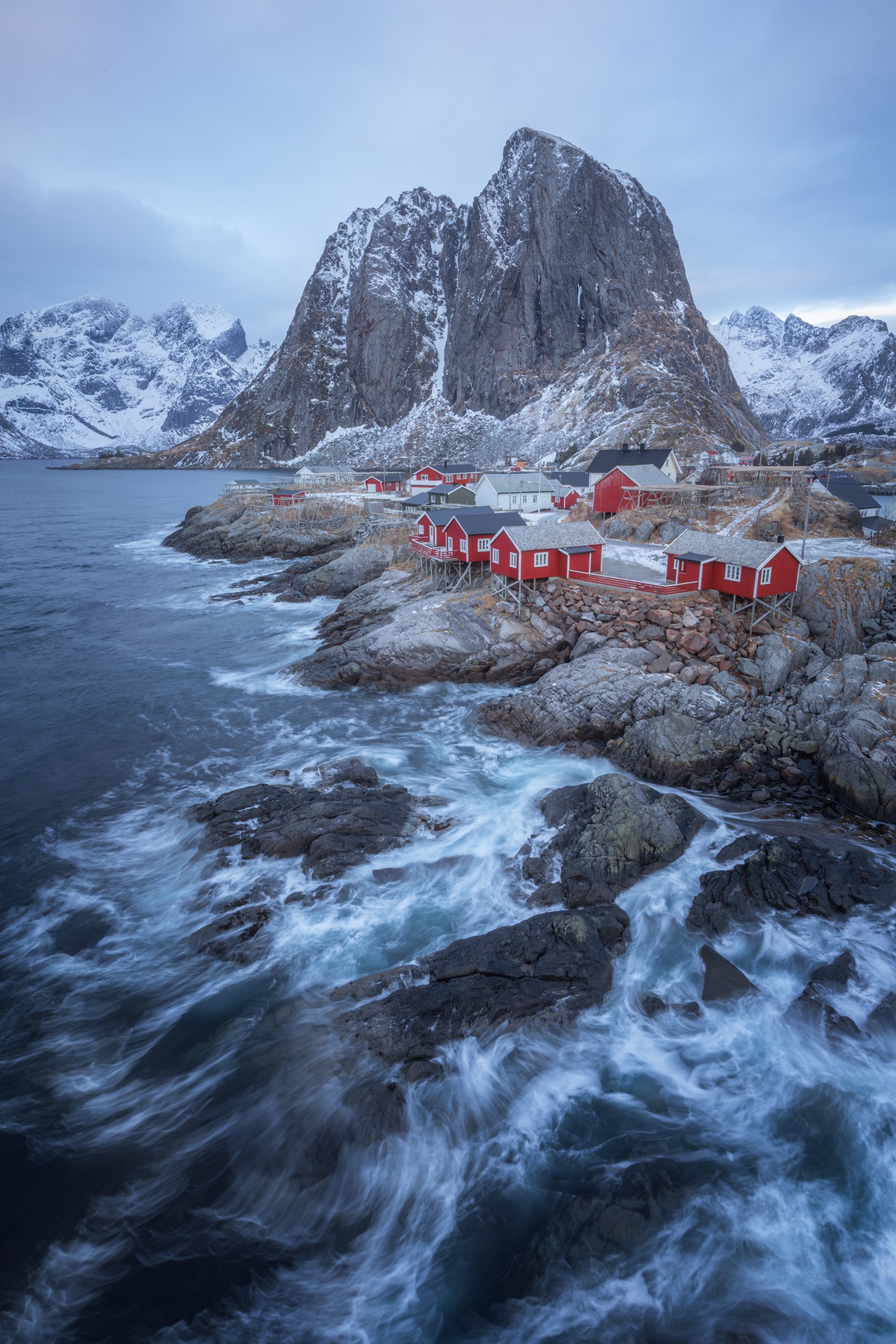
Canon EOS 5D IV + Canon 11-24mm @18mm, ISO-100, f/22, 1.6s
For a more dynamic scene in rough wave conditions, using an exposure of around 1/2 second to 2 second allows you to capture the motion of the waves, adding energy and movement to the image.
Canon EOS 5D III + Canon 11-24mm @20mm, NiSi 10-stops ND filter, ISO-100, f/20, 100s
Longer exposures emphasize cloud movement and create a sense of flow. They introduce the sense of contrast between dynamic elements (clouds) and static subjects (cabins and mountains). It also smoothing the water by eliminating ripples, adding a sense of simplicity to the scene. While shorter exposures preserve detail and capture a more natural moment. Both approaches can be effective, depending on your artistic intent.
PRACTICAL TIPS
Arriving early for sunrise is important, as the bridge can become crowded. A tripod, 6-stops and 10-stops ND filters are essential for low-light and/or long-exposure photography. Care should be taken when shooting on the bridge due to traffic, and in winter, icy conditions make crampons highly recommended.
If you have several days in the area, it is worth visiting these locations under different conditions. If time is limited, starting at the bridge during blue hour or sunrise and then gradually moving to nearby spots on foot is an efficient approach.
In winter, particularly from early January to early February, the golden hour can last for several hours, allowing ample time to photograph multiple locations in beautiful light when conditions are favorable.