

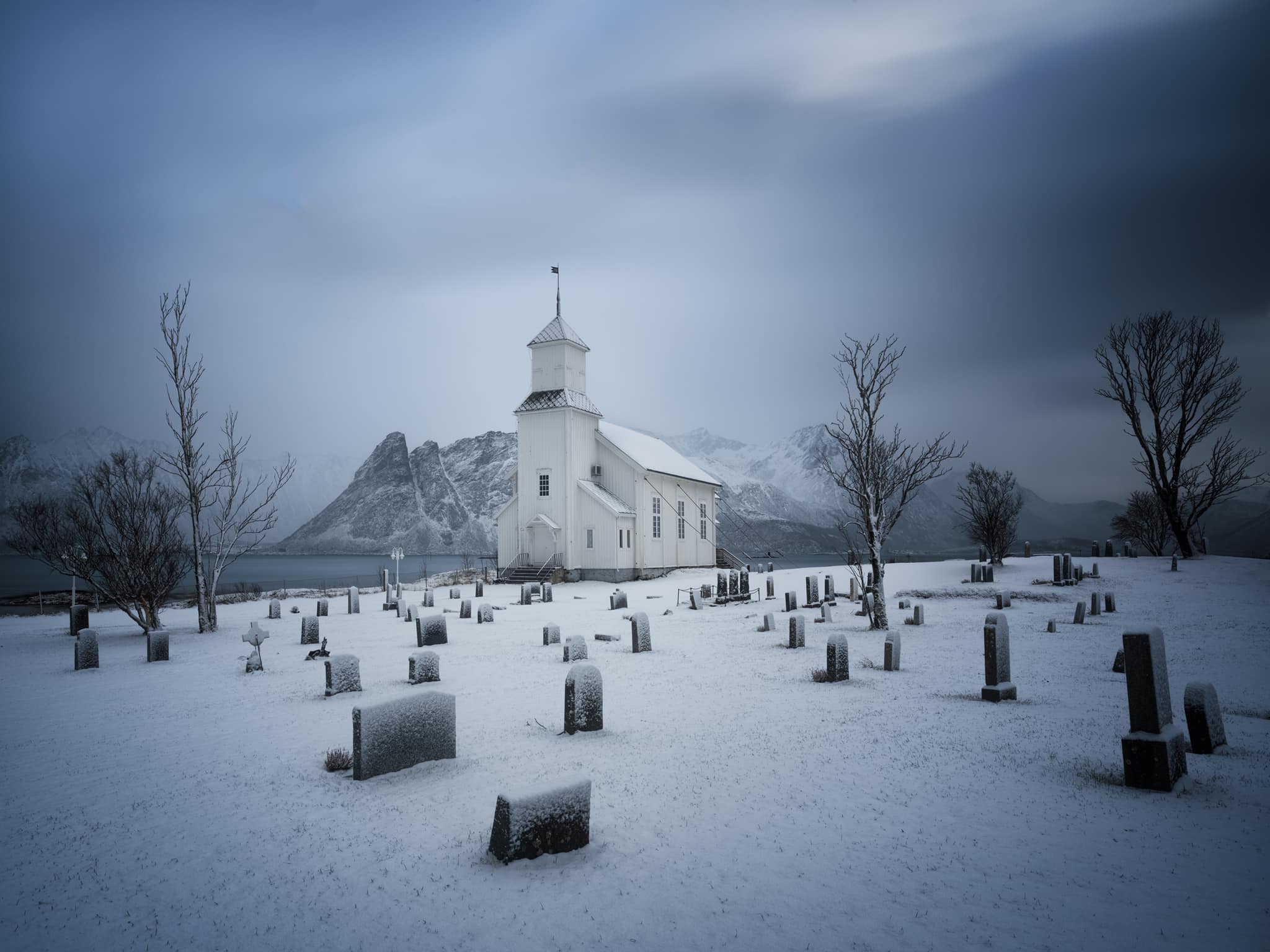
A strong image rarely happens by accident. While light and weather play important roles, the true foundation of a compelling image lies in composition — the careful arrangement of visual elements within the frame. Achieving a balanced and engaging composition is often the result of patience, observation, and deliberate decision-making in the field.
Photographers constantly evaluate the scene before them, asking simple but crucial questions: What is the subject? What supports the subject? What can be removed? By identifying these elements, the photographer begins to organize the frame so that every component serves a purpose. Foreground elements can add depth, midground subjects anchor the story, and backgrounds provide context and atmosphere.
This process is particularly evident when photographing iconic locations such as Gimsoy Church in the Lofoten of the Arctic Norway. While the church itself is already a striking subject, the challenge lies in arranging the surrounding landscape, i.e. the cemetery, the trees, the mountains, and the sky, into a composition that feels balanced and meaningful.
Finding the perfect composition often requires exploration and refinement. Small movements, stepping a few meters to one side, lowering the camera, or waiting for clouds to shift, can dramatically change how the scene comes together. Lines, shapes, and natural framing begin to align, guiding the viewer’s eye toward the intended subject.
The final image here can only be achieved from this exact spot, moving even a meter to the left or right would break the composition.
In this article, I am going to talk about how thoughtful arrangement of elements can transform a quiet winter scene at Gimsoy Church into a visually powerful image.
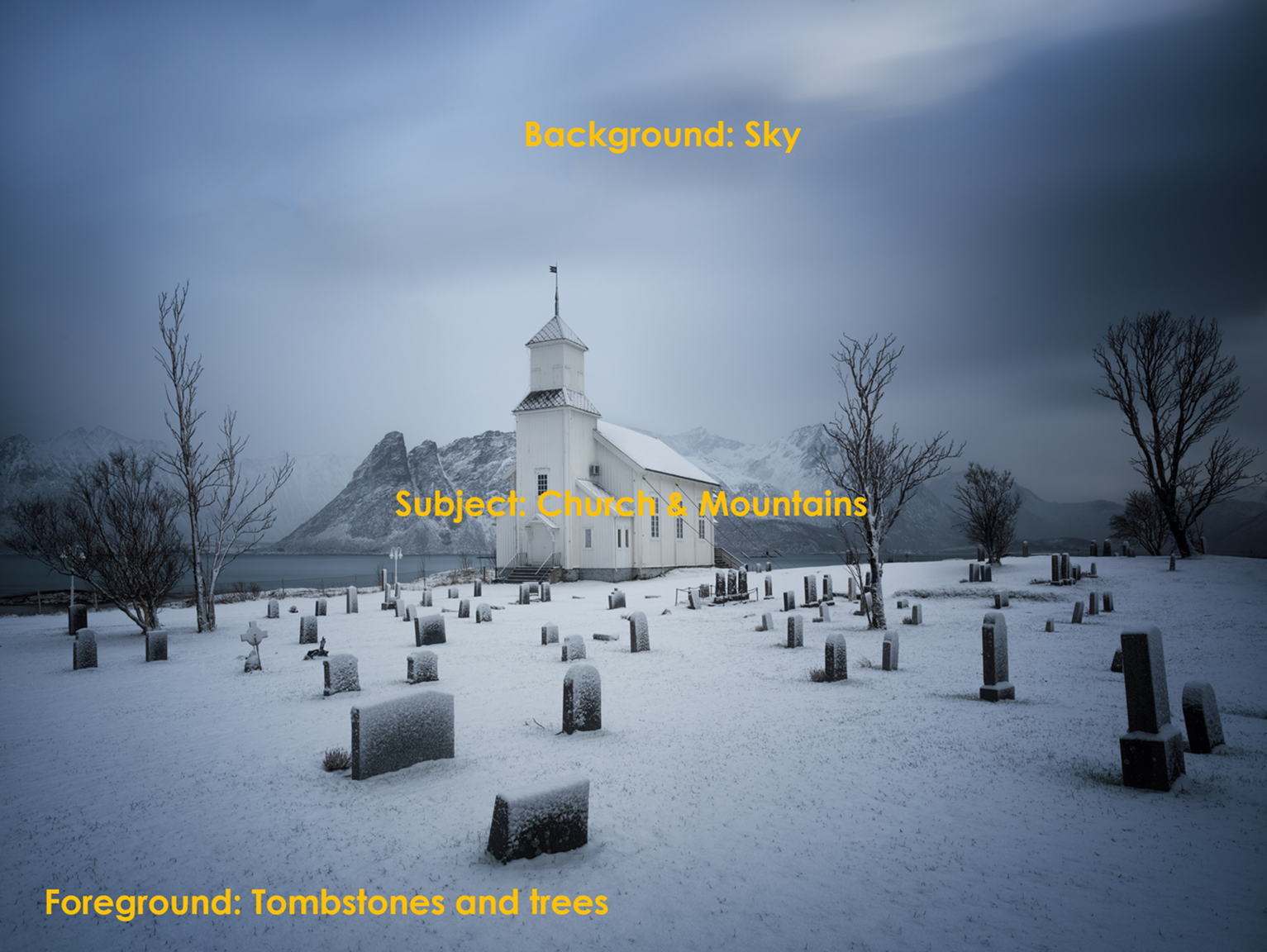
Layered Structure: Foreground, Subject, and Background
One of the most important compositional strengths of this image is its clear three-layer structure, which creates depth and spatial clarity.
1. Foreground – Tombstones and Trees
The snow-covered tombstones dominate the foreground, scattered across the cemetery in various shapes and sizes. These elements serve two purposes: they create depth, giving the viewer a sense of stepping into the scene; and their irregular placement forms natural geometric patterns that guide the viewer’s gaze toward the church. The trees on both sides add vertical accents and help contain the composition, preventing the eye from drifting out of the frame.
2. Subject – Church and Mountains
The central subject is the white church, positioned slightly off-center. Its vertical tower contrasts strongly with the horizontal landscape. Behind the church, the rugged mountains form a secondary subject that reinforces the scene’s sense of place. The simplicity of the church’s shape, a strong rectangle topped with a tower, creates a clear focal point against the darker mountains.
3. Background – Sky
The sky acts as a soft, uncluttered background. Instead of competing with the subject, it provides a subtle tonal gradient that isolates the church and mountains, allowing them to stand out. Sometimes, I prefer a dull and empty sky rather than a dramatic one.
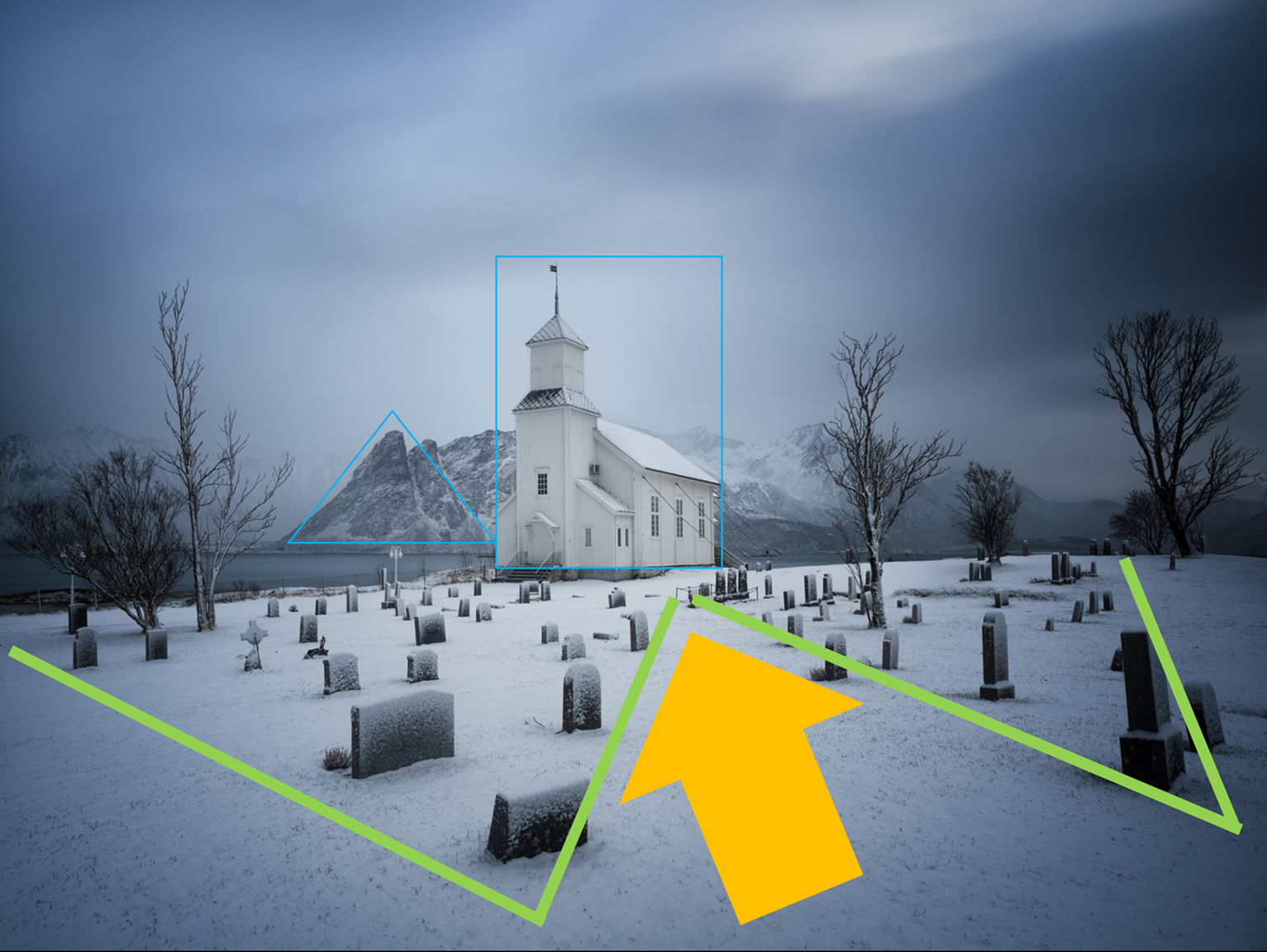
Geometry and Visual Direction
The image is rich in geometric relationships that subtly guide the viewer’s eye.
1. Tombstone Geometry
The tombstones form a “W” shape in the foreground. While they do not create a traditional straight leading line, their distribution forms a visual funnel directing attention toward the church. This approach is more natural and organic than a single strong line, which would feel more artificial in this environment.
2. Mountain and Church Relationship
Behind the church, the mountain peak forms a triangular shape that echoes the verticality of the church tower. This geometric dialogue strengthens the visual connection between the built structure and the natural landscape. The mountain also acts as a visual anchor, preventing the church from appearing isolated in the frame.
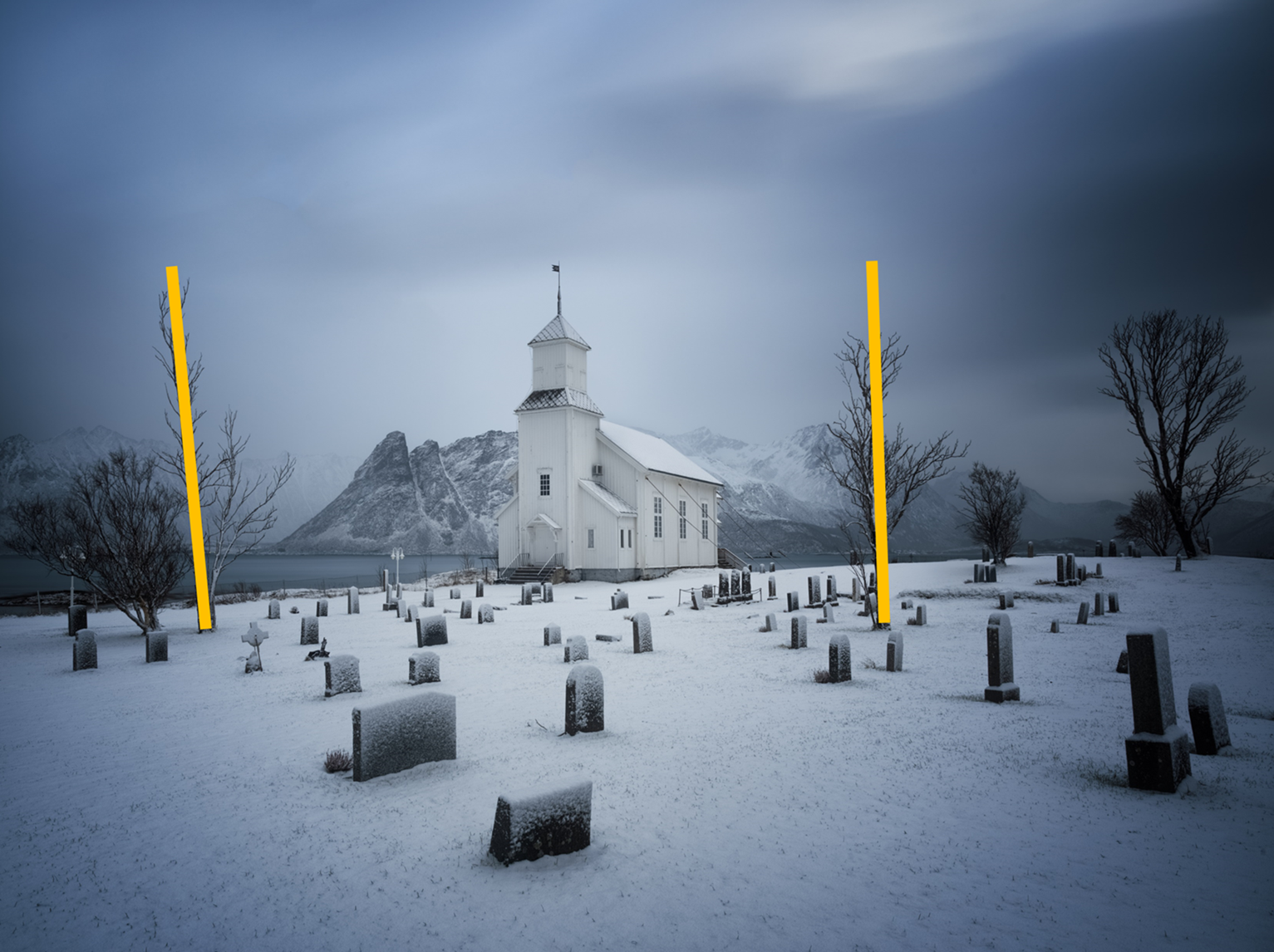
Natural Framing with Trees
The trees play a subtle but critical role in the composition. Two trees positioned on either side of the frame create a natural framing effect. This framing technique works similarly to architectural framing used in classical landscape photography.
These trees contain the scene within the frame; direct the viewer’s attention inward; and add balance to the composition
Without these trees, the image would feel far more open and less structured.
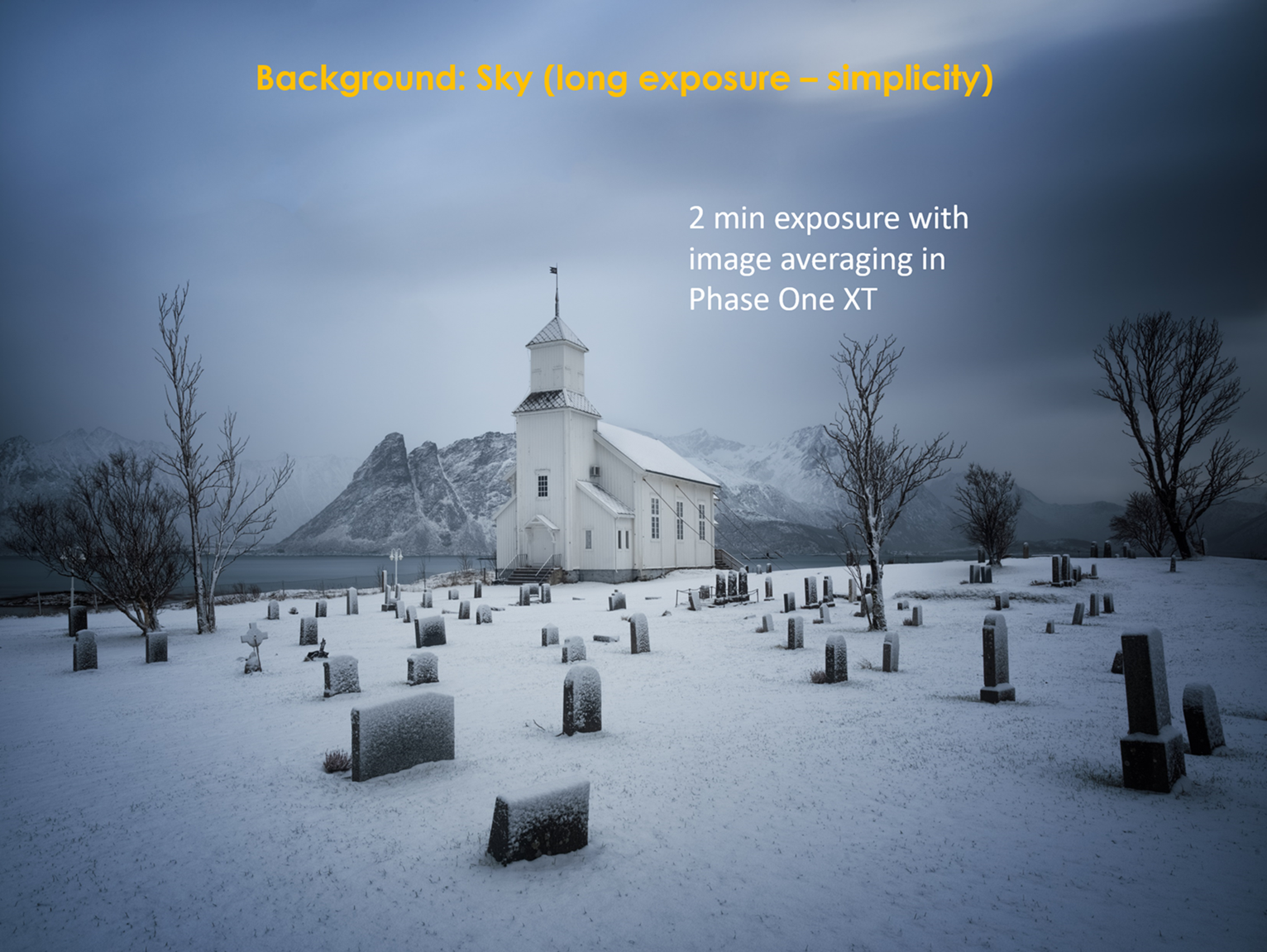
Simplicity Through Long Exposure
The sky was captured using a two-minute exposure with image averaging on the Phase One camera, which smooths cloud movement and eliminates visual clutter. You can achieve the same results with using long exposure with a 6-stops or 10-stops ND filter, depends on the light condition.
This technique serves two purposes:
- Simplification – The sky becomes a clean tonal gradient rather than a busy cloud pattern.
- Mood enhancement – The soft sky contrasts with the sharp textures of the tombstones and mountains.
The long exposure also reinforces the sense of quiet stillness that defines the scene.
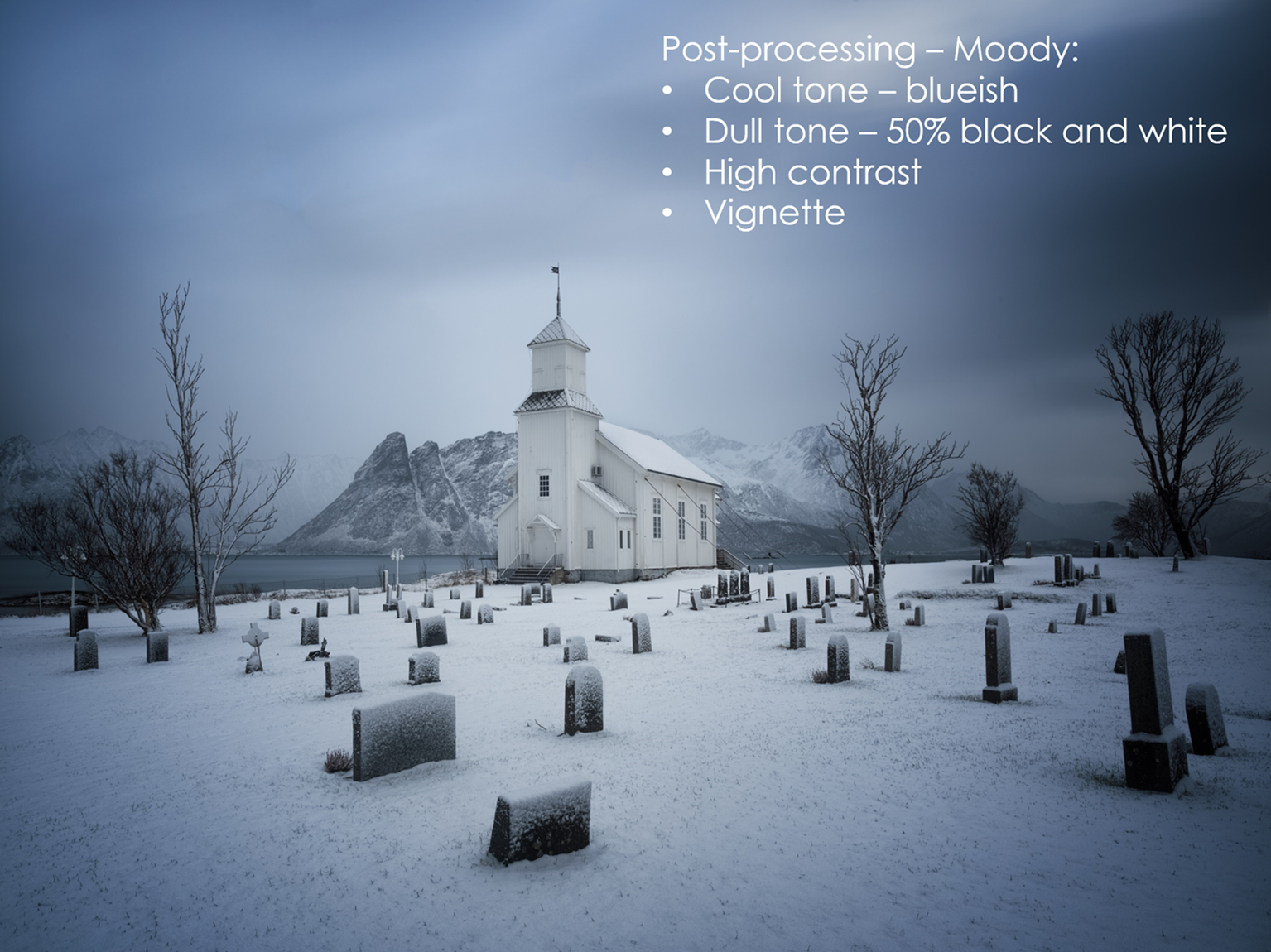
Post-Processing: Tonal Balance and Atmospheric Mood
Post-processing plays a key role in establishing the emotional tone of the photograph.
1. Cool Color Palette
The image is dominated by cool blue tones (white balance and color tone), which evoke the cold Arctic environment and enhance the sense of solitude.
2. Reduced Saturation
The tones are intentionally subdued, approaching a semi-monochrome aesthetic (adding a of black and white layer with 50% opacity). This restraint removes distractions and strengthens the graphic qualities of the composition.
3. Increased Contrast
Higher contrast emphasizes the structure of the scene: the white church stands out clearly against the darker mountains; the tombstones become stronger graphical elements in the snow.
4. Subtle Vignette
A light vignette gently darkens the edges of the frame, encouraging the viewer’s eye to return to the central subject.
Emotional Interpretation
Beyond technical composition, the photograph also carries a powerful emotional resonance.
The combination of a quiet church, a snow-covered cemetery, barren trees, distant mountains, and a calm winter sky, creates a contemplative atmosphere. The scene feels timeless, almost suspended between life and memory. The tombstones remind us of human presence, while the mountains and sky emphasize the vastness of nature.
Again, the final image can only be achieved from this exact spot, moving even a meter to the left or right would break the composition. The real challenge for a photographer is to search and discover that precise position, whether at this location or in any landscape.